
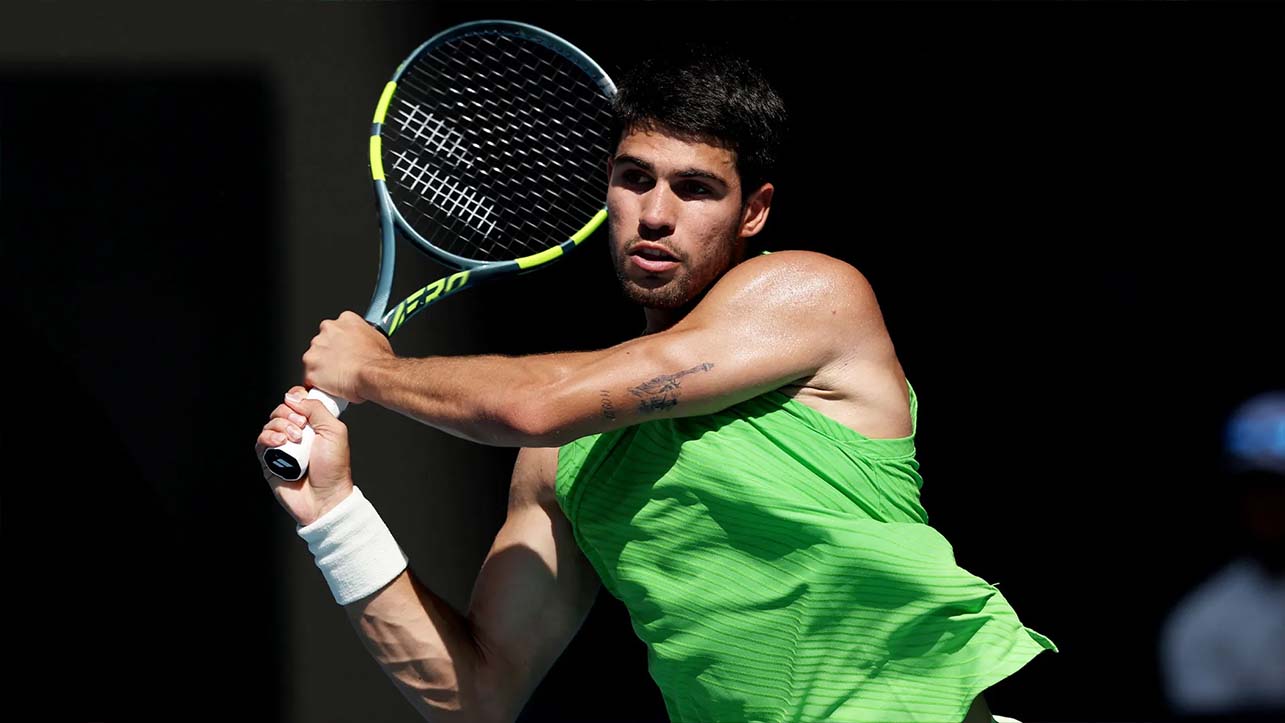
Introduction: The Players Who Could Have Been Champions
In every sport, there exists a painful category of athlete - the gifted player whose career becomes defined not by trophies won but by potential unrealised. In men's tennis, this conversation is particularly rich, given the extraordinary era defined by Roger Federer, Rafael Nadal, and Novak Djokovic - three players so dominant that even Grand Slam winners of a different era might have struggled to accumulate major titles against them.
Yet even accounting for that extraordinary competition, there are players whose careers leave tennis fans with an enduring sense of what could have been. Injuries, inconsistency, unfortunate timing, and the cruel randomness of sport combined to prevent several genuinely exceptional players from claiming the titles their ability suggested they deserved.
This list focuses on five men whose talent was never in question - only the circumstances that prevented them from translating it into the sustained success their gifts promised. The debate over who belongs on this list is endless, and reasonable fans will argue for Spanish, Russian, German, French, Balkan, and Latin American players not included here. Consider this a starting point for that conversation.
At Rackonnect, we celebrate racket sports in all their complexity - from the grassroots courts at https://rackonnect.com/venues to the stories of the professionals who inspire the next generation. This is one of those stories.
5. Gaël Monfils
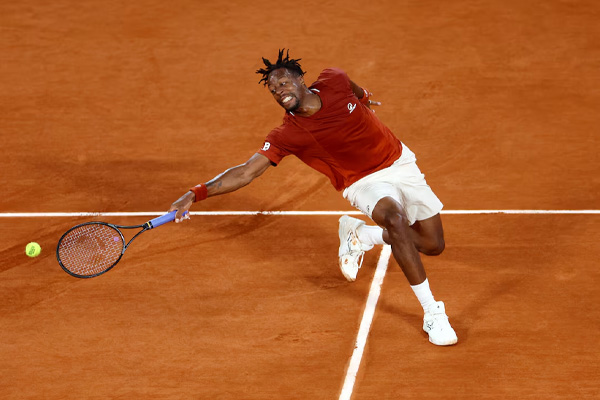
Few players in the modern era have generated as much excitement - or as much frustration - as Parisian Gaël Monfils. His combination of elite athleticism, showmanship, and unconventional shot-making made him must-watch viewing at every tournament he entered. His ceiling, on his best days, was clearly that of a Grand Slam champion. His floor, on his difficult days, was that of a player seemingly uninterested in the hard work of winning.
The Rise
Monfils was named ATP Newcomer of the Year in 2005 - the same year he climbed 200 spots in the ATP rankings to announce himself as one of the sport's most exciting emerging talents. By 2006, he had broken into the top 25 and reached the semi-finals of the Rome Masters, where the eventual champion Rafael Nadal ended his run.
His first Grand Slam semi-final arrived in 2008 at the French Open - making him the first Frenchman to reach that stage at Roland Garros since 2001. The occasion, unfortunately, was Roger Federer in full flight, and the result was defeat.
By 2009, Monfils had broken into the world's top 10 and reached his first ATP Masters final. The pattern of near-misses, however, was already establishing itself.
The Career
After a period away from the highest level, Monfils returned in 2015 to feature consistently among the world's top 15. His most significant Grand Slam result came at the 2016 US Open semi-finals - a match against Novak Djokovic that Monfils led before losing in one of the most discussed matches of that year.
He has collected ten ATP World Tour singles titles across his career and holds the rare distinction of having achieved at least one victory over a top-10 player every year since 2005 - a remarkable measure of consistent competitive quality.
Why He Belongs on This List
Wrist, shoulder, and back injuries were recurring companions throughout his career, repeatedly interrupting momentum at crucial stages. But beyond the injuries, there was always the nagging sense that Monfils - with his extraordinary athleticism, court speed, and shot-making ability - could have extracted more from his talent with a different approach to the tactical and mental demands of winning consistently at the highest level.
His aggressive play, ability to retrieve apparently impossible shots from the defensive wings, and capacity for moments of breathtaking improvisation still surprise and delight. His career achievements are real. But his potential, viewed against his actual results, leaves the conversation permanently open.
4. Nikolay Davydenko
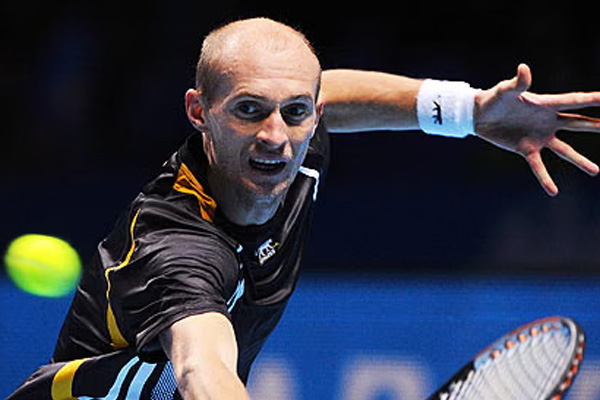
Nikolay Davydenko was, at his peak, one of the most technically complete baseliners in men's tennis - a player whose precision, consistency, and tactical intelligence made him a genuine threat against any opponent in any conditions. He was, in some respects, the natural successor to Marat Safin in Russian tennis, albeit with a quieter personality and a more methodical approach to his craft.
The Grand Slam Frustration
Davydenko reached four Grand Slam semi-finals across his career - both semi-finals of the French Open (2005, 2007) and both semi-finals of the US Open (2006, 2007) - but converted none of them into a final appearance. In three of those four semi-finals, his conqueror was Roger Federer. The exception was 2005, where an unseeded Mariano Puerta of Argentina ended his run in five sets.
He achieved a career-high ranking of world number 3 in November 2006, confirming his status as genuinely among the elite of the game - yet without a Grand Slam title to his name.
The Finest Moment
Davydenko's career peak arrived in 2009 at the ATP World Tour Finals in London. After 12 unsuccessful attempts, he defeated Federer in the semi-finals - a result that carried enormous significance given the psychological weight of that particular rivalry. He then defeated Juan Martín del Potro in the final to claim the season-ending title. That same year, he also claimed three ATP Masters titles - a remarkable season that demonstrated what he was capable of when everything aligned.
His game drew frequent comparisons to Andre Agassi - the offensive baseline precision, the ability to redirect pace, the relentless consistency from both wings.
The Decline
From 2010 onwards, wrist injuries became a persistent and ultimately career-defining obstacle. His form dropped steadily, and he was unable to recapture the consistency that had characterised his peak years. After winning 21 ATP titles across his career, he retired in 2014.
The legacy is one of genuine excellence that fell just short of the Grand Slam validation that would have secured his place among the sport's recognised greats.
3. Jo-Wilfried Tsonga
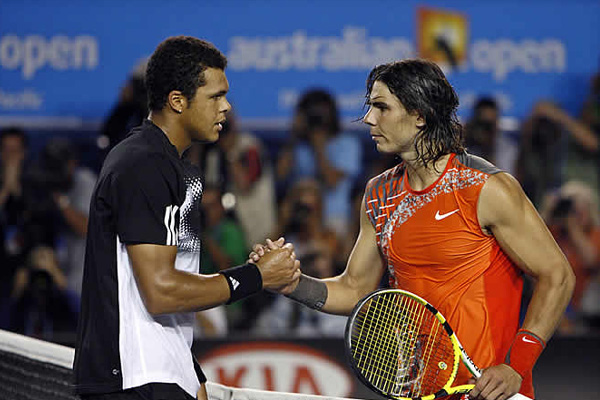
Jo-Wilfried Tsonga arrived on the professional scene with the announcement of someone who had been there before. Named ATP Newcomer of the Year in 2007, he made his Grand Slam debut at the 2008 Australian Open and reached the final - as an unseeded player - defeating four seeded opponents along the way, including a straight-sets victory over world number 2 Rafael Nadal in the semi-finals.
It was one of the most dramatic Grand Slam runs of the modern era. And it created expectations that, despite a genuinely impressive career, Tsonga was never quite able to fulfil.
The Career Highlights
Tsonga reached two semi-finals at the French Open (2013, 2015) and two semi-finals at Wimbledon (2011, 2012) - demonstrating a consistency across surfaces that marked him as a serious all-court threat. His best performance at the ATP World Tour Finals came in 2011, where he reached the final before losing to Federer.
In February 2012, he reached his career-high ranking of world number 5. During the 2014 Canadian Open, he defeated four top-10 opponents on his way to lifting the trophy - a performance that briefly reignited the conversation about whether a Grand Slam title was still possible.
The Playing Style
Tsonga was one of the few players of his era to effectively use serve-and-volley tactics - a style that had largely disappeared from the professional game. His net movement and reflexes were genuinely elite. His combination of powerful serve, aggressive forehand, and willingness to attack the net made him a uniquely difficult opponent on fast surfaces.
Why He Belongs on This List
The 2008 Australian Open final created expectations that proved impossible to live up to, even with a career that included multiple Masters semi-finals, a top-5 ranking, and significant titles. The sense that a player of Tsonga's ability and variety should have won at least one Grand Slam remains the defining question of his career - and one that keeps him on this list.
2. Juan Martín del Potro
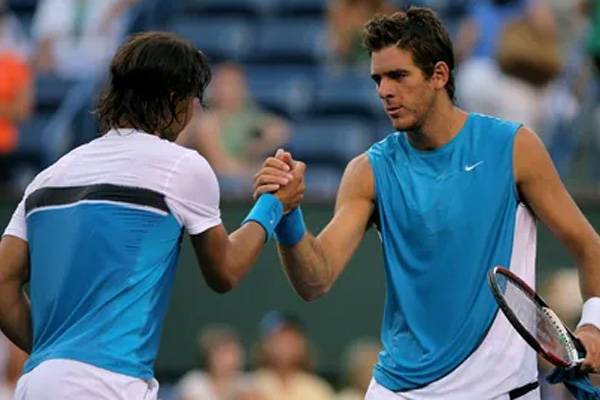
Del Potro's story is perhaps the most heartbreaking on this list - not because his career was unaccomplished, but because what was visible was so extraordinary that the injuries that repeatedly denied him further achievements became almost unbearable to witness.
The 2009 US Open
Del Potro's defining moment arrived at the 2009 US Open. In the semi-finals, he defeated Rafael Nadal. In the final, he defeated Roger Federer - the five-time defending champion - in a match of extraordinary intensity and quality. The victory made him the only man outside of the Big Four (Federer, Nadal, Djokovic, Murray) to win a Grand Slam between the 2005 French Open and the 2013 US Open - a span of eight years during which those four players won every major title in men's tennis.
It was a performance that announced del Potro as the heir apparent to the sport's highest honours. And then the injuries began.
The Long Road Back
From 2010 onwards, wrist injuries became the defining narrative of del Potro's career. He was on and off the tour for years - undergoing multiple surgeries, enduring extended absences, and repeatedly fighting his way back to competitive relevance through what must have required extraordinary personal resilience.
When he returned to sustained form from 2016, the results were remarkable. He reached world number 3. He led Argentina to the Davis Cup title in 2016. He won the 2018 Indian Wells Masters. He reached his second Grand Slam final at the 2018 US Open, where Novak Djokovic defeated him in straight sets.
His Olympic record was equally impressive - a Bronze medal at the 2012 London Games, upgraded to Silver at the 2016 Rio Games.
The Enduring Question
What del Potro might have achieved across a full, injury-free career is one of men's tennis' most tantalising hypotheticals. The 2009 performance demonstrated a level of play capable of defeating both Nadal and Federer in the same Grand Slam - a quality of tennis that, sustained over a full career, could have produced multiple major titles. The sport never got to see that version of del Potro for long enough.
1. David Nalbandian
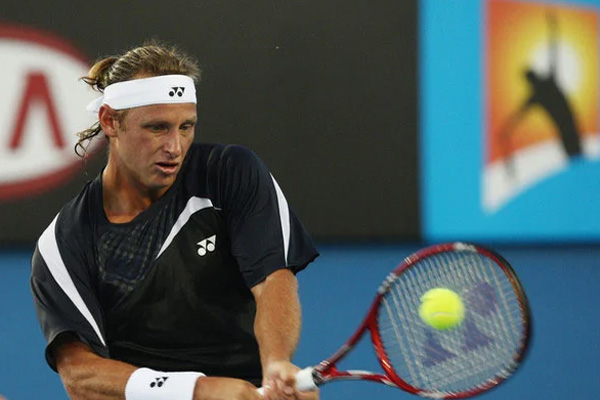
David Nalbandian sits at the top of this list not simply because of what he failed to win, but because of the extraordinary promise he demonstrated so early - and the specific moments in which that promise was denied by the narrowest of margins.
The Early Promise
As a junior, Nalbandian defeated Roger Federer in the finals of the 1998 US Open boys' singles - a result that, viewed in hindsight, carries remarkable significance given what Federer would become. He turned professional in 2000 and, just two years later, reached the Wimbledon final as the 28th seed - facing top seed Lleyton Hewitt in the summit clash. He was unable to match the Australian champion on the day, losing 6-1, 6-3, 6-2, but the achievement of reaching a Wimbledon final as a 28th seed at that stage of his career was extraordinary.
The Near-Misses
The rest of Nalbandian's career reads as a catalogue of agonising near-misses:
At the 2003 US Open, he led by two sets in the semi-finals before losing a third-set tiebreaker from match point - a controversial line call disrupting his rhythm at the worst possible moment. The eventual champion, Andy Roddick, advanced.
At the 2004 French Open, Nalbandian was considered a strong favourite to reach the final. The unseeded Gastón Gaudio defeated him in straight sets.
The Finest Hour
His most celebrated victory came at the 2005 Tennis Masters Cup in Shanghai - where he defeated Roger Federer from two sets down in the final. Defeating Federer from that position, in that era, was a performance of the very highest order.
Yet the pattern continued. At the 2006 Australian Open, he led Marcos Baghdatis by two sets before surrendering the match. At the 2006 French Open, he retired hurt in the semi-finals. Hip surgery in 2009 began a gradual, irreversible decline. He retired in 2013.
Why He Is First on This List
Nalbandian's combination of tactical intelligence, two-handed backhand quality, and ability to read and construct points made him, on his best days, the equal of any player in the world. His victories over Federer - and his demonstrated ability to compete at the highest level in the biggest matches - confirm that the talent was real and was at the very top of the game. The full career that talent deserved, however, never fully materialised. That gap between promise and achievement is what places him at the top of this list.
The Bigger Picture: What These Careers Tell Us
The five players on this list share common themes that extend beyond individual biography. Injuries - particularly wrist and shoulder injuries - feature in almost every story, reflecting the physical demands that modern professional tennis places on the body across a full career. The extraordinary dominance of Federer, Nadal, and Djokovic created a competitive environment in which even players of exceptional ability found it difficult to accumulate major titles. And the mental demands of competing consistently at the highest level proved, for several of these players, as challenging as the physical ones.
What these careers also demonstrate is the extraordinary depth of talent that men's tennis has produced - and continues to produce. The players who inspire the next generation of club players, recreational enthusiasts, and competitive juniors across India are not only the Grand Slam champions but also the players whose careers remind us how difficult the sport truly is.
If you have been inspired to pick up a racket - whether by these stories or by the sport itself - Rackonnect's coaching programmes provide structured development for players of all ages and levels across Delhi NCR and North India. And if you are ready to compete, Rackonnect tournaments offer the kind of competitive experience that builds the character this sport demands - at every level.
Who Did We Miss?
The debate around wasted potential in men's tennis is genuinely endless. Reasonable arguments exist for including players from Spain, France, Germany, the Balkans, Russia, and Latin America not mentioned here. Some would argue that players like Marat Safin, Marcelo Rios, or Fernando González deserve places on this list. Others would argue that the players included here achieved enough to disqualify them from the 'wasted talent' category entirely.
That is the nature of this conversation - and it is one of the things that makes tennis uniquely rich as a sport to follow, discuss, and love.
Stay connected with the world of racket sports through https://rackonnect.com - and join our community of players and fans across India.