
Introduction
Badminton is one of the fastest racket sports in the world — but beyond speed and skill, respect and sportsmanship define a truly great player. Understanding badminton court etiquette and rules ensures fair play, prevents injuries, and creates a positive experience for everyone on the court.
Whether you are a beginner learning the basics or a club-level player refining your behavior during competitive matches, knowing how to conduct yourself properly is just as important as mastering your smash. Official gameplay laws are governed by the Badminton World Federation (BWF), while day-to-day court etiquette helps maintain harmony in clubs, academies, and tournaments.
In this guide, you’ll learn:
Why court etiquette matters
What to do before stepping on the court
Essential in-match behavior and rule awareness
Let’s begin with the foundation — why etiquette matters in badminton.
Why Court Etiquette Matters
Court etiquette in badminton is more than simple politeness — it directly impacts safety, fairness, and the overall spirit of the game.
1. Promotes Fair Play
Badminton is often self-officiated in club settings. Players call their own lines and announce the score. Honest conduct ensures smooth rallies and reduces disputes. The official Laws of Badminton, published by the Badminton World Federation, provide the framework for competition, but sportsmanship fills the gaps during informal matches.
2. Prevents Injuries
Badminton involves quick lateral movement and rapid directional changes. Crossing behind players during rallies, leaving shuttles on the floor, or distracting opponents can cause accidents. Good etiquette minimizes these risks and keeps everyone safe.
3. Enhances the Playing Experience
Respectful behavior makes matches enjoyable for both recreational and competitive players. Simple gestures like waiting until a rally ends before entering the court show awareness and consideration for others.
4. Reflects Professional Standards
Even at the highest levels, players are expected to respect officials, opponents, and the game itself. Following proper etiquette at the club level prepares players for structured tournament environments.
In short, etiquette maintains the integrity of badminton while supporting its competitive structure.
Before You Step On Court — Pre-Match Etiquette
Good court behavior begins before the first shuttle is served. Preparation and awareness set the tone for the match.
Dress Code and Proper Footwear
Wearing appropriate attire is essential for both safety and performance.
Use non-marking court shoes to protect indoor surfaces.
Wear breathable sports clothing suitable for fast movement.
Avoid accessories that may injure yourself or others.
Most indoor badminton facilities strictly require non-marking soles. Proper footwear improves grip and reduces the risk of slipping during quick lunges and directional changes.
Equipment Responsibility
Being organized shows respect for fellow players and prevents interruptions.
Keep your racket, towel, and water bottle off the playing area.
Do not leave shuttlecocks scattered across the court.
Inspect your racket strings beforehand to avoid unnecessary delays.
A tidy court helps maintain smooth gameplay and prevents accidents.
Warm-Up and Shared Court Manners
If multiple courts are active in a hall:
Warm up only within your allocated space.
Do not hit shuttles across other courts.
Wait until ongoing rallies finish before retrieving stray shuttles.
Interrupting another court mid-rally is considered poor etiquette and can be dangerous.
Greeting Your Opponent
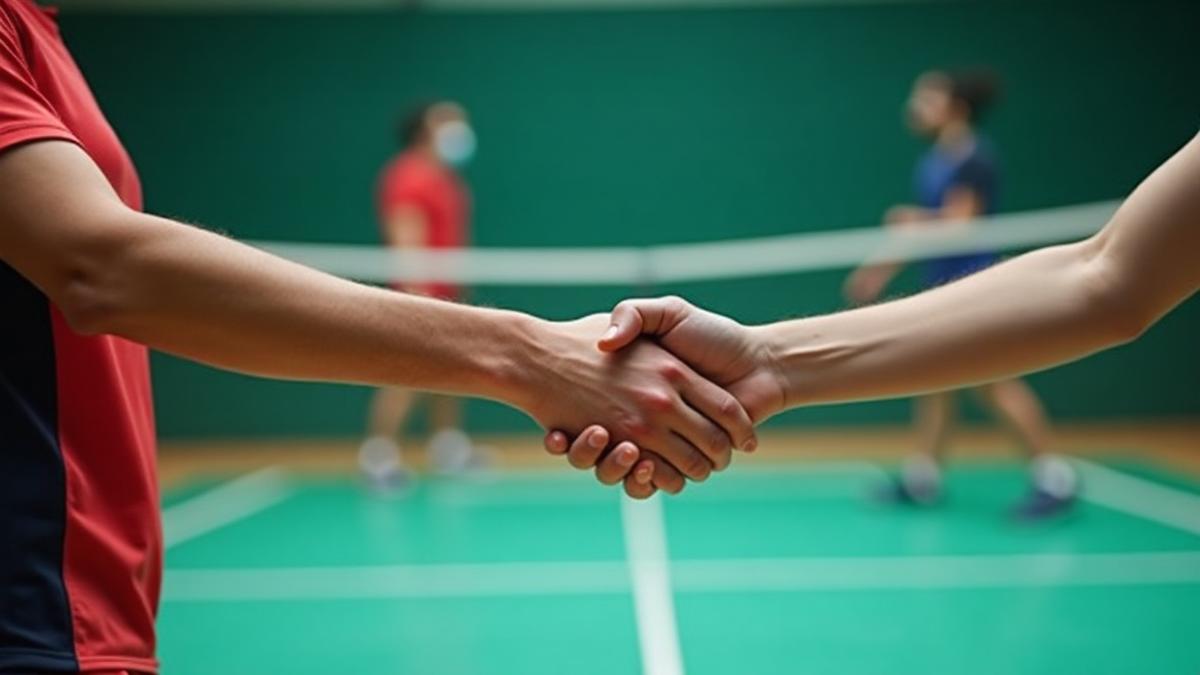
Before starting, a simple handshake or verbal greeting sets a respectful tone. In tournaments, players typically greet both opponents and the umpire before play begins.
This small gesture reinforces sportsmanship and mutual respect — values that are central to badminton at every level.
During Play — In-Match Etiquette & Essential Rules
Once the match begins, your conduct on the court becomes just as important as your technique. Understanding both etiquette and the basic laws of the game ensures smooth, fair, and enjoyable play.
Serving and Score Calling
The server is responsible for announcing the score clearly before each rally. In badminton, the server’s score is always called first. Calling the score loudly and confidently prevents confusion and disputes.
Before serving:
Ensure your opponent is ready.
Avoid rushing your serve.
Maintain correct serving posture (racket head pointing downward, shuttle struck below the server’s waist).
Serving before your opponent is ready is considered poor etiquette and may result in a fault under official rules.
Movement and Court Awareness
Badminton requires fast reflexes and sharp movement, but awareness of others is crucial.
Never walk across someone else's court during an active rally.
If a shuttle lands on your court from another game, wait until the rally ends before returning it.
Avoid sudden shouting or unnecessary noise that may distract players.
Being aware of your surroundings ensures safety and prevents avoidable interruptions.
Returning the Shuttle Politely
If a shuttle lands on your side from another court:
Pick it up gently.
Return it under the net or hand it back softly.
Never smash or aggressively hit it back.
This small act of courtesy reflects professionalism and respect.
Line Calls and Honesty
In many club matches, players call their own lines. If there is no umpire:
Call shots on your side of the court.
Be honest about close calls.
If unsure, give the benefit of doubt to your opponent.
Fair line calling builds trust and maintains the spirit of the game.
Respecting Opponents and Officials
During competitive matches:
Do not argue excessively with officials.
Accept decisions respectfully.
Avoid negative gestures or visible frustration.
Professional behavior enhances your reputation and keeps matches focused on skill rather than conflict.
Safety and Common Courtesy on the Court
Safety should always be a priority in badminton, especially in indoor halls where multiple matches happen simultaneously.
Keep the Court Clear
Remove empty bottles, towels, and wrappers from the playing area.
Clear stray shuttlecocks before play resumes.
Avoid placing equipment near boundary lines.
A clean court reduces the risk of slipping or tripping.
Control Your Emotions
Badminton can be intense, especially during competitive rallies. However:
Avoid shouting aggressively.
Do not intentionally distract opponents.
Keep celebrations respectful.
Passion is part of the sport, but it should never cross into unsportsmanlike behavior.
Respect Breaks and Time Limits
Under official rules, there are short breaks during games and longer intervals between games. Do not delay play unnecessarily.
Return to court promptly after intervals.
Avoid extended discussions during breaks.
Be mindful of time if others are waiting for the court.
Respecting time keeps tournaments and club sessions running smoothly.
After the Match — Post-Match Etiquette
Good etiquette continues even after the final point is played.
Shake Hands and Show Appreciation
At the end of the match:
Shake hands with your opponent.
Thank your doubles partner.
Acknowledge the umpire (if present).
This gesture shows respect regardless of the match outcome.
Accept Victory and Defeat Gracefully
Winning with humility and losing with dignity are hallmarks of a good badminton player.
Avoid boasting after a win.
Do not blame your partner or equipment after a loss.
Reflect on areas for improvement instead.
Leave the Court Ready for the Next Players
Collect your belongings quickly.
Dispose of waste properly.
Return borrowed shuttles if required.
Leaving the court organized ensures a positive experience for the next players.
Quick Reference — Core Rules Every Player Should Know
While etiquette shapes behavior, understanding the core rules of badminton ensures fair and structured gameplay. Below is a simplified reference guide every player should know.
1. Scoring System
A match is typically played in a best-of-three games format.
Each game is played to 21 points.
A point is scored on every rally (rally-point system).
If the score reaches 20–20, a player must win by two clear points.
If the score reaches 29–29, the first player to reach 30 wins the game.
2. Service Rules
The shuttle must be struck below the server’s waist.
The racket shaft must point downward at the moment of contact.
Both server and receiver must stand inside their respective service courts.
The shuttle must land diagonally in the opponent’s service court.
Serving incorrectly results in a fault.
3. Faults
A fault occurs if:
The shuttle lands outside the court boundaries.
The shuttle passes under or through the net.
A player touches the net with their racket or body.
The shuttle is struck twice in succession by the same side.
A player deliberately distracts the opponent.
4. Intervals and Breaks
A 60-second break is allowed when the leading score reaches 11 points.
A 2-minute break is allowed between games.
Players should return promptly after intervals to avoid delaying play.
This quick rules guide helps players understand the essentials, but reviewing official regulations is recommended for competitive tournaments.
Common Mistakes and How to Fix Them
Even experienced players sometimes overlook proper court behavior. Here are common mistakes and simple ways to correct them.
1. Serving Before Opponent Is Ready
Fix: Always make eye contact and ensure your opponent signals readiness before serving.
2. Crossing Courts During Active Play
Fix: Wait until rallies finish before walking across any court.
3. Arguing Over Line Calls
Fix: Stay calm. If unsure, replay the point or give the benefit of the doubt.
4. Returning Shuttles Aggressively
Fix: Gently pass the shuttle under the net or hand it back respectfully.
5. Poor Emotional Control
Fix: Channel frustration into focus. Maintain composure regardless of the score.
Correcting these habits improves both your reputation and your overall performance.
Etiquette for Doubles vs Singles
While general etiquette applies to both formats, doubles play requires additional awareness and communication.
Communication with Your Partner
Call shots clearly (“Mine,” “Yours,” “Leave”).
Avoid blaming your partner for mistakes.
Discuss positioning calmly between rallies.
Strong communication strengthens teamwork and reduces confusion.
Shared Responsibility
In doubles:
Both players must stay aware of court positioning.
Avoid crossing into your partner’s path unexpectedly.
Support each other emotionally during tough rallies.
In singles, responsibility lies entirely with one player, making self-discipline and emotional control even more important.
Understanding these subtle differences enhances coordination and respect during doubles matches.
Frequently Asked Questions (FAQs)
What should you not do on a badminton court?
Do not cross the court during an active rally, intentionally distract opponents, argue excessively, or leave equipment on the playing surface.
Is shaking hands mandatory after a badminton match?
While not legally required in casual play, shaking hands is widely accepted as standard sportsmanship and expected in tournaments.
How should you return a shuttle that lands on your side?
Pick it up gently and pass it under the net or hand it back politely. Avoid hitting it aggressively.
Who calls the score in casual badminton?
The server typically calls the score before each rally, announcing their score first.
What happens if both players disagree on a line call?
In informal play, the point may be replayed. In tournaments, the umpire’s decision is final.
Where can I find official badminton rules?
Official laws are published by the sport’s international governing authority and are updated periodically for competitive play.
Conclusion
Mastering badminton court etiquette and rules goes beyond technical skill. Respect, honesty, safety awareness, and professionalism define a truly complete player.
From preparing properly before stepping onto the court to handling victory or defeat gracefully, every action contributes to the integrity of the sport. Whether you play recreationally or competitively, applying these principles will improve not only your performance but also your reputation among fellow players.
Play hard. Play fair. Respect the game.