Introduction: Why the Floor Beneath Your Feet Matters
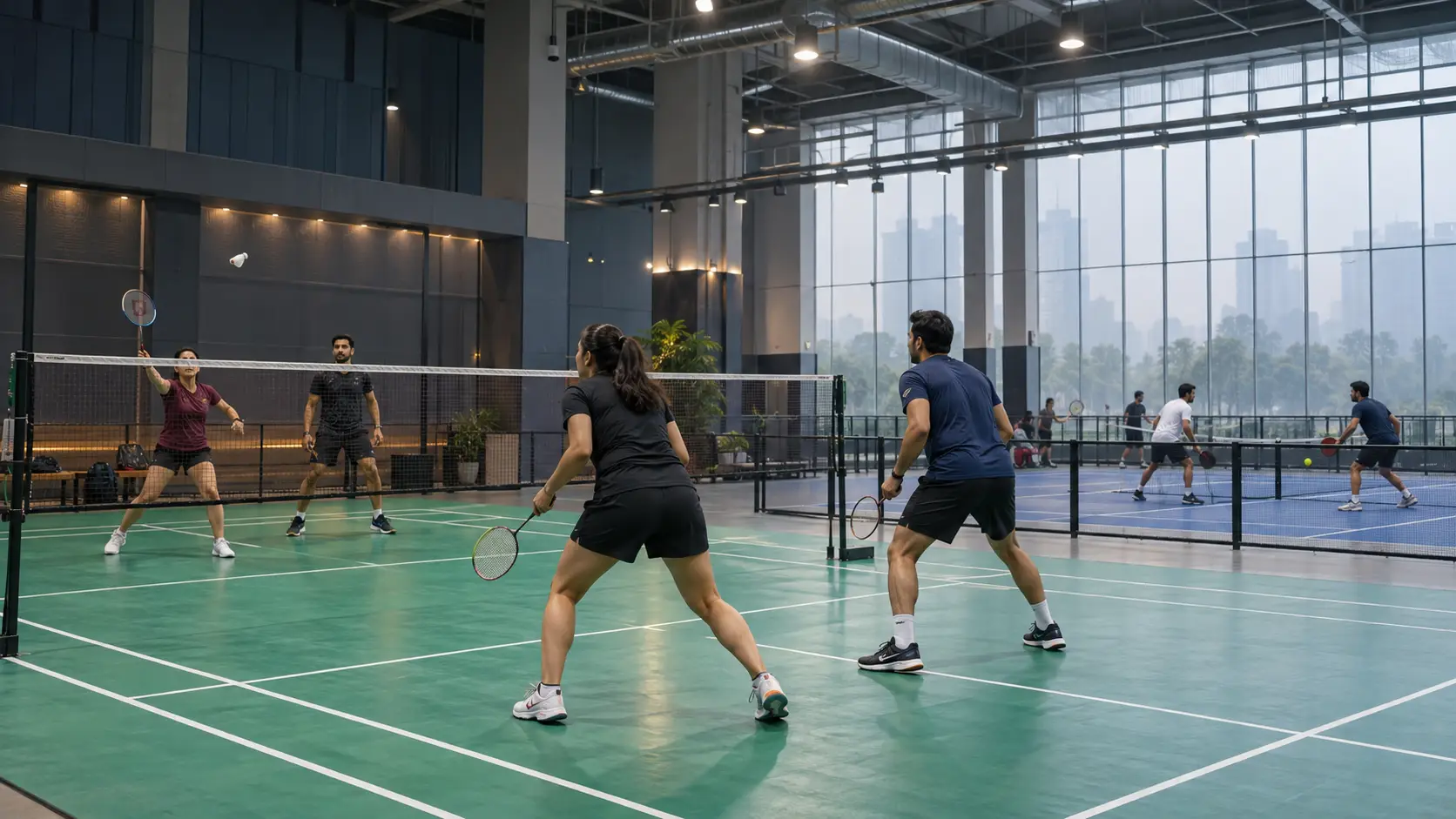
When most badminton players think about performance, they think about their racket, their technique, or their fitness. Very few think about the surface they are playing on — yet the court floor directly affects every step, lunge, jump, and landing in every rally.
The quality of a badminton court surface determines your traction during fast directional changes, the shock your joints absorb during smashes and lunges, your grip consistency during defensive scrambles, and your long-term injury risk over months and years of play.
For players, understanding court surfaces helps you choose better facilities and know when a court is genuinely safe to play on. For venue owners and facility managers, understanding surface types and maintenance is essential for providing a professional playing environment, protecting player safety, and preserving a significant infrastructure investment.
This complete guide covers every badminton court surface type used in India and globally, BWF standards for court flooring, detailed maintenance practices, common surface problems and how to fix them, and how to choose the right surface for your facility or playing needs.
Quick Overview: Badminton Court Surface Types at a Glance
1. Wooden flooring (maple-based) → Traditional, natural feel; moderate shock absorption; requires humidity control; common in multi-sport stadiums
2. PVC vinyl sports flooring → Professional standard; multi-layer cushioning; consistent traction; most widely used in competitive arenas
3. PU synthetic coated surface → Seamless; decent grip; mid-range facilities; lower cushioning than layered vinyl
4. Acrylic hard court → Common in multi-use sports halls; limited shock absorption; harder on joints over long sessions
5. Cement or concrete surface → Minimal shock absorption; highest joint stress; not recommended for competitive or regular training
Why Court Surface Matters in Badminton
Performance Impact
The surface you play on affects every technical element of your game:
Traction and grip — Correct friction allows explosive first steps, sharp directional changes, and stable lunges. Too little friction causes dangerous slipping. Too much friction causes the foot to stick, increasing ankle and knee strain during fast movements.
Shock absorption — During a competitive badminton session, players perform hundreds of lunges, jumps, and landings. A well-cushioned surface absorbs impact energy and reduces the cumulative stress transferred to ankles, knees, and hips. A hard surface with no cushioning transfers that energy directly to the joints — the effects accumulate over time.
Consistent bounce — Court surface affects the predictability of shuttle rebound during net play and low shots. Uneven or damaged surfaces create inconsistent shuttle behavior that disrupts timing and technique.
Movement efficiency — On a good surface, every step and push-off transfers cleanly into directional movement. On a worn or improperly maintained surface, energy is lost through slipping, dragging, or uneven footing — leading to slower movement and greater fatigue.
Injury Prevention
Playing on an appropriate, well-maintained surface is one of the most effective injury prevention measures available to any badminton player:
Ankle injuries — Most commonly caused by slipping during fast directional changes; proper surface friction reduces this risk significantly
Knee stress injuries — Repeated lunges on hard concrete or cement surfaces create chronic stress on patellar tendons and cartilage; cushioned surfaces reduce this load
Hip and lower back strain — Poor shock absorption travels up the kinetic chain; good surfaces protect more than just the feet and ankles
Fatigue-related errors — Playing on hard surfaces increases physical fatigue, which leads to technique breakdown and higher injury risk in later games
A high-quality badminton flooring system supports aggressive, high-intensity movement without compromising player safety — session after session.
Common Badminton Court Surface Types: Detailed Breakdown
1. Wooden Flooring (Maple-Based)
Wooden courts — most commonly constructed from hard maple — have been the traditional standard for indoor badminton and multi-sport facilities for decades. They offer a natural, responsive feel that many experienced players prefer.
Characteristics:
Moderate shock absorption through natural wood flex
Consistent surface texture when properly finished and sealed
Natural aesthetic, commonly seen in multi-sport indoor stadiums
Moderate traction depending on finish coat quality and maintenance
Advantages:
Durable and long-lasting when properly maintained
Natural playing feel preferred by many competitive players
Suitable for multi-sport use alongside basketball, volleyball, and indoor tennis
Disadvantages:
Requires regular polishing, sealing, and humidity control to prevent warping
Susceptible to expansion and contraction with humidity changes — a significant factor in India's varied climate
Higher initial installation cost compared to vinyl options
Surface traction can degrade significantly if polishing schedule lapses
Best suited for: Multi-sport indoor stadiums, school gymnasiums, and facilities with controlled climate systems.
2. PVC Vinyl Sports Flooring
PVC layered vinyl flooring is the current professional standard for dedicated badminton arenas globally and is the most widely used surface in competitive badminton facilities across India. It is the surface type used at most Rackonnect venues.
Characteristics:
Multi-layer construction: wear layer, performance layer, foam cushioning layer, and backing
Anti-skid surface texture engineered for consistent friction
Available in rolls or interlocking tiles
Specifically engineered for badminton and indoor racket sports
Advantages:
Superior shock absorption compared to wood or synthetic coatings
Highly consistent traction across the entire surface
Lower maintenance requirements than wood
Resistant to humidity changes — does not warp or expand
BWF-approved variants available for tournament use
Longer lifespan with appropriate daily maintenance
Disadvantages:
Higher quality systems require significant upfront investment
Seams in roll-based systems require periodic inspection and repair
Quality varies significantly between budget and professional-grade products
Best suited for: Dedicated badminton arenas, competitive training facilities, and venues hosting tournaments. This is the recommended surface type for any facility serious about player performance and safety.
3. PU Synthetic Coated Surface
Polyurethane-coated floors are seamless surfaces applied directly over a concrete or cement base. They are commonly found in mid-range facilities and school sports halls.
Characteristics:
Seamless — no joints or edges to lift or separate
Applied as a liquid coating that cures to a hard, slightly textured finish
Available in various thickness levels affecting cushioning quality
Advantages:
Seamless surface eliminates tripping hazards from edges or seams
Lower installation cost than layered vinyl or wood
Easy to clean and maintain daily
Customizable color and line marking
Disadvantages:
Significantly less shock absorption than layered vinyl systems — the cushioning is limited by coating thickness
Hard underbase means joint impact is higher than on wood or vinyl
Surface can become slippery when wet or worn
Difficult to repair sections — damaged areas often require full recoating
Best suited for: Mid-range multi-use facilities, community sports centers, and school sports halls where budget constraints limit vinyl installation.
4. Acrylic Hard Court
Acrylic surfaces — similar to those used on outdoor tennis courts — are occasionally found in multi-use indoor sports halls that also host badminton.
Characteristics:
Hard, rigid surface with minimal cushioning
Consistent texture when new, but tends to wear unevenly
Available in various color options
Advantages:
Low installation cost
Durable in low-maintenance environments
Suitable for multi-sport use
Disadvantages:
Very limited shock absorption — significantly harder on joints than vinyl or wood
Surface friction can be inconsistent, especially when worn
Not designed specifically for badminton movement patterns
Higher fatigue and injury risk during extended play sessions
Best suited for: Multi-use facilities where badminton is one of many sports, not the primary use.
5. Cement or Concrete Surface
Cement and concrete courts are found in community halls, temporary setups, and older facilities. They are the lowest-quality option for badminton play.
Characteristics:
Rigid, zero-cushioning surface
No designed friction management
Minimal installation cost
Advantages:
Very low installation and maintenance cost
Durable without upkeep
Disadvantages:
Provides no shock absorption — all impact energy transfers directly to joints
Highest injury risk of any badminton surface type
Inconsistent friction — can be dangerously slippery in humid conditions
Not suitable for competitive play or regular high-intensity training
Best suited for: Casual, infrequent recreational play only. Not recommended for any serious training or competitive use.
Badminton Court Surface Comparison
Shock Absorption (best to worst)
1. PVC Vinyl (layered) — Superior multi-layer cushioning; best joint protection
2. Wooden flooring — Moderate natural flex; decent impact reduction
3. PU synthetic coated — Limited; depends on coating thickness
4. Acrylic hard court — Minimal; hard underbase limits cushioning
5. Cement/concrete — None; all impact transfers to joints
Traction Consistency (best to worst)
1. PVC Vinyl — Anti-skid surface engineered for consistent grip
2. PU synthetic — Good when new; degrades with wear
3. Wooden flooring — Moderate; highly dependent on maintenance quality
4. Acrylic — Inconsistent, especially when worn
5. Cement — Unpredictable; dangerous when wet
Maintenance Requirements (lowest to highest)
1. Cement — Minimal; but compromises safety entirely
2. PVC Vinyl — Regular cleaning; periodic seam inspection
3. PU synthetic — Regular cleaning; eventual recoating required
4. Acrylic — Regular cleaning; resurfacing required periodically
5. Wooden flooring — Most demanding; requires polishing, sealing, and humidity control
Long-Term Cost (lowest to highest)
1. Cement — Lowest upfront; highest player cost through injury risk
2. PU synthetic — Moderate upfront; periodic recoating expense
3. Acrylic — Moderate; resurfacing costs accumulate
4. PVC Vinyl — Higher upfront; lower ongoing maintenance
5. Wooden flooring — Highest total cost including ongoing maintenance
BWF Recommended Court Standards
The Badminton World Federation (BWF) sets international standards for badminton court flooring used in sanctioned competition. Understanding these standards helps both players and facility owners identify genuinely professional playing surfaces.
BWF flooring requirements include:
Surface must be flat, level, and free from unevenness across the entire court area
Non-slippery surface with uniform friction — no high or low friction patches
Adequate shock absorption to reduce injury risk during competitive play
Surface must support proper lighting reflection without creating glare for players
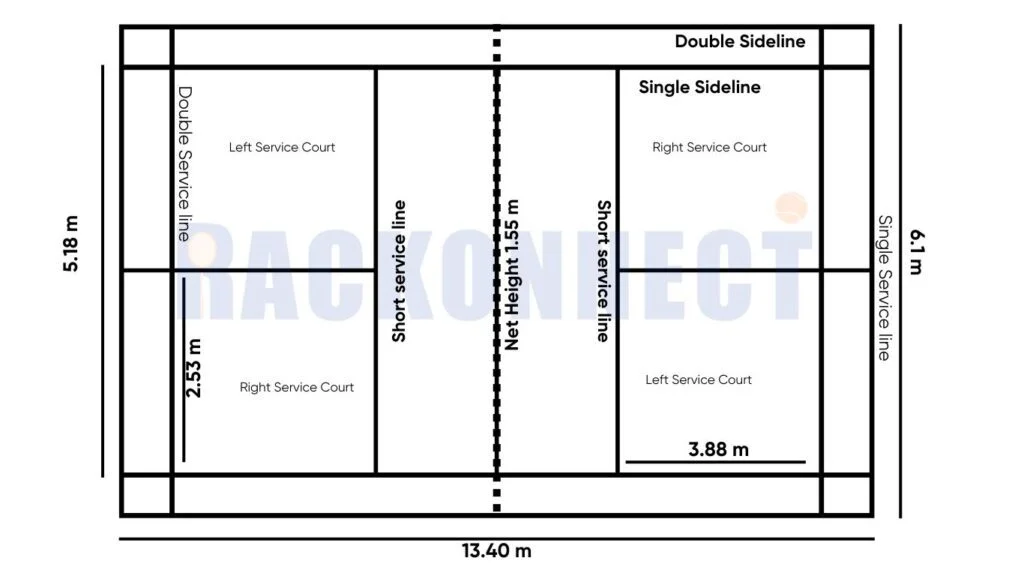
Court lines must be clearly visible and accurately measured to BWF specifications
For tournaments and sanctioned events, only approved PVC vinyl surfaces or approved wooden flooring systems qualify. Cement, basic acrylic, and PU coating surfaces do not meet BWF competitive standards.
🏸 All Rackonnect venues are equipped with professional-grade court surfaces. Find a venue near you and experience the difference quality flooring makes to your game:
Daily Badminton Court Maintenance
Consistent daily maintenance is what keeps a professional surface performing at its best and extends its usable lifespan significantly.
Daily maintenance checklist:
Sweep or dry mop the entire surface before and after every session — dust, sand, and grit particles act as abrasives that damage surface texture over time
Clean sweat patches immediately — sweat creates slippery patches that are dangerous mid-rally and degrades surface finish if left to dry
Inspect the surface visually before each session for visible damage, peeling edges, or lifted seams
Check and clean the net posts and verify court line visibility
Ventilate the facility after sessions to prevent moisture buildup on the surface
Dust and debris buildup is one of the fastest ways to reduce surface grip — even on a new, professional-grade PVC vinyl court.
Weekly and Monthly Maintenance Practices
Weekly Maintenance
Deep clean using non-abrasive, pH-neutral cleaning solutions — avoid harsh chemicals that strip surface coatings or damage vinyl layers
Inspect vinyl seams or wooden floor joints for lifting, separation, or bubbling — address immediately before they expand
Check for surface bubbling in vinyl courts — caused by moisture beneath the surface layer; requires professional assessment if widespread
Clean and inspect net posts and support hardware for wear or instability
Monthly Maintenance
Monitor and record indoor humidity levels — ideal range for badminton courts is 40–60% relative humidity; outside this range, wooden floors expand or contract and vinyl adhesion can weaken
Inspect lighting systems for adequate and even court illumination — poor lighting affects player performance and safety
Assess overall surface wear patterns — high-traffic areas near the net and rear service lines wear faster and may need targeted attention
Professional floor treatment for wooden courts — buffing and resealing maintains traction and prevents surface degradation
Common Court Surface Problems and Solutions
Problem 1: Slippery Patches
Cause: Moisture on the surface, sweat accumulation, worn surface coating, or cleaning product residue.
Solution: Identify the specific cause. For moisture — improve ventilation and wipe down surfaces during breaks. For worn coating — professional resurfacing or replacement. For cleaning residue — switch to recommended pH-neutral products and rinse thoroughly after cleaning.
Problem 2: Bubbling in Vinyl Flooring
Cause: Moisture trapped beneath the vinyl layer, poor initial installation, or adhesive failure in high-humidity environments.
Solution: Small bubbles can sometimes be re-adhered using specialized vinyl adhesive by a professional. Widespread bubbling typically requires section replacement. Never play on a surface with significant bubbling — it creates uneven footing and fall risk.
Problem 3: Wood Expansion and Warping
Cause: Humidity fluctuations — particularly in Indian climates with significant seasonal humidity variation — cause wooden floors to expand, contract, and eventually warp if not managed.
Solution: Install and maintain a proper climate control system (dehumidifier in monsoon season, controlled ventilation year-round). Monitor humidity weekly and keep within the 40–60% range. Regular sealing reduces moisture absorption.
Problem 4: Lifted or Separated Surface Edges
Cause: Edge adhesive failure, foot traffic at boundaries, or improper initial installation.
Solution: Re-adhere immediately using appropriate flooring adhesive. Lifted edges are a serious trip hazard — never allow play on a court with visibly raised edges until repaired.
Problem 5: Uneven Surface Areas
Cause: Subsurface settlement, poor installation, or structural issues in the underlying base.
Solution: Requires professional assessment. Uneven playing surfaces affect shuttle bounce unpredictably and create ankle and fall risk — address before resuming competitive play.
How Climate Affects Badminton Court Flooring in India
India's climate presents specific challenges for badminton court maintenance that differ from conditions in Europe or East Asia:
Monsoon season (June–September): Humidity levels can reach 80–90% in many cities. Wooden floors are particularly vulnerable during this period — expansion, warping, and surface lifting are common if humidity is not actively managed. PVC vinyl is significantly more resilient but still requires good ventilation.
Summer heat (April–June): Extreme temperatures can affect vinyl elasticity and adhesive bonding in poorly ventilated facilities. Adequate cooling and ventilation are essential during peak summer months.
Year-round humidity variation: Facilities in coastal cities or regions with high ambient humidity require more active climate management than those in drier northern cities. Delhi NCR venues, for example, face significant humidity variation across seasons.
Recommended climate management:
Dehumidifier systems during monsoon months
Air conditioning or ventilation during summer months
Consistent humidity monitoring with a digital hygrometer
Post-session ventilation to clear moisture from the playing area
How to Choose the Right Court Surface for Your Facility
If you are a venue owner or facility manager planning a new badminton court installation or renovation, consider these factors carefully:
1. Primary use of the facility A dedicated badminton-only arena justifies investment in professional-grade PVC vinyl. A multi-sport facility may choose wood or high-quality PU coating as a compromise.
2. Player skill level and session intensity Competitive training facilities and tournament venues require the best shock absorption available — PVC vinyl is the only appropriate choice. Recreational-only facilities may manage with quality PU coating.
3. Budget: upfront vs long-term Cement and basic coatings have low upfront costs but create long-term costs through player injuries, player loss, and eventual replacement. PVC vinyl has higher upfront cost but lower ongoing maintenance and significantly better player retention.
4. Climate conditions at your location High-humidity locations should avoid wood or invest heavily in climate control if wood is chosen. PVC vinyl is the lowest-risk choice for any location in India.
5. Maintenance capacity Wood requires the most maintenance commitment. If your facility does not have the resources to maintain wood properly, PVC vinyl is the better long-term choice.
How Players Can Identify a Quality Badminton Court
Before booking or committing to a venue, players can assess court quality quickly:
Walk across the surface — it should feel uniformly cushioned with no hard or hollow spots
Check for visible damage — no cracks, lifted edges, bubbling, or uneven patches
Test traction — shuffle your feet in different directions; grip should be consistent with no slippery or sticky areas
Look at the court lines — clear, accurately marked lines indicate a well-maintained facility
Check ventilation — poor airflow leads to moisture buildup and surface degradation over time
Observe surface cleanliness — a dusty or dirty court has reduced grip and reflects poor maintenance standards overall
💡 Looking for a well-maintained professional badminton facility near you? Rackonnect operates premium venues across Delhi NCR and North India with professional-grade court surfaces:
Frequently Asked Questions (FAQ)
Q: What is the best badminton court surface type for competitive play? Professional-grade PVC vinyl layered flooring is the best surface for competitive badminton. It provides the most consistent traction, the best shock absorption, and the most durable performance over time. It is the surface of choice for BWF-sanctioned tournaments and elite training facilities worldwide.
Q: Is wooden flooring good for badminton courts? Yes — well-maintained wooden flooring, particularly hard maple, is a good surface for badminton. It offers a natural playing feel and moderate shock absorption. However, it requires significantly more maintenance than PVC vinyl, is susceptible to humidity-related warping, and has higher long-term maintenance costs.
Q: Why is concrete not suitable for badminton? Concrete provides zero shock absorption — all impact from lunges, jumps, and landings transfers directly to your joints. Playing regularly on concrete surfaces significantly increases the risk of ankle injuries, knee stress injuries, and chronic joint problems over time. It is suitable only for very occasional, casual play.
Q: How often should badminton court surfaces be replaced? PVC vinyl surfaces in well-maintained, high-usage facilities typically last 8–12 years before replacement is needed. Wooden floors can last significantly longer with proper maintenance. PU coatings typically require recoating every 3–5 years depending on usage intensity.
Q: What humidity level is ideal for an indoor badminton court? The ideal indoor humidity range for badminton facilities is 40–60% relative humidity. Below 40%, wooden floors can dry out and crack. Above 60%, moisture accumulation increases slip risk on all surfaces and causes wooden floors to expand and warp.
Q: How do I fix a slippery badminton court? First identify the cause — moisture, worn surface coating, or cleaning product residue. For moisture-related slipperiness, improve ventilation and wipe down the surface during session breaks. For worn coating, professional resurfacing is required. Never use wax or general-purpose floor polish on badminton courts — these create dangerous slip conditions.
Q: Can I play badminton on a PU synthetic court? Yes — PU synthetic surfaces are suitable for badminton play, particularly at recreational and intermediate levels. They have limitations in shock absorption compared to layered vinyl, so players who train intensively for long sessions may experience more joint fatigue over time than on higher-quality surfaces.
Conclusion: Surface Quality Is a Player Safety Investment
Badminton court surface types and maintenance are not administrative details — they are direct determinants of player safety, performance quality, and long-term facility value.
For players, choosing a venue with a quality, well-maintained surface is one of the most impactful decisions you can make for your game and your physical health. The difference between playing on professional PVC vinyl and playing on worn cement is felt in every session — and accumulates over years of training.
For venue owners and facility managers, investing in the right surface and maintaining it properly is not a cost — it is a commitment to every player who walks through your doors, and a foundation for the reputation your facility builds over time.
Experience professional-grade courts at a Rackonnect venue near you: