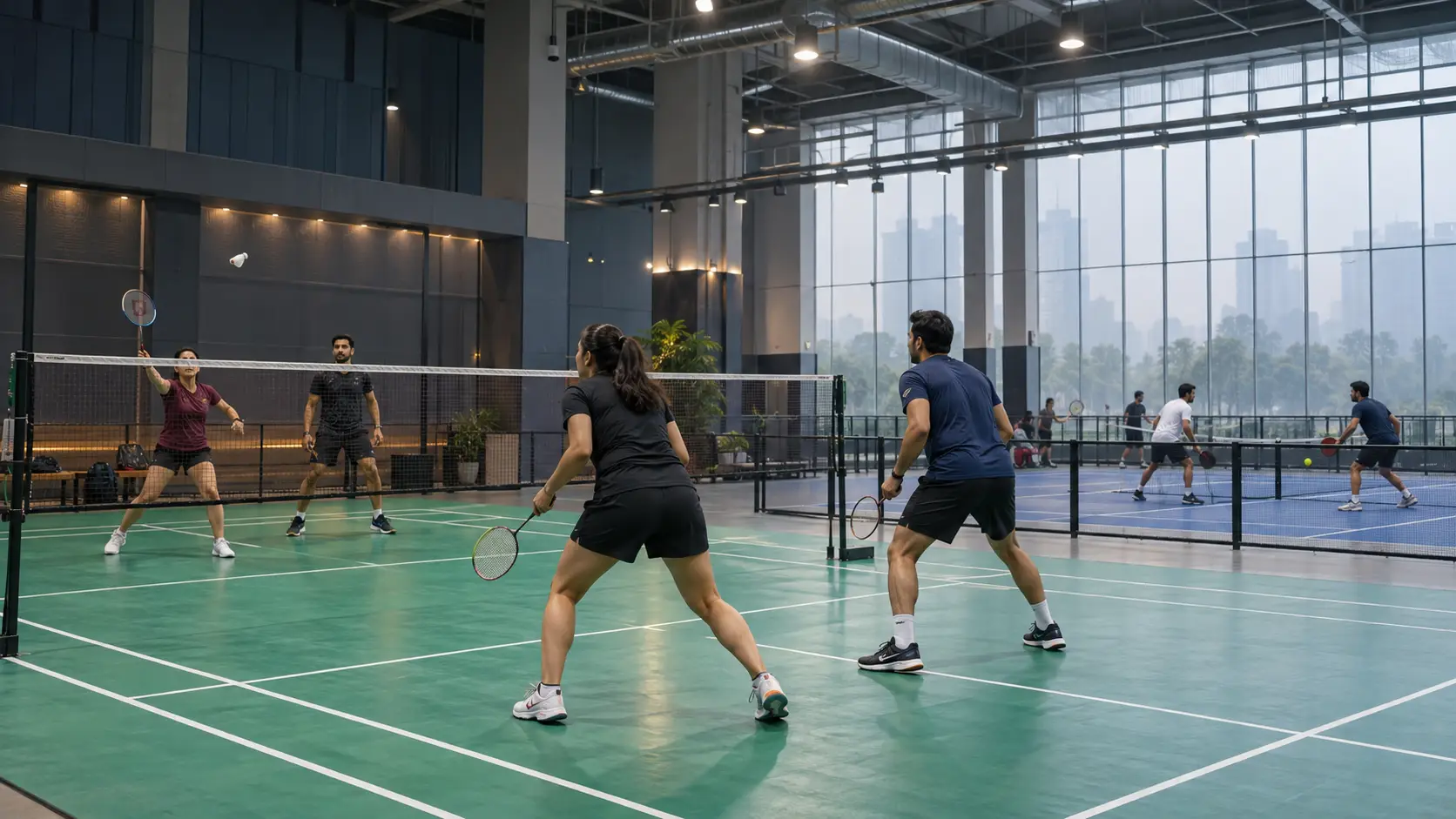

The gym has long been considered the default answer for anyone serious about fitness. But for a growing number of people, the question is not whether to exercise - it is whether the gym is actually the best way to do it. Badminton is increasingly being recognised not as a casual recreational activity but as a serious, high-performance fitness tool that delivers cardiovascular benefits, full-body strength development, calorie burning, and mental health improvements that rival or exceed what most gym programmes offer. So which is actually better for you - badminton or the gym? The honest answer depends on your goals, your personality, and what kind of exercise you will actually sustain long term. This guide breaks down both options clearly so you can make the right choice.
The Core Difference Between Badminton and the Gym
The fundamental difference between badminton and gym training is not about which burns more calories or builds more muscle in isolation - it is about the nature of the physical demand and how that demand is experienced by the person doing it. The gym offers structured, controlled, progressive resistance training combined with whatever cardiovascular equipment you choose to use. It is systematic, measurable, and completely customisable to your goals. Badminton offers dynamic, reactive, full-body physical effort embedded in a competitive and social activity. The physical demand is real and significant - but it is driven by the game rather than by a programme you consciously follow.
Both approaches can produce excellent fitness results. The one that produces better results for you is the one you will actually do consistently - week after week, month after month. And that is ultimately a question of which type of exercise you genuinely enjoy and can sustain as a habit.
Badminton as a Full-Body Workout
One of the most compelling arguments for badminton as a fitness tool is the breadth of physical qualities it develops simultaneously. A single badminton session trains your cardiovascular system, your lower body muscles through constant sprinting and lunging, your upper body through smashes and overhead strokes, your core through the postural demands of every stroke and movement, and your neuromuscular system through the constant requirement to react, adjust, and coordinate complex movements at high speed.
A typical badminton session at moderate competitive intensity burns over 450 calories per hour - and at higher intensities can exceed 550 calories. Even at a lower recreational intensity, a one-hour session burns over 310 calories while developing physical qualities that purely cardiovascular gym work does not address. The dynamic movements involved - explosive jumps, wide lateral lunges, rapid directional changes, and overhead smashing - are fundamentally different from the linear, controlled movements of most gym exercises, and they develop different physical qualities: agility, coordination, reactive speed, and proprioception.
Badminton Delivers HIIT-Level Intensity Naturally
High-Intensity Interval Training - HIIT - has become one of the most popular fitness methodologies in the world, valued for its ability to burn significant calories in short periods and produce cardiovascular adaptations more efficiently than steady-state cardio. What most people do not realise is that competitive badminton naturally replicates the physiological pattern of HIIT without requiring a structured programme or the mental effort of pushing yourself through deliberately intense intervals.
Every rally in badminton is a burst of high-intensity effort - explosive sprinting, jumping, and striking - followed by a brief recovery period between points. This stop-start pattern of maximum effort and partial recovery is precisely the stimulus that makes HIIT so effective for cardiovascular improvement and calorie burning. In badminton, this pattern is generated naturally by the demands of the game rather than by willpower, making it far easier to sustain at the required intensity for a full hour than a structured HIIT session on a treadmill or in a fitness class.
Shuttlecocks in competitive play can reach speeds of up to 493 km/h - making badminton one of the fastest racket sports in the world. Reacting to and tracking these speeds requires reflexes, decision-making speed, and concentration that constitute a genuine cognitive workout alongside the physical one. The mental engagement required by competitive badminton is one of the key factors that distinguishes it from gym training, where the cognitive demand is minimal and boredom is a genuine barrier to consistent participation.
Heart Health - How Badminton Compares to Gym Cardio
The cardiovascular benefits of regular badminton play are well-documented and significant. Playing badminton consistently strengthens the heart muscle itself, improving its efficiency and its ability to pump blood across the full body with less effort. Over time, regular players typically see reductions in resting heart rate and blood pressure - two of the most important markers of cardiovascular health.
At the cholesterol level, regular aerobic exercise like badminton is associated with increases in HDL cholesterol - the protective variety that reduces cardiovascular risk - and reductions in LDL and VLDL cholesterol, the varieties associated with plaque formation and increased risk of heart disease, heart attacks, and strokes. These are the same cholesterol-related benefits that gym-based cardiovascular training produces, but badminton delivers them through an activity that most people find far more enjoyable and therefore more sustainable.
For people whose primary fitness goal is cardiovascular health rather than maximum muscle mass or specific strength targets, badminton is a genuinely competitive alternative to gym-based cardio - and for many people it is the superior option simply because they will actually do it consistently.
Mental Health and Motivation - Where Badminton Has a Clear Advantage
One of the most significant practical advantages badminton has over gym training is its impact on motivation and mental health. Gym training, for all its physical effectiveness, is experienced by many people as monotonous, isolating, and psychologically difficult to sustain. The intrinsic motivation required to show up, complete your programme, and push yourself sufficiently hard depletes over time without external reinforcement. This is why gym membership abandonment rates are among the highest of any consumer service.
Badminton solves the motivation problem structurally. The competitive dynamic of a rally - the desire to win the point, to execute the shot perfectly, to outsmart your opponent - generates intrinsic motivation that keeps intensity high naturally. Winning a rally releases dopamine, the brain's reward chemical, creating a positive reinforcement loop that makes you want to come back and play again. The social element of the sport - playing with regular partners, being part of a club or group, the camaraderie of shared competition - provides social connection and accountability that solo gym training cannot replicate.
Badminton also delivers significant stress relief through the release of endorphins during physical activity, combined with the absorbing, mindful quality of a competitive rally that naturally clears mental clutter. For people dealing with stress, anxiety, or low mood, the combination of physical exertion, social engagement, and competitive focus that badminton provides is one of the most effective non-clinical interventions available.
Where the Gym Has a Clear Advantage
Badminton is an outstanding fitness tool, but there are specific fitness goals where structured gym training has clear advantages that badminton alone cannot fully replicate.
If your primary goal is building maximum muscle mass and developing specific strength - particularly in the upper body - progressive resistance training in a gym provides stimuli that badminton simply does not. Compound lifting movements like squats, deadlifts, bench press, and overhead press, performed with progressive overload over months and years, produce muscle hypertrophy and strength gains that no racket sport can match in specificity or volume. For people whose aesthetic or performance goals centre on muscle building, the gym is essential.
The gym also offers complete control over the specific physical qualities you are training at any given time. If you are rehabilitating an injury and need to isolate specific muscle groups, or if you are training for a sport that has very specific physical requirements, the precision and structure of gym-based programming provides customisation that open sport cannot.
For people who genuinely enjoy the gym environment - who find satisfaction in the systematic progression of a structured programme, who enjoy the solo focus of lifting, or who prefer training at times that do not require coordinating with a partner or finding a court - the gym is the obviously correct choice.
Badminton or Gym - Which Is Right for You?
The honest answer is that the best workout is the one you will actually do consistently over months and years. No fitness activity produces results if it is abandoned after three weeks because it is boring, inconvenient, or unmotivating. The question to ask is not which is objectively superior in a laboratory study - it is which you will genuinely sustain as a habit.
Choose badminton if you want a full-body cardiovascular workout that is socially engaging, mentally stimulating, and naturally motivating. If you have struggled to maintain gym habits in the past, find cardio machines monotonous, prefer competitive activity over solo training, or want an exercise option that also develops coordination, agility, and sport-specific skill - badminton is very likely the better fit for your personality and your long-term fitness goals.
Choose the gym - or combine both - if your goals include specific muscle building or strength targets, if you have injury rehabilitation requirements that need structured isolation exercises, or if you genuinely enjoy the systematic, controlled environment of programmed resistance training. Many serious badminton players supplement their court sessions with targeted gym work to address physical qualities - particularly upper body strength and injury prevention conditioning - that badminton alone does not fully develop.
If you are still undecided, try both consistently for four to six weeks and evaluate which produces better results for your specific goals and which you are more likely to maintain as a long-term habit. For most people who try badminton seriously for the first time, the combination of physical intensity, skill development, social enjoyment, and competitive motivation makes it far more sustainable than they initially expected.
How to Get Started with Badminton as Your Fitness Workout
Getting started with badminton as a fitness tool is genuinely simple. You need a racket, shuttlecocks, appropriate badminton shoes, and access to a court. Entry-level equipment from reputable brands is inexpensive, and court hire at most badminton facilities is accessible and affordable. Unlike gym membership, you do not need ongoing access to expensive machines or equipment - just a court and a partner.
Start at a comfortable intensity and focus on learning basic strokes, footwork, and positioning before worrying about competitive performance. Two sessions per week is enough to start experiencing fitness benefits within the first two to three weeks. As your skills and fitness develop simultaneously - which they will - naturally increase session frequency and intensity. Set small, achievable goals in the early weeks - completing a full session without significant fatigue, winning your first rally, executing your first clean smash - and build from there.
Consistency, as always, is everything. Two sessions of badminton per week, sustained over three months, will produce fitness results that most people who have spent years in occasional gym attendance have never achieved.
Frequently Asked Questions - Badminton vs Gym
Is badminton better than the gym for weight loss?
For many people, yes - badminton is more effective than the gym for weight loss in practice, even if the gym is theoretically comparable in caloric expenditure. The reason is sustainability. Badminton is enjoyable, socially engaging, and competitively motivating in ways that gym cardio typically is not. People play badminton consistently because they want to, not solely because they feel they should. Consistent activity over months is what produces meaningful weight loss - and badminton's natural motivational structure makes long-term consistency far easier to achieve than most gym programmes.
How many calories does badminton burn compared to the gym?
A competitive badminton session burns between 450 and 550 calories per hour, which is comparable to or higher than most moderate gym sessions. HIIT-style gym training can burn similar or slightly higher amounts in specific protocols, but sustaining maximum intensity throughout a structured HIIT session is significantly harder than maintaining high intensity during a competitive badminton rally where the game drives the effort naturally.
Can badminton replace the gym entirely?
For cardiovascular fitness, weight management, full-body conditioning, flexibility, agility, and mental health, badminton can serve as a primary fitness activity without gym supplementation for most non-specialist fitness goals. For people with specific muscle building or maximum strength targets, incorporating some gym training alongside badminton will produce better results than either activity alone. Many competitive badminton players combine both for this reason.
Is badminton good for people who hate the gym?
Badminton is one of the best fitness alternatives for people who find the gym environment boring, uninspiring, or difficult to sustain. The competitive, social, and skill-development dimensions of the sport provide natural motivation that gym training lacks for many people, making it far easier to maintain the consistency that actual fitness improvement requires.
How often should I play badminton for fitness benefits?
Two to three sessions per week of 45 to 60 minutes each is sufficient to produce meaningful cardiovascular fitness improvement, weight management benefits, and skill development. This frequency is also sustainable as a long-term habit for most people with normal work and life schedules. As fitness and skill improve, increasing session frequency or intensity produces progressively greater benefits.
The badminton vs gym debate does not have a single right answer for every person - but for most people whose primary goals are cardiovascular fitness, weight management, full-body conditioning, and long-term enjoyment of physical activity, badminton offers a more compelling, sustainable, and genuinely enjoyable path to those goals than a conventional gym routine. It burns serious calories, builds real fitness, sharpens your mind, and gives you something to get better at every time you step on the court. The best workout is always the one you will keep doing. For a great many people, that workout is badminton.