Introduction: Why Communication Is the Hidden Skill in Doubles Badminton
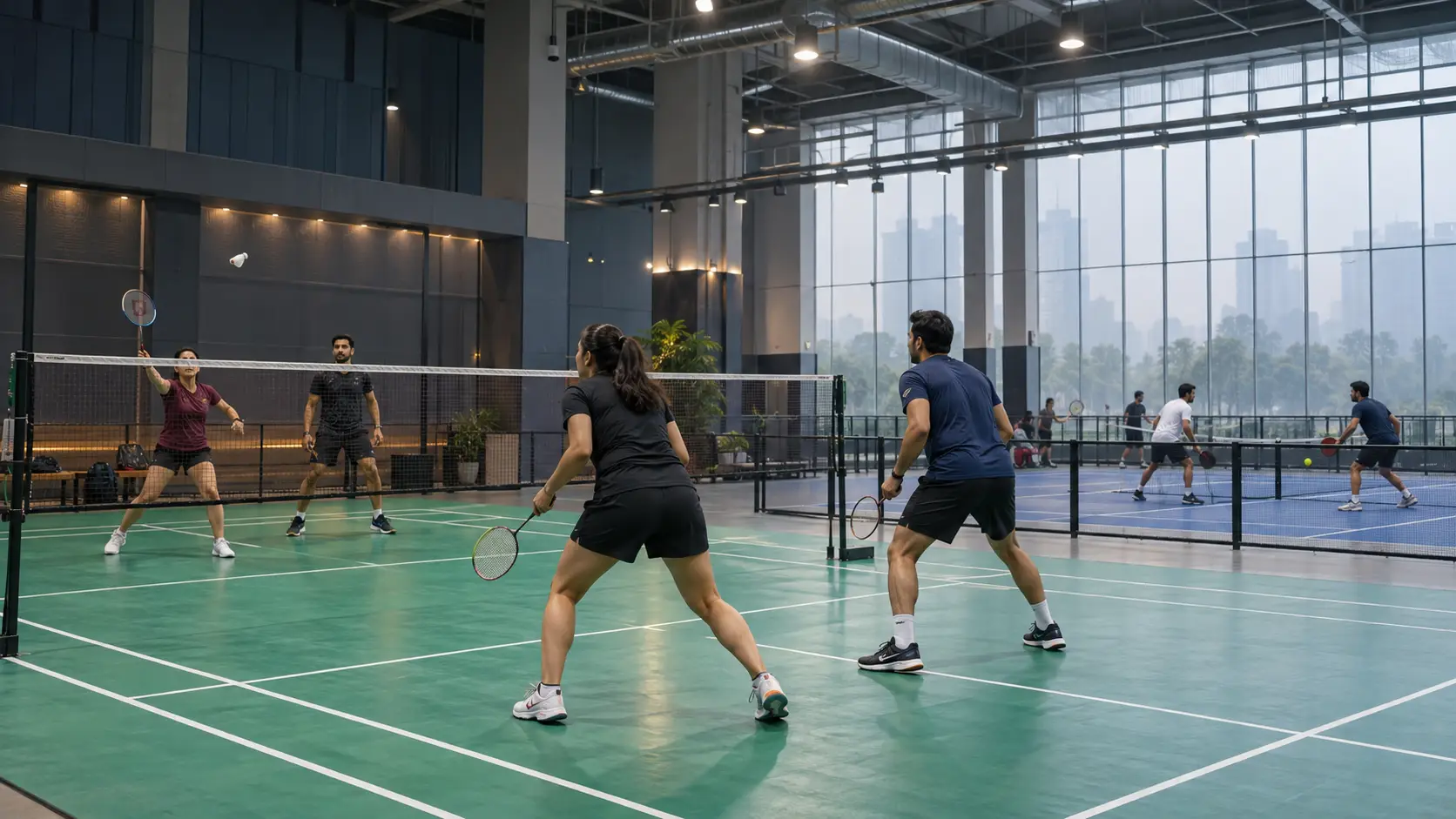
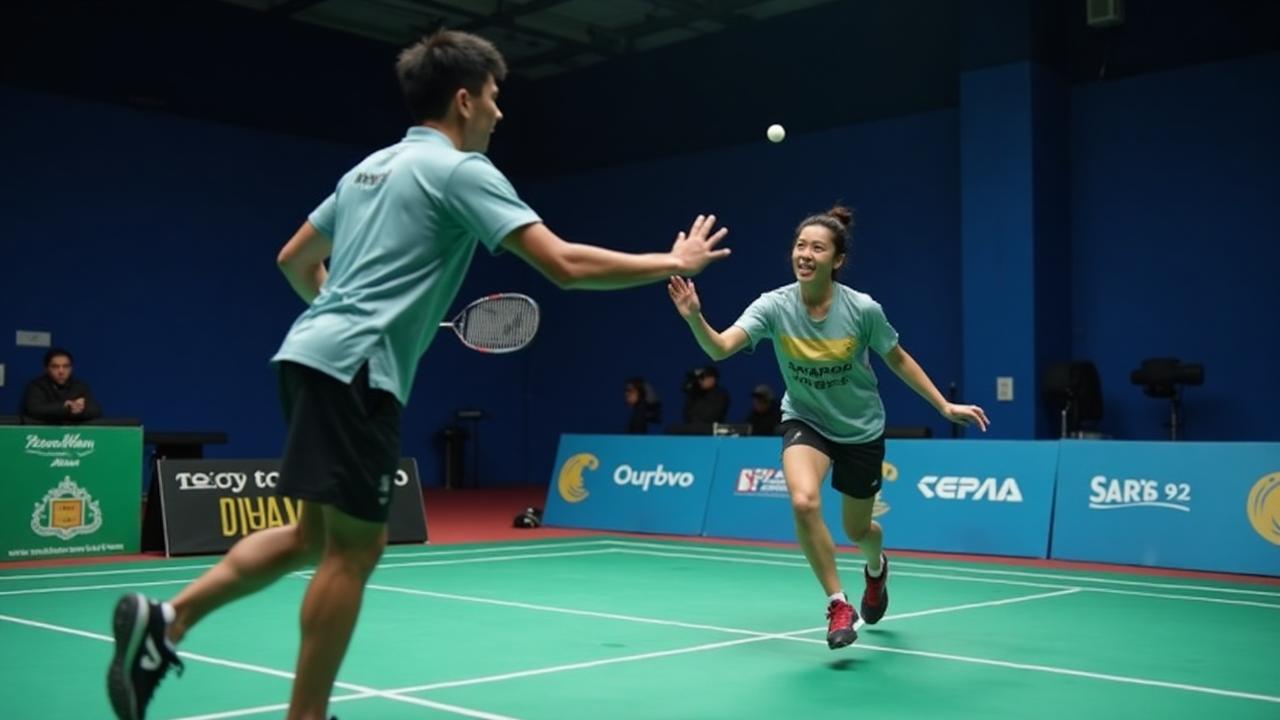
Doubles badminton is not simply two singles players sharing a court. It is a coordinated partnership built on timing, positioning, trust - and most importantly, communication. The best doubles pairs in the world are not always the two most technically gifted players available. They are the two players who function most effectively as a single unit.
Strong badminton partner communication in doubles directly influences shot selection, defensive coverage, rotation speed, and mental stability during pressure situations. A technically superior pair that hesitates on mid-court calls, blames each other after errors, or fails to rotate in sync will consistently lose to a well-coordinated, communicating pair of lower individual ability.
Whether you play recreationally at your local club in Delhi or compete in structured tournaments across North India, teams that communicate effectively outperform technically stronger but poorly coordinated pairs - in almost every match, at every level.
This complete guide covers everything you need to build elite-level doubles communication - from verbal and non-verbal cues to rotation signals, pressure-point composure, role clarity, practice drills, and a structured development plan.
Quick Overview: What This Guide Covers
1. Why communication matters more in doubles than singles → Tactical coordination, psychological stability, hesitation costs
2. Types of communication in badminton doubles → Verbal, non-verbal, and between-rally tactical discussion
3. Pre-match communication strategy → What to agree before the first rally
4. On-court communication during rallies → Calling the shuttle, rotation signals, net play coordination
5. Communication under pressure → Match points, deuce situations, emotional management
6. Common communication mistakes to avoid → Silence, blaming, over-communicating, ignoring adjustments
7. Body language and court awareness → How posture, gestures, and reset behaviour affect partnership
8. Partner compatibility and role clarity → How to define roles and adapt to new partners
9. Practice drills to improve doubles communication → Shadow rotation, communication-only rallies, serve strategy drills
10. Psychological impact of strong doubles communication → Anxiety reduction, tactical consistency, match resilience
Why Communication Matters More in Doubles
In singles badminton, every decision is independent. You read the shuttle, choose your shot, move to position, and recover - all under your own control. If you make a mistake, it is entirely yours to analyse and correct.
In doubles, decision-making is shared - and shared decisions create the possibility of conflict, confusion, and hesitation. The shuttle comes down the middle between two partners at high speed. Both move toward it. Neither calls. They collide, or both pull out, and the shuttle drops to the floor untouched.
This scenario happens at every level of doubles play - from beginner club nights to national competitions. It happens not because players lack technical ability, but because they lack communication habit.
Tactical Coordination
Effective communication enables smooth front-and-back court rotation during attack, seamless side-by-side defensive positioning when under pressure, and quick transitions from defensive lift to counter-attack without hesitation. Without communication, these transitions are slow, uncertain, and exploitable by opponents who read the confusion.
Clear calling prevents two specific disasters:
Both players going for the same shuttle - wasted energy, potential collision, disrupted formation
Neither player going for a shuttle both assumed the other would take - free point handed to the opposition
Psychological Stability
Communication is not only tactical - it is deeply psychological. Doubles partnerships under pressure either reinforce each other or erode each other. The difference is almost entirely determined by how partners communicate after errors, during tight scorelines, and in the final points of close games.
Partners who communicate positively experience reduced frustration after errors, maintained trust during long defensive rallies, and composure at match-deciding moments. Partners who fall silent or respond negatively compound individual errors into team collapses - losing three or four consecutive points from a single mistake that good communication would have stopped at one.
Types of Communication in Badminton Doubles
1. Verbal Communication
Verbal communication is the most direct and unambiguous form of doubles signalling. Used correctly, it eliminates hesitation entirely.
"Mine" - The most important call in doubles. Said clearly and early when you are taking a mid-court or central shuttle. Said early enough that your partner can redirect their movement before committing.
"Leave" - Called when the shuttle is clearly going out of bounds or when your partner is better positioned. Early calling allows your partner to hold position rather than committing to a shot.
"Switch" - Called after a smash or attacking shot when the hitting player needs to move forward and the partner needs to cover the rear court. Smooth rotation depends on this signal being given immediately after contact, not after the shuttle has already been returned.
"Yours" / "Take it" - Positive confirmation that your partner should take the next shuttle - particularly useful when you are out of position or recovering.
Service cues - Before important serve moments, a brief verbal confirmation of serve type and intended placement ("short to the body" or "high left") aligns both partners' anticipation for the return.
Key principle: Verbal calls must be early and clear - shouted after both players have already committed is worse than no call at all. The call must arrive before either player commits to the shuttle.
2. Non-Verbal Communication
Non-verbal communication conveys tactical information without alerting opponents - essential for signalling serve placement or tactical plans between rallies.
Hand signals behind the back - Used by the server to signal serve type to the partner standing at the net. Common signals include one finger for short serve, two fingers for flick serve, closed fist for drive serve. Both partners must agree and practise the signal system before using it in matches.
Racket positioning - A partner holding the racket high signals readiness and interception intent at the net. Lowering the racket signals stepping back. These subtle cues tell the rear player whether to expect the front player to take the next net shot or leave it.
Eye contact before serve - A brief look between partners before each serve confirms readiness and shared intention. It takes one second and eliminates the possibility of one partner being surprised by an early serve.
Body positioning signals - The direction a net player faces subtly signals whether they intend to intercept cross-court or cover straight. Experienced doubles pairs read each other's positioning automatically through thousands of repetitions together.
3. Between-Rally Tactical Discussion
The time between rallies - typically 20–30 seconds - is one of the most underused communication opportunities in doubles play at recreational and club level.
What to discuss between rallies:
Opponent tendencies observed in the last few points ("their receiver keeps lifting short left - let's attack that side")
Serve variation for the next point ("let's flick this one - they're leaning in")
Formation adjustment ("they keep winning from our weak mid-court - let's tighten our rotation")
Emotional reset ("good work, stay focused, one point at a time")
What to avoid:
Long tactical speeches that disrupt rhythm and create information overload
Any negative commentary about the previous point
Introducing new, untested tactical ideas mid-match
Between-rally communication should be brief, positive, and focused on the next point - not the last one.
Pre-Match Communication Strategy
Strong partnerships are built before the first rally begins. The pre-match period - warming up together, reviewing opponents, and aligning tactical intentions - sets the foundation for everything that follows.
What to Agree Before the Match
Service order and starting positions - Confirm who serves first, which service court each player starts from, and who takes the first receive position.
Formation preferences - Agree your default attacking formation (front-back) and defensive formation (side-by-side), and the specific triggers that cause you to switch between them.
Mid-court responsibility - The most common confusion point in doubles. Decide explicitly: shots down the centre line go to the player who can take them forehand, or the player in better position, or the specific player (left or right) - and stick to it consistently.
Opponent tendencies - If you have played this pair before or seen them warm up, share observations. "Their left player has a weak backhand" or "they like to push to the middle on return" gives both partners early positioning advantages.
Signal system confirmation - Run through your behind-the-back serve signals before the match to confirm both partners remember and understand each sign.
💡 Want to build automatic doubles coordination with a training partner? Rackonnect's certified coaches at venues across Delhi NCR run structured doubles sessions that develop communication habits alongside technical skills. Explore coaching
On-Court Communication During Rallies
Calling the Shuttle on Central Shots
Central shots - directed down the middle between two partners - are the most common source of doubles confusion and the most impactful communication opportunity. A clear, early call on central shots eliminates hesitation, prevents collisions, and allows the calling player to take the shuttle at the optimal position.
The rule: The player who can take the shuttle with a forehand stroke - or the player in better court position - calls "mine" early and takes it. The partner immediately adjusts position to cover the newly created gap.
Practise this explicitly: In training, have a feeder direct shuttles down the centre repeatedly. Both players practise calling loudly and early before moving. The discomfort of calling loudly in practice is nothing compared to the cost of confusion in a close match.
Rotation Signals and Timing
After an attacking smash from the rear court, smooth rotation requires both players to move simultaneously - the hitter rotating forward to the net position, the net player rotating to the rear court. Without a verbal cue, this transition often happens too slowly, leaving a gap exploited by the opponent's return.
Signal timing: The "switch" call should be made at or immediately after contact with the shuttle - not after seeing where the shuttle lands. By the time the return is played, both partners must already be in their new positions.
Practise rotational transitions explicitly: Shadow rotation drills without a shuttle - practiced until the rotation feels automatic - are one of the most valuable doubles training tools available. The movement must become instinctive so that cognitive attention stays on the shuttle, not on where to move next.
Net Play Coordination
The front-court player in doubles has a specific communication responsibility - signalling interception intent to the rear player on every shot.
Racket high = "I am covering this net shot - be ready for the counter" Racket low or stepping back = "I am not taking this - rear player covers"
This ongoing positional communication is what allows the rear player to position correctly for every rally exchange - without which they are always guessing.
Managing the Middle
In competitive doubles, opponents deliberately target the gap between partners to create confusion. Pre-agreed calling responsibility for the middle removes this weapon from opponents entirely.
The simplest rule that works for most pairs: the player who can take the shuttle forehand takes it and calls loudly. This covers the majority of central shots without requiring complex in-rally discussion.
Communication Under Pressure
Pressure situations - match points, deuce games, comeback scenarios - are precisely when communication breaks down most often. Partners fall silent, become visibly tense, or start playing individualistically rather than as a team.
At Match Point and Deuce
Use short, process-focused phrases:
"One point - same focus" (not "don't mess this up")
"Trust our game - stick to the plan" (not improvising under pressure)
"Good work - keep moving" (positive reinforcement after a winning rally)
Avoid:
Tactical changes introduced for the first time in the last three points - unfamiliar adjustments under pressure create more confusion than they solve
Visible frustration at errors - a partner who shows frustration after a mistake is telling their partner "your errors cost us the match," which destroys confidence at the worst possible moment
Extended silence - silence between pressure points is often interpreted as disapproval, even when the silent player intends nothing negative
After Errors
The response to errors is one of the clearest indicators of doubles partnership quality. Elite pairs reset immediately - brief positive acknowledgement, immediate refocus on the next point. Lower-level pairs linger - visible frustration, minimal communication, mounting tension.
Develop a consistent error-response routine:
Partner who made the error: brief self-acknowledgement, then immediate reset
Partner who did not make the error: brief supportive phrase or gesture, then forward focus
Both partners: split step ready for the next serve within 10 seconds of the last point ending
Common Communication Mistakes in Doubles
Mistake 1: Silence During Defensive Rallies
When under sustained pressure - defending multiple consecutive smashes - many pairs communicate least when they need to most. Defensive silence leads to slow rotation, poor positioning adjustment, and mounting individual anxiety.
Fix: Agree that during defensive exchanges, the player in the better position to counter calls "drive" or "block" on each shot - giving both players real-time information about the pair's defensive strategy.
Mistake 2: Both Players Attacking the Same Shuttle
The most visible communication failure in doubles - both players moving toward the same central shuttle, resulting in collision, confusion, or a panicked pull-out that leaves the shuttle untouched.
Fix: Explicit, loud calling practised until automatic. Use "mine" every single time on central shots in every training session - even when it feels unnecessary. The habit built in casual practice saves points in pressure matches.
Mistake 3: Blaming After Unforced Errors
Visible blame - whether through words, body language, or eye-rolling - is the single fastest way to destroy doubles partnership confidence.
Fix: Agree before the match: no blame, no visible frustration at partner errors. Adopt a shared responsibility mindset - if the formation creates a gap that leads to an error, it is a shared tactical problem, not one player's fault.
Mistake 4: Over-Communicating and Creating Confusion
The opposite problem - partners who talk constantly during rallies, calling every shuttle even when the situation is clear, or offering tactical instructions mid-rally when the partner needs to focus on the shuttle.
Fix: Establish clear communication protocols for specific situations (central shots, rotation calls, service signals) and keep between-rally conversations brief and focused. Communication should reduce uncertainty - not add to it.
Mistake 5: Ignoring Opponent Tactical Adjustments
Many pairs continue their original game plan even when opponents have clearly identified and exploited a weakness - such as repeatedly targeting the weaker player or exposing the mid-court gap.
Fix: Build explicit between-rally tactical review into your doubles communication habit. After every three or four points, a brief "they keep going middle - let's tighten rotation" keeps your pair actively adapting rather than passively absorbing.
Body Language and Court Awareness
Communication in doubles extends far beyond words. Body language communicates constantly - to your partner, to your opponents, and to yourself.
Positive Body Language Builds Partnership
Ready posture - both players in split-step ready position signals mutual preparation and builds a sense of shared readiness. Partners who see each other prepared feel more confident in their own positioning.
Quick reset after losing points - walking purposefully back to position, making brief eye contact, and preparing for the next serve signals resilience and composure to both your partner and your opponents.
Supportive gestures - a brief nod, a racket tap, or a thumbs-up after a partner error signals "we are fine, move forward." These cost nothing and prevent the confidence erosion that visible frustration creates.
Negative Body Language Spreads Quickly
Slumped shoulders, averted eyes, visible sighing, or turning away from a partner after an error communicates disapproval and frustration - even when none is consciously intended. In a partnership under pressure, these signals are amplified.
Practise positive body language explicitly in training - particularly after errors. The habit of resetting quickly and positively in practice becomes automatic under match pressure.
Partner Compatibility and Role Clarity
The most effective doubles pairs play to each other's strengths with clearly defined roles. Role clarity eliminates the tactical uncertainty that slows rotation, creates mid-court confusion, and generates communication breakdown.
Common Role Structures
Power smasher paired with agile net controller - The rear player focuses on generating attacking opportunities through smashes and steep drops; the front player focuses on net interception, tight net shots, and finishing at the front.
Balanced rotational partnership - Both players share attacking and defensive responsibilities equally, with role determined by court position rather than fixed assignment. This requires stronger rotation communication but creates more tactical flexibility.
Serve specialist and return specialist - In competitive doubles, pairs often designate one player as the primary serve tactician and the other as the primary return aggressor, with roles switching when service changes.
Playing with New Partners
Tournament draws and club rotations often create partnerships with players you have not played with before. Communication habits become even more important when shared instincts are not yet developed:
Agree signal systems and calling responsibility before the first rally
Play conservatively in the first game to build shared positioning awareness
Discuss role preference explicitly - do not assume
Focus on formation discipline over individual brilliance
View upcoming Rackonnect doubles tournaments - competitive doubles events are one of the fastest ways to build real-match communication experience with different partners.
Practice Drills to Improve Doubles Communication
Drill 1: Shadow Rotation Drill (No Shuttle)
Purpose: Build automatic front-back rotation transitions without cognitive load.
Both players start in front-back attacking formation
Coach calls "switch" - both players rotate simultaneously
Players hold their new positions for two seconds, then reset
Repeat 20 times at increasing speed
Focus: Smooth, simultaneous rotation triggered by the call - not by watching each other move.
Drill 2: Communication-Only Rally Sessions
Purpose: Build calling habits under real rally pressure.
Play a normal doubles rally with one rule: every shuttle must be called - "mine," "yours," or "leave"
Any uncalled shuttle counts as a fault, regardless of where it lands
Play to 11 points per game, 3 games per session
Focus: Early, clear calling on every shuttle - especially central shots. Discomfort in practice builds automatic habit in matches.
Drill 3: Defensive Side-by-Side Repetition
Purpose: Build defensive communication and positioning under sustained pressure.
Two attackers feed continuous smashes from the front court
Both defenders call their shot selection on every return - "block," "drive," or "lift"
Defenders must also call rotation intent after any counter-drive
Duration: 45–60 seconds per set, 4 sets
Focus: Maintaining verbal communication quality even under physical fatigue and sustained pressure.
Drill 4: Serve and Return Strategy Drill
Purpose: Build pre-point signal and formation alignment habit.
Server signals serve type behind their back to the partner
Partner positions based on the signal - aggressive interception for short serve, net-covering for flick
Play out the full point
After each point, brief verbal confirmation: "good rotation" or "let's cover middle next time"
Duration: 20 service points per set
Focus: Consistent signal execution and aligned positioning between server and net player.
Drill 5: Pressure-Point Communication Drill
Purpose: Build composure and communication quality specifically at high-pressure scores.
Start every game at 18–18 - no warm-up points
Both pairs play with maximum competitive intensity from the first shuttle
After each point, the winning pair must communicate positively (not silently celebrate)
After each point, the losing pair must reset visibly and communicate one adjustment
Focus: Maintaining communication quality under the psychological pressure of close-score situations - exactly what decides competitive doubles matches.
🏸 Book a court and run these drills with your doubles partner. Rackonnect operates premium badminton venues across Delhi NCR with professional courts for structured doubles training:
Psychological Impact of Strong Doubles Communication
The psychological benefits of effective doubles communication are measurable and significant - and they compound across a match.
Improved reaction speed - When partners trust each other's calls, neither hesitates before moving. Hesitation is eliminated by communication habit, and reaction speed improves as a direct result.
Lower anxiety during long rallies - Partners who communicate feel supported rather than isolated under pressure. Shared responsibility for rally outcomes reduces individual performance anxiety and allows both players to focus on execution rather than consequence.
Higher tactical consistency - Pairs who discuss tactics between rallies adapt more quickly to opponent adjustments, maintain their game plan more reliably, and make better collective decisions under pressure than pairs who operate independently.
Greater resilience in close matches - The third game of a close doubles match is decided as much by mental composure as physical fitness. Pairs who communicate positively under pressure sustain their performance quality through the final points. Pairs who fall silent or become negative collapse - often rapidly - at crucial moments.
Team chemistry that improves over time - Unlike individual technique, which plateaus without specific training, doubles communication habits continue improving through every shared session and every match played together. The investment compounds.
Frequently Asked Questions (FAQ)
Q: What is the most important verbal call in doubles badminton? "Mine" - called loudly and early on central and mid-court shots. This single habit, consistently practised until automatic, eliminates the most common source of doubles confusion and prevents both the double-hit fault and the unclaimed shuttle that gives opponents free points.
Q: How do I communicate better with a partner I have just met? Agree four things before the first rally: who calls central shots (the player with the forehand option), your serve signal system (hand signals behind the back), your rotation trigger word ("switch"), and your error-response agreement (no blame, immediate reset). These four protocols cover the majority of communication needs in any doubles match.
Q: How should doubles partners communicate after errors? Immediately and positively - brief acknowledgement, then forward focus. The partner who made the error should reset quickly without extended self-criticism. The partner who did not make the error should offer brief positive reinforcement ("it is fine, next one") and avoid any visible frustration. Extended negative response to errors is more damaging than the error itself.
Q: Should doubles partners talk during rallies? Yes - but only with clear, specific calls: "mine," "leave," "switch," "yours." Ongoing tactical commentary or instructions mid-rally distracts the receiving partner from shuttle focus. Reserve tactical discussion for between rallies.
Q: How long does it take to develop good doubles communication with a partner? Basic calling habits - "mine," "switch," rotation calls - can be established in 3–5 sessions of deliberate practice. Deeper communication instincts - reading each other's positioning, anticipating rotation without explicit calls, managing pressure together - develop over months of regular playing together and are accelerated significantly by structured coaching.
Q: Does communication strategy change in competitive vs recreational doubles? The fundamentals are identical - central calling, rotation signals, positive error response. Competitive doubles adds layer: pre-match opponent analysis, serve signal systems, and explicit between-rally tactical adjustment. Recreational players benefit from the same habits - they simply may not apply all tactical layers simultaneously.
Q: How can the Rackonnect platform help doubles pairs develop communication? The Rackonnect technology platform allows doubles pairs to book courts consistently, find tournament opportunities, and manage their shared training schedule - providing the regular, structured court time that doubles communication development requires.
Conclusion: Communication Is What Doubles Pairs Are Made Of
Badminton partner communication in doubles is not an optional extra that technically skilled pairs can ignore. It is the foundation of coordinated movement, tactical precision, and mental resilience - and it is what separates pairs who play alongside each other from pairs who genuinely play as one.
Technical skills are individual. Communication is shared. And in doubles badminton, the shared element - the trust, the calling habit, the positive error response, the rotation signal, the between-rally tactical adjustment - is what decides who wins close matches at every level.
Invest in communication as deliberately as you invest in your smash, your footwork, and your fitness. It will pay dividends in every session, every match, and every partnership you form.
Build your doubles game at Rackonnect: