Not every training session requires a partner. In fact, structured solo practice is one of the most effective ways to improve consistency, footwork precision, and shot control. Professional players often dedicate individual sessions to technical refinement and conditioning.
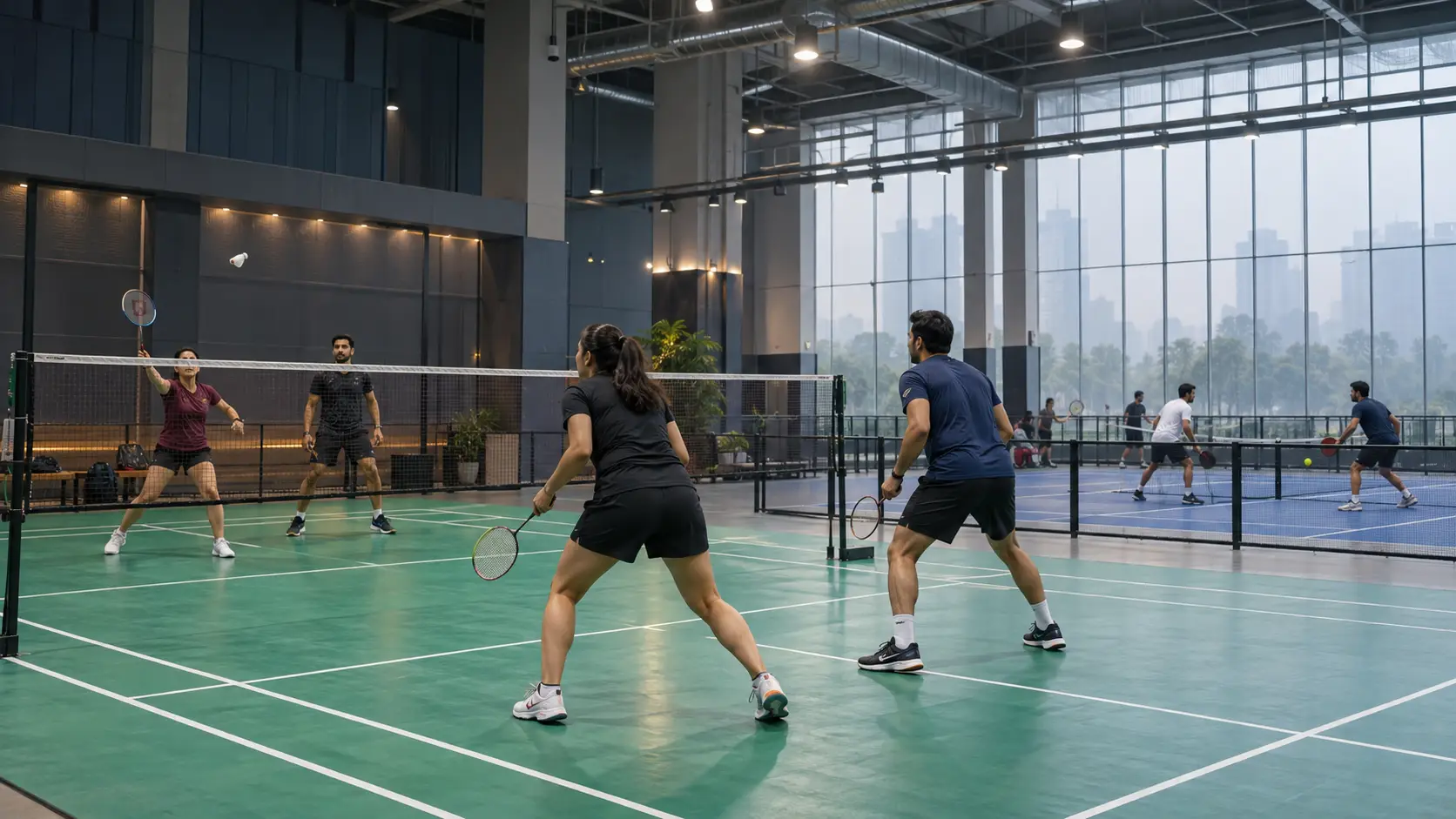
Whether training at a competitive badminton court in Delhi or using facilities at a structured badminton academy in Faridabad, solo routines help build discipline and muscle memory.
This comprehensive guide outlines proven badminton practice routines for solo players, covering warm up structure, technical drills, conditioning circuits, and weekly planning aligned with international training standards.
Warm Up Routine for Solo Sessions
A proper warm up prepares muscles, improves reaction time, and reduces injury risk.
Dynamic stretches for shoulders and hips
Light skipping or jogging for 5 minutes
Shadow swings for forehand and backhand
Wrist activation exercises
Gradual activation ensures better performance during high intensity drills.
Shadow Footwork Drills
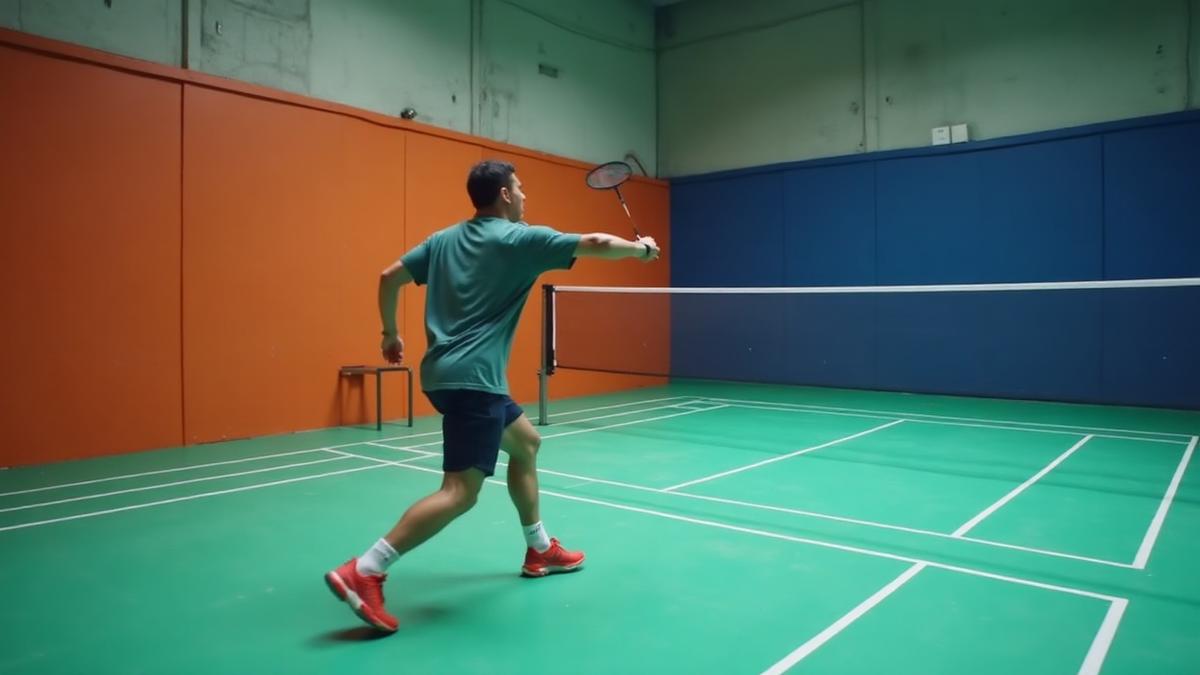
Shadow footwork builds court awareness and recovery speed without a shuttle.
Six Point Court Drill
Move to all six corners of the court with correct lunge technique and quick recovery to base position.
Rear Court Recovery Drill
Simulate backhand and forehand rear corner clears followed by fast return to center.
Defensive Transition Drill
Practice side to side defensive movement for doubles style coverage.
Indoor facilities like Noida Indoor Stadium provide stable surfaces ideal for repetitive footwork practice.
Wall Practice Drills
Wall training improves reaction time and stroke consistency.
Continuous forehand drive repetitions
Backhand drive control drill
Alternating forehand backhand rally against wall
Speed reaction challenge for 60 seconds
Focus on compact swings and finger power during wall sessions.
Serve and Accuracy Practice
Serving is one skill that can be mastered alone.
Place targets in service box for short serve precision
Practice flick serves to back boundary
Baseline clear target practice
Net shot drop accuracy routine
Repetition improves consistency under match pressure.
Self Feed Shuttle Routines
Self Toss Smash Practice
Toss shuttle upward and execute controlled smash focusing on technique rather than power.
Net Kill Repetition
Self feed gentle net shots and practice quick finishing taps.
Drop Shot Consistency
Focus on tight spinning net drops with minimal height.
Conditioning for Solo Badminton Players
Agility ladder drills
Short court sprints
Core rotation workouts
Interval cardio circuits
Badminton demands explosive movement combined with sustained endurance.
Mental Focus and Visualization
Solo sessions are perfect for strengthening mental preparation.
Visualize match situations
Practice breathing control
Rehearse tactical patterns
Mental rehearsal improves real match decision making.
Weekly Solo Training Plan Example
Beginner
3 sessions per week focusing on footwork and basic stroke repetition.
Intermediate
4 sessions combining wall drills, conditioning, and shuttle accuracy training.
Advanced
5 to 6 sessions incorporating high intensity footwork intervals and technical refinement.
Common Solo Practice Mistakes
Practicing without clear goals
Skipping warm up
Ignoring recovery time
Repeating incorrect technique
Structured practice leads to measurable improvement.
Frequently Asked Questions
Can you improve badminton without a partner
Yes. Footwork, conditioning, serving accuracy, and stroke mechanics can be significantly improved alone.
How long should solo sessions last
Typically 60 to 90 minutes depending on intensity and fitness level.
Is wall practice effective
Wall drills enhance reaction speed and stroke repetition but should be combined with court practice.
What equipment is required for solo training
Basic equipment includes racket, shuttles, cones or targets, and comfortable court shoes.
Build Discipline Through Structured Solo Practice
Badminton practice routines for solo players create technical consistency, improve endurance, and sharpen focus. Players who follow structured individual training schedules often progress faster between competitive matches.
Solo practice is not a substitute for match play, but it is a powerful tool for long term development and performance stability.