Badminton String Tension Guide: How to Choose the Right Tension for Your Game
Choosing the right badminton string tension can significantly improve your performance on the court. Whether you want more power in your smashes or better control at the net, understanding string tension is essential.
In this guide, you will learn what string tension means, how it affects power and control, and what tension range is recommended based on your skill level.
What Is Badminton String Tension?
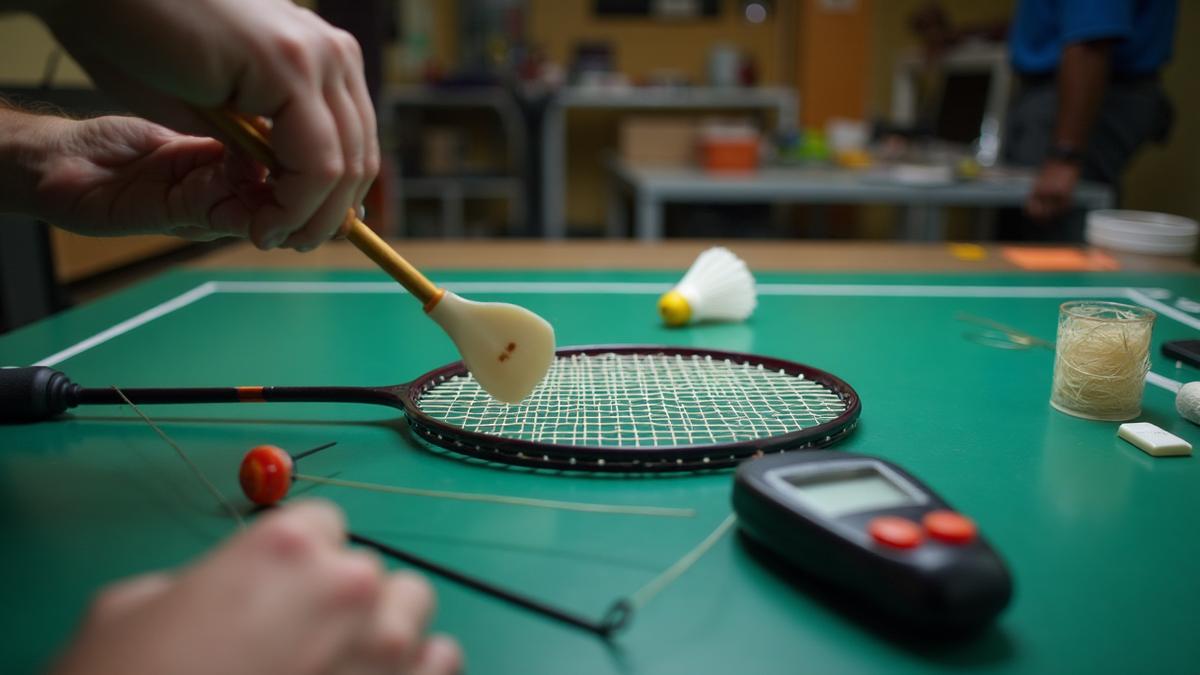
Badminton string tension refers to how tightly the strings are pulled when they are installed on a racket. It is measured in pounds (lbs) or kilograms (kg).
Most badminton rackets are strung within the following general ranges:
18–22 lbs (8–10 kg) – Low tension
22–26 lbs (10–12 kg) – Medium tension
26–30+ lbs (12–14+ kg) – High tension
Every racket frame has a manufacturer-recommended tension range printed on it. You should never exceed this limit, as doing so may damage the frame and void the warranty.
String tension affects:
Shuttle rebound speed
Sweet spot size
Shot feel and feedback
Overall balance between power and control
You can think of the string bed like a trampoline. A looser trampoline (low tension) throws the shuttle farther with less effort. A tighter trampoline (high tension) provides more precision but requires better technique and timing.
How String Tension Affects Power and Control
Understanding the relationship between power and control is the key to choosing the correct string tension.
Low Tension (18–22 lbs)
Low tension is ideal for beginners and players looking for easier power.
Advantages:
Larger sweet spot
Greater shuttle repulsion
More forgiving on off-center hits
Reduced strain on the arm
With lower tension, the shuttle stays on the strings slightly longer, creating a trampoline effect. This helps generate power with less effort, making clears and smashes easier.
However, precision and net control may feel slightly less sharp compared to higher tensions.
Medium Tension (22–26 lbs)
Medium tension is suitable for intermediate and club-level players.
Advantages:
Balanced power and control
Moderate sweet spot size
Suitable for both singles and doubles
This range provides a good mix of repulsion and accuracy. It is the most commonly used tension range among recreational and competitive club players.
High Tension (26–30+ lbs)
High tension is recommended for advanced and professional players with consistent technique.
Advantages:
Excellent control and precision
Crisp shuttle feedback
Better net play and tight drops
Trade-offs:
Smaller sweet spot
Requires good timing and technique
Higher chance of string breakage
Increased strain on wrist and elbow if technique is incorrect
At higher tensions, the shuttle does not sink deeply into the strings. This results in greater control but requires stronger and cleaner strokes to produce power.
Recommended String Tension by Skill Level
Choosing the correct tension should match your skill level, strength, and playing consistency.
Beginner
Recommended Tension: 18–22 lbs (8–10 kg)
Reason: Larger sweet spot, easier power generation, more forgiving on mishits.
Intermediate
Recommended Tension: 22–26 lbs (10–12 kg)
Reason: Balanced control and power for all-round play.
Advanced
Recommended Tension: 26–30+ lbs (12–14+ kg)
Reason: Maximum precision and shuttle control for consistent players.
Important Guidelines:
Always check your racket’s maximum tension limit.
Increase or decrease tension gradually in 1–2 lb increments.
If you frequently mishit shots, slightly lower your tension.
If your shots feel too bouncy or lack control, slightly increase your tension.
If you are unsure where to start, choose the middle of your recommended skill range and adjust after two or three playing sessions.
String Type and Racket Factors That Influence the Ideal Tension
Choosing the right string tension is not only about skill level. String type, racket characteristics, and playing conditions also play an important role in how the tension feels and performs.
1. String Type
Different badminton strings are designed for different purposes:
Power (Repulsion) Strings
These strings are designed to provide maximum shuttle speed and explosive shots. They usually feel lively and responsive. If you use a repulsion string, you may not need extremely low tension to generate power.
Control Strings
These offer better shuttle hold and precision. They are ideal for players who focus on placement, net play, and defensive control. Many players using control strings prefer medium to high tension.
Durable Strings
Thicker strings last longer but may feel slightly less responsive. If durability is your priority, you can maintain medium tension to balance feel and lifespan.
Important: The same tension can feel different depending on the string model and thickness. If you change string type, reassess your ideal tension.
2. Racket Stiffness and Balance
Your racket frame also affects how tension performs.
Stiff Rackets
A stiff shaft provides more direct power transfer and better control but requires strong technique. Many advanced players combine stiff rackets with higher tension for precision.
Flexible Rackets
Flexible shafts help generate power more easily. These often work well with low to medium tension, especially for beginners.
Head-Heavy Rackets
Designed for powerful smashes, they pair well with medium tension for balanced performance.
Head-Light Rackets
Designed for faster defensive and doubles play, they often feel best with medium to slightly higher tension for quick control.
3. Playing Conditions and Shuttle Type
Feather Shuttle
Offers better control and is commonly used in competitive play. Medium to high tension is often preferred.
Synthetic Shuttle
Usually requires slightly more force to generate power. Lower to medium tension can help compensate.
Indoor vs Outdoor
Most badminton is played indoors. However, if you play in cooler environments, strings may feel tighter. Temperature can slightly affect string tension feel.
Step-by-Step: How to Choose the Right String Tension
Selecting the correct string tension does not need to be complicated. Follow this simple five-step process.
Step 1: Identify Your Skill Level
Are you a beginner, intermediate, or advanced player? Use the recommended ranges discussed earlier.
Step 2: Define Your Goal
Do you want more power? Better control? More durability? Your playing style should guide your decision.
Step 3: Check Your Racket’s Maximum Tension
Always confirm the maximum recommended tension printed on your racket frame. Never exceed this limit.
Step 4: Choose a Starting Point
Select a tension in the middle of your recommended range. For example, if your range is 22–26 lbs, start at 24 lbs.
Step 5: Test and Adjust
Play for two to three sessions. Evaluate your performance:
Are clears effortless?
Do smashes feel strong?
Is net control precise?
Are mishits frequent?
Adjust tension in small increments of 1–2 lbs at a time until you find your optimal feel.
Keep a record of your tension and restringing date for future reference.
Common String Tension Scenarios and Practical Examples
Understanding real-world examples can help you make better decisions.
Scenario 1: Beginner Struggling with Power
If your clears do not reach the baseline easily, try lowering your tension by 1–2 lbs. A larger sweet spot and better repulsion will help generate easier power.
Scenario 2: Intermediate Player Lacking Control
If your shots feel too “bouncy” or inconsistent, slightly increase tension. This will improve accuracy and tighten net control.
Scenario 3: Advanced Singles Player
If you rely on precision, tight net shots, and sharp drops, higher tension (within safe limits) may improve shot accuracy. However, ensure your technique is consistent.
Scenario 4: Doubles Player Needing Fast Drives
Medium tension often works best. It allows quick flat exchanges while still offering enough power for attacking shots.
Scenario 5: Frequent String Breakage
If your strings break too often, consider slightly lowering tension or switching to a more durable string type.
Restringing and Maintenance Tips
Even the perfect string tension will lose performance over time. Strings naturally lose tension due to usage, impact, and environmental conditions.
How Often Should You Restring?
A common guideline is:
Restring as many times per year as you play per week.
For example:
If you play twice per week, restring at least twice per year.
Competitive players may restring every 1–3 months.
Signs You Need to Restring
Noticeable loss of power
Dull or muted sound on impact
Increased vibration
Visible string notching or fraying
Inconsistent shuttle response
Even if the string has not broken, tension loss can significantly affect performance.
Maintenance Tips
Store your racket in a protective cover.
Avoid leaving it in hot cars or humid areas.
Use a professional stringer for accurate tension.
Inform your stringer about your preferred tension and playing style.
Proper maintenance ensures consistent performance and protects your racket frame.
Quick Reference: Badminton String Tension Chart
Below is a simplified reference chart to help you quickly identify the right starting tension range.
Skill Level: Beginner
Tension Range: 18–22 lbs (8–10 kg)
Primary Benefit: Easier power, larger sweet spot
Skill Level: Intermediate
Tension Range: 22–26 lbs (10–12 kg)
Primary Benefit: Balanced power and control
Skill Level: Advanced
Tension Range: 26–30+ lbs (12–14+ kg)
Primary Benefit: Maximum control and precision
Playing Style Adjustments:
Power-Oriented Player → Choose the lower end of your range.
Control-Oriented Player → Choose the higher end of your range.
Doubles Player → Medium tension for faster flat exchanges.
Singles Player → Medium to high tension for placement and control.
Important Reminder: Never exceed your racket’s maximum recommended tension.
Frequently Asked Questions (FAQs)
What is the best string tension for beginners?
Beginners should start with 18–22 lbs (8–10 kg). This provides a larger sweet spot and makes it easier to generate power.
Does higher string tension give more power?
Not necessarily. Higher tension gives more control and precision. Lower tension often produces easier power due to the trampoline effect of the strings.
What happens if I string above the recommended maximum tension?
Exceeding the recommended tension can damage the racket frame, cause cracks, and void the manufacturer warranty. Always stay within the printed limit.
How much should I adjust tension at a time?
Adjust in small increments of 1–2 lbs. Large jumps make it difficult to identify what works best for your game.
How long does string tension last?
Tension gradually decreases with use. Even if strings do not break, performance may decline within a few months depending on how frequently you play.
Do professional players use very high tension?
Many advanced and professional players use tensions between 26–34 lbs. However, this requires excellent technique and consistent timing. High tension is not recommended for beginners.
Conclusion
Choosing the right badminton string tension can transform your performance on the court. Lower tension provides easier power and forgiveness, while higher tension delivers greater control and precision.
Your ideal tension depends on your skill level, playing style, string type, and racket characteristics. Start within the recommended range, test your setup for a few sessions, and adjust gradually until you find the perfect balance.
Remember, the best tension is the one that matches your technique and helps you play confidently and consistently.