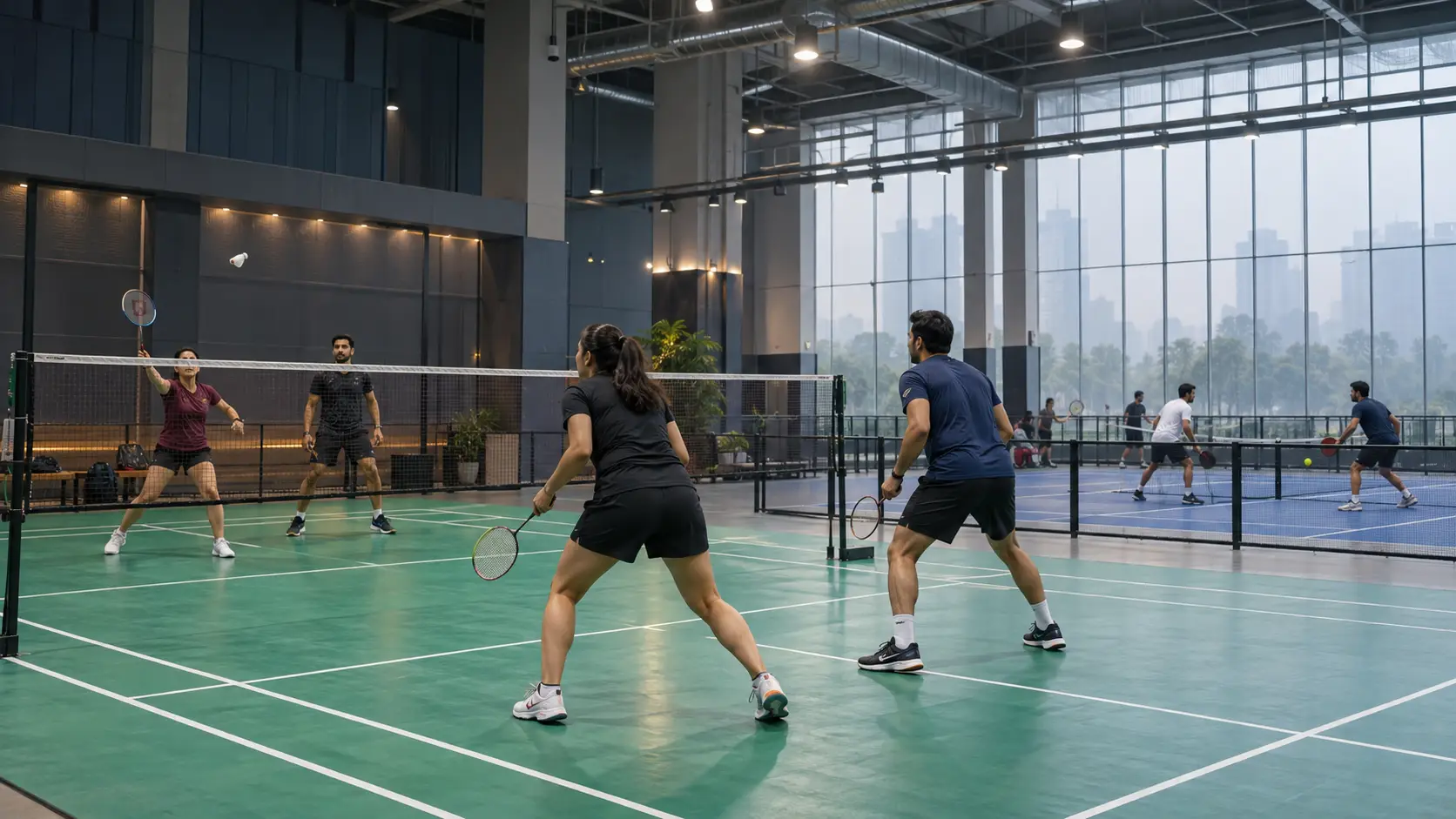
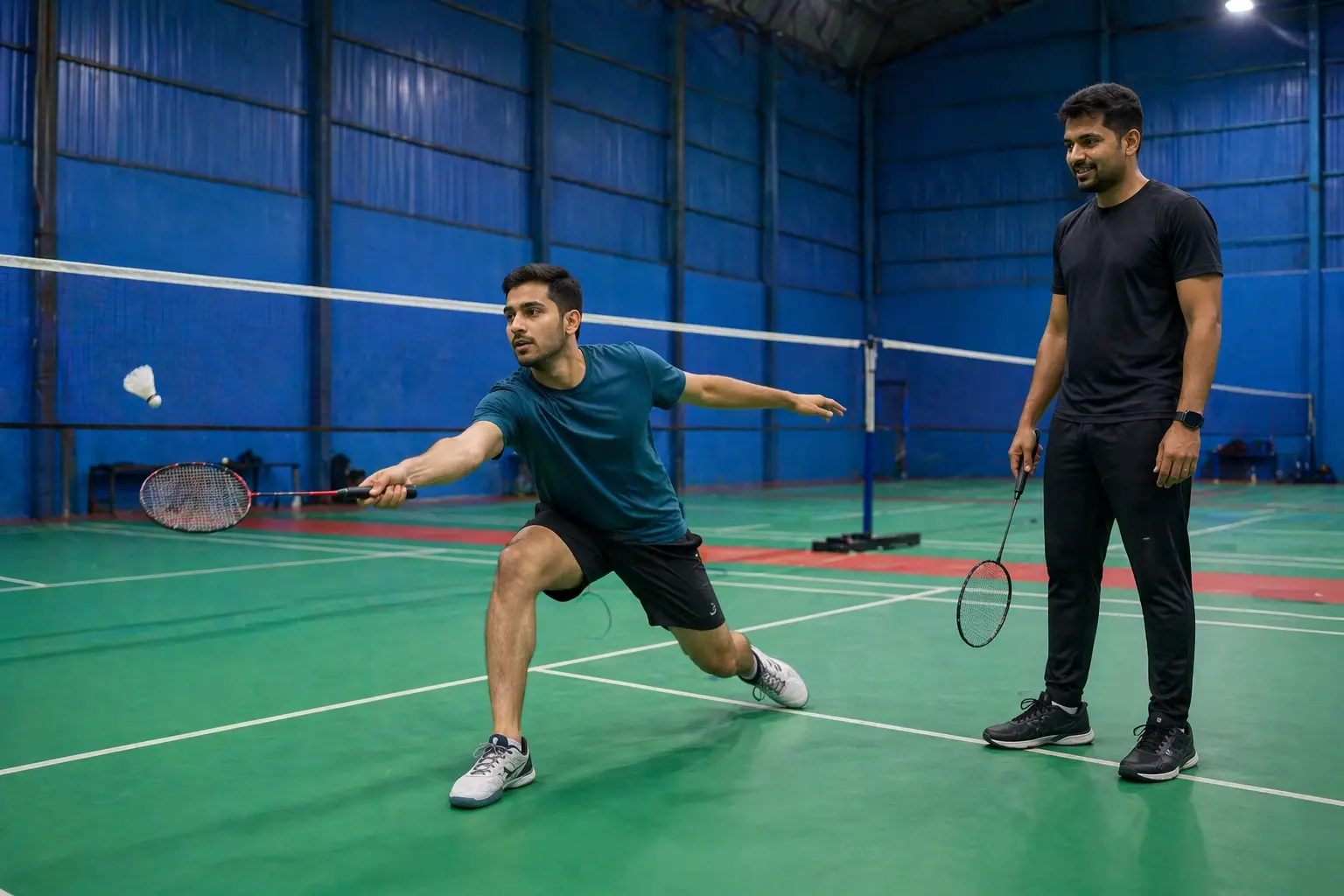
You have been thinking about joining a badminton academy. Maybe you watched India's Ayush Shetty stun the world at the Asia Championships. Maybe your child has been asking to try the sport after watching a match on television. Maybe you just want a sport that keeps you fit, is easy to play with friends, and does not feel like a punishment.
But there is a question sitting at the back of your mind: what actually happens when I walk through that door on day one? Will I look completely lost? Will my child feel out of place? Is it too late for me as an adult? What does the first month look like - and the second, and the third?
This guide answers all of that. Here is exactly what happens in your first three months at a badminton academy, week by week, so you can walk in on day one knowing what to expect - and why everything that seems slow and basic in the beginning is actually the most important work you will ever do for your badminton game.
Before Day One - What to Bring to Your First Session
Most people overthink the equipment situation before their first session. Here is what you actually need:
Non-marking indoor sports shoes: This is the one non-negotiable. All indoor badminton courts - especially synthetic and wooden surface courts - require non-marking soles. Regular running shoes or outdoor trainers are not allowed and will damage the court surface. If you do not own a pair yet, buy these before your first session.
Comfortable sports clothing: Shorts or trackpants and a light t-shirt or sports top. Nothing restrictive. Badminton involves a lot of lateral movement, lunging, and jumping.
Water bottle: You will sweat more than you expect, even as a beginner.
Racket: If you do not own one, most academies can lend a beginner racket for the first session. Do not rush to buy an expensive racket before your coach has assessed your style and level. A coach's recommendation for the right racket weight and string tension for a beginner is genuinely valuable.
Shuttlecocks: Provided by the academy during coaching sessions. You do not need to bring your own.
That is it. Do not overthink it. Show up, introduce yourself to the coach, and let the session do the rest.
Month 1 - Building the Foundation (Weeks 1 to 4)
The first month of badminton coaching is almost entirely about fundamentals. If this surprises you, it should not. Every elite player in the world - including those currently competing at the Thomas Cup 2026 - built their game on the same basic foundations that you will be working on in month one. The difference between a champion and a casual player is often not talent. It is how deeply and correctly those foundations were built.
Week 1 and 2 - Grip, Stance and Court Familiarisation
Your first two sessions will feel almost embarrassingly simple. The coach will spend significant time on your grip - how you hold the racket, the angle of your wrist, the lightness of your fingers. This is intentional. The grip is the foundation of every single shot in badminton. A wrong grip developed in week one becomes a deeply embedded habit by month three and a serious technical problem by month six.
You will also work on your ready position - the stance from which you receive every shot. Feet shoulder-width apart, knees slightly bent, racket up and ready. It sounds trivial. But the player who instinctively returns to this position between every shot covers the court faster and reaches more shuttles than the player who does not.
By the end of week two, you will be able to maintain correct grip through basic rallies, return to ready position consistently, and move to your forehand and backhand sides with some coordination. You will not feel like a player yet. That is completely normal.
Week 3 and 4 - Basic Footwork and First Strokes
In weeks three and four, the coach introduces structured footwork drills. Badminton footwork is a specific skill - the split step, the side shuffle, the lunge to the front court, the crossover to the back court. These movements are trained separately from hitting until they become semi-automatic, because if you are thinking about your feet, you cannot think about your shot.
You will begin working on your first proper strokes - the basic forehand clear (sending the shuttle from the back court to the opponent's back court), the backhand clear, and the basic serve. Short supervised rallies begin at this stage, typically with a coach feeding shuttles from a basket so you can focus purely on technique without the complexity of a real rally.
By the end of month one, a beginner with consistent attendance should have: correct grip becoming habitual, basic footwork in all six corners of the court, ability to execute a forehand clear and basic serve, and a growing sense of court positioning.
Month 2 - Getting Match-Ready (Weeks 5 to 8)
Month two is when training starts to feel more like the actual sport. The purely technical drills of month one begin to connect into something that resembles a game. This is also the month where many beginners hit their first visible plateau - improvement slows slightly as the body consolidates what it has learned. This is normal and temporary. Push through it.
Week 5 and 6 - Drop Shots, Net Play and Tactical Awareness
The coach introduces the drop shot - a gentle, precise shot that falls close to the net on the opponent's side. The drop shot is badminton's great change-of-pace weapon, and learning to execute it correctly requires touch and control rather than power. Many beginners find this the hardest early skill because it requires restraint rather than effort.
You will also begin working on net play - the ability to move to the front of the court quickly, play a tight net shot or lift, and recover to your base position. Net play in badminton is where many points are won and lost at all levels of the game. Early exposure to it, even at a basic level, begins building the reflexes and spatial awareness that will serve you for years.
Your coach will also introduce basic tactical concepts: why you hit to the back court, when you play short, why you try to make your opponent move rather than hitting to the same spot repeatedly. Badminton is a chess match played at high speed, and understanding the why behind each shot is what turns hitting practice into game intelligence.
Week 7 and 8 - First Practice Matches and Real Rally Situations
By weeks seven and eight, you are ready for your first real practice matches. These are supervised by the coach, who will stop play to correct errors and explain tactical decisions. Do not expect to win or play impressively. That is not the point at this stage. The point is to experience making decisions under mild competitive pressure - where to hit the shuttle, when to attack, when to play safe.
Playing real rallies against another person introduces a level of unpredictability that no drill can fully replicate. Shuttle speeds vary, angles you have not practiced appear, and you discover exactly which parts of your game hold up under mild pressure and which parts collapse. This is valuable information, and a good coach uses match observation to identify exactly what needs the most attention in the weeks ahead.
By the end of month two, you should be able to sustain rallies of 8 to 15 shots using a mix of clears, drops and nets, serve legally and consistently, move to all six corners of the court with reasonable efficiency, and understand the basic tactical logic of a singles rally.
Month 3 - Seeing Real Improvement (Weeks 9 to 12)
Month three is when it clicks. Not everything - but enough that you start feeling like a badminton player rather than a person learning badminton. Your footwork becomes more automatic. Your rallies become longer. You start anticipating where the shuttle is going rather than reacting to where it already is. And physically, the changes are visible and felt.
Week 9 and 10 - Smash, Drive and Building a Game Style
The coach introduces the smash - the most exciting shot in badminton, the one that ends rallies decisively. Learning to smash correctly requires timing, shoulder rotation, and the ability to get under the shuttle at the right height. Many beginners attempt to smash from too late and too low, producing a weak shot that sits up for the opponent. Month three is the right time to begin smash work, with the footwork and upper body coordination to execute it properly now in place.
Drives - flat, fast shots played at mid-court level - also enter the training program here. The drive is particularly important in doubles, where the midcourt battle often determines who controls the rally. Even for singles players, developing the ability to play a fast, flat drive forces opponents to react quickly rather than setting up their preferred shots.
By this stage, you and your coach will also have a clearer picture of your natural game style - whether you are instinctively an attacking player who likes to play fast and force errors, or a more patient, defensive player who prefers rallying and waiting for the opponent to make mistakes. Good coaching works with your natural tendencies while filling in the gaps.
Week 11 and 12 - Tournament Preparation and First Competition
In a well-structured academy, the end of month three brings your first exposure to genuine competition - whether an in-house tournament, an inter-academy match, or, for more advanced beginners, a local ranking event. Nothing accelerates improvement like competitive match play. The pressure of a real match, the need to manage nerves and make decisions quickly, the experience of winning a hard rally and losing an easy one - all of this builds the mental side of the game that practice sessions alone cannot develop.
Even if competition feels intimidating at this stage, lean into it. Everyone at the beginner level is navigating the same nerves and the same technical gaps. Competing early, failing at some things, and learning from the experience is far more valuable than waiting until you feel "ready" - a feeling that, for many people, never quite arrives.
By the end of month three, a beginner with consistent attendance three times per week should realistically be able to: sustain competitive rallies, execute clears, drops, net shots and basic smashes with reasonable consistency, understand and apply basic tactical principles in match situations, serve legally in both singles and doubles formats, and demonstrate noticeably improved court fitness, speed, and reflexes compared to week one.
What a Good Coach Does Versus What a Poor Coach Does
Not all coaching is equal. Knowing what to look for helps you evaluate whether the academy you have chosen is genuinely developing your game or simply filling court time.
A good coach watches each student individually during drills and gives specific, personalised correction. They can explain why a technique is correct, not just demonstrate it. They track your progress over weeks and months and adjust the training focus accordingly. They create an environment where beginners feel encouraged to try difficult shots and make mistakes without embarrassment. They push students toward competitive play at the right time - not too early, not too late.
A poor coach runs the same generic drills for all students regardless of level, corrects errors inconsistently or not at all, cannot explain technique beyond "do it like this," treats beginners and advanced students identically, and never creates competitive opportunities. The sessions feel productive because you are physically tired at the end - but the specific skills required to actually play the game are not improving.
If after six weeks of coaching your technique feels essentially unchanged and your coach has not identified specific areas for you to work on, that is a signal worth paying attention to.
Is It Too Late to Start Badminton Coaching as an Adult?
This is the question every adult beginner asks, usually with some anxiety attached to it. The honest answer is no - it is not too late, and adult beginners often progress faster than they expect.
Adults bring things to coaching that children often lack: the ability to understand and apply tactical instructions quickly, the discipline to practice deliberately rather than just hitting around, and the motivation that comes from choosing to be there rather than being brought by a parent. What adults typically lack is the physical flexibility and reflexes that come naturally to younger players - but both improve significantly within the first three months of regular training.
Many adults who begin badminton coaching in their 30s and 40s find that within a year they are playing at a level that would have seemed impossible when they started. The sport rewards intelligence and consistency as much as athleticism, which means adults with the right coaching environment can close the gap on younger players faster than they expect.
Where to Start Your Badminton Journey in Noida
If you are ready to take the first step, Rackonnect operates professional badminton facilities across Noida with coaching programs designed for all levels - from children just picking up a racket for the first time to adults returning to the sport after years away.
Rackonnect Next Level Badminton Arena - Noida Sector 141: 6 synthetic courts, open 6 AM to 10 PM daily. Coaching for beginners, intermediate and advanced players.
Rackonnect Next Level Badminton Arena - Noida Sector 45: Professional courts with expert trainers, suitable for all ages and levels.
Noida Indoor Stadium: A flagship indoor badminton venue for players seeking a full competitive training environment.
Rackonnect Unwind Badminton Arena - Noida Sector 149: Quality courts in South Noida, ideal for regular practice and coaching sessions.
All Rackonnect venues maintain proper synthetic court surfaces with the correct lighting and ventilation standards that protect your joints and give you the most realistic practice environment possible.
The best time to start was six months ago. The second best time is this week. Book a trial session, show up with your non-marking shoes and a water bottle, and let the first session begin to answer every question you still have about whether this sport is right for you.
Frequently Asked Questions
Is it too late to start badminton coaching as an adult?
No, it is never too late to start badminton coaching. Adults who begin with proper coaching typically improve faster than self-taught players because they develop correct technique from the start. Many adults in their 30s, 40s and beyond enjoy badminton coaching for fitness, skill development, and the competitive satisfaction the sport provides.
How many days per week should a beginner attend badminton coaching?
For beginners, 3 days per week is the ideal starting frequency. This gives the body enough time to rest and absorb the new physical demands of the sport while maintaining enough regularity to build muscle memory and improve consistently. Attending only once a week makes meaningful progression very slow.
What should I bring to my first badminton coaching session?
Bring non-marking indoor sports shoes - this is mandatory on all indoor courts - comfortable sports clothing, a water bottle, and a basic badminton racket if you have one. If you do not have a racket yet, ask the academy to lend you one for the first session. Shuttlecocks are typically provided during coaching.
Will I play actual matches in my first month of badminton coaching?
In most structured academies, beginners spend the first month on fundamental skills - grip, footwork, basic strokes, and court movement. Short supervised rallies typically begin in weeks 3 to 4. Actual game situations and practice matches are usually introduced in month 2, once basic technique and court awareness are established.
How much improvement can a beginner expect in 3 months of badminton coaching?
After 3 months of consistent badminton coaching - three sessions per week - a beginner can expect to have correct grip and stance, solid basic footwork, ability to sustain rallies using clears, drops and serves, basic match awareness including court positioning, and noticeably improved overall fitness, speed and coordination.
What is the difference between a good and bad badminton coach?
A good badminton coach gives individual attention, corrects technique with clear explanations, tracks each student's progress over time, runs structured sessions with specific goals, and creates an encouraging environment for beginners. A poor coach runs generic drills with no personalisation, ignores technical errors, and has no clear progression plan for students.
Do I need expensive equipment to join a badminton academy as a beginner?
No. As a beginner, all you need are proper non-marking indoor sports shoes and comfortable sportswear. A basic entry-level racket costing Rs. 500 to Rs. 1,500 is perfectly adequate for your first 3 to 6 months. Your coach will guide you on upgrading equipment as your game and needs develop.