
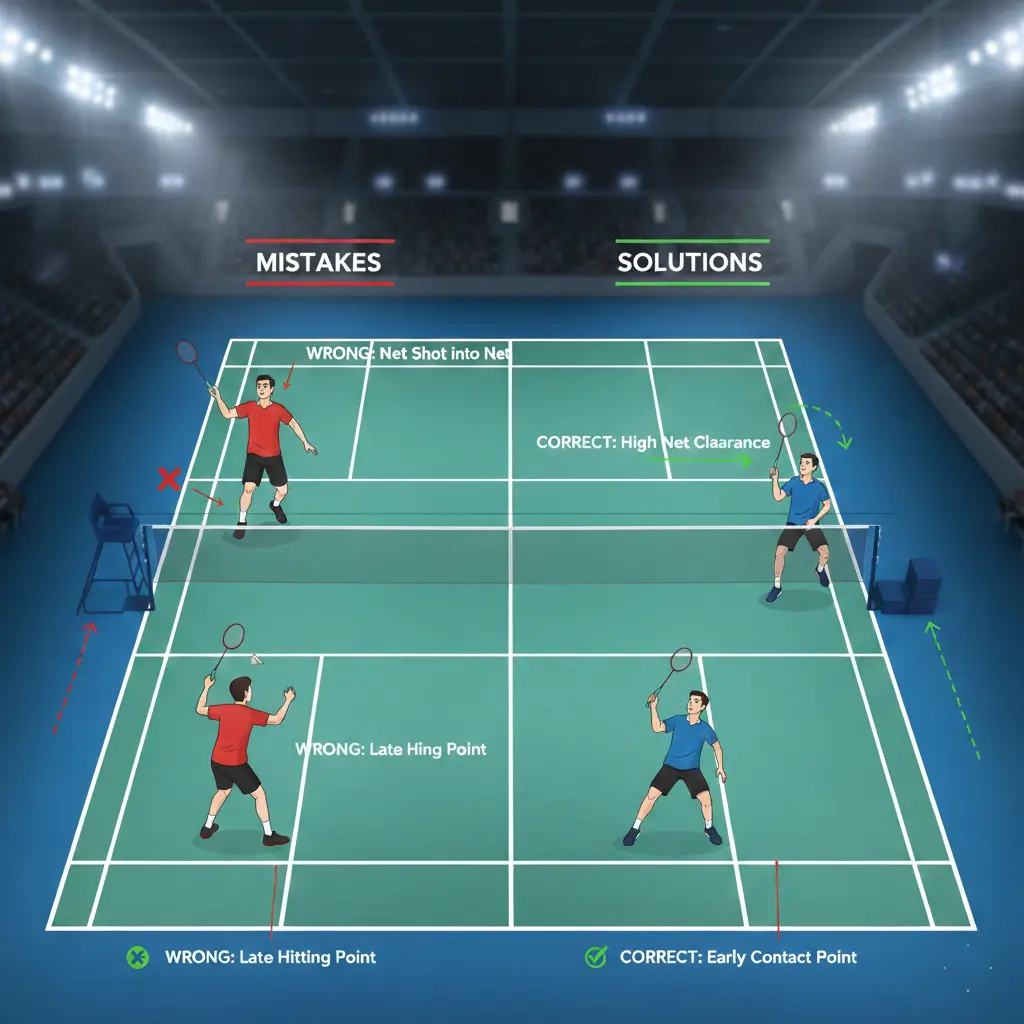
Introduction: Why Fixing Small Badminton Mistakes Matters
Badminton is a game of speed, precision, and control. Yet most players — especially beginners and intermediate athletes across India — struggle not because of lack of talent, but because of small technical errors that repeat during every rally. These mistakes reduce power, slow reaction time, and make gameplay predictable.
The truth is simple: correcting fundamental mistakes will improve your performance faster than learning advanced techniques. A wrong grip, poor footwork, or mistimed contact can cost you multiple points in a single game — whether you're playing casually at your local sports complex in Delhi or competing at a Rackonnect arena.
In this guide, you will learn:
The most common badminton mistakes players make
Why these mistakes hurt your performance
Step-by-step fixes for each mistake
Practical drills to correct them quickly
Whether you play recreationally or competitively, fixing these errors will instantly elevate your consistency, confidence, and control on court.
Top 12 Common Badminton Mistakes — Quick Overview
Here's a summary of all 12 mistakes covered in this guide:
1. Incorrect forehand and backhand grip → Use the handshake grip; relax between shots
2. Poor footwork and no split step → Master split step; always return to base
3. Mistiming the shuttle → Contact the shuttle at the highest point
4. Repeating the same shots → Mix clears, drops, smashes, and drives
5. Weak or predictable net play → Use soft hands; vary net angles
6. Poor serve technique → Practice short backhand and deep high serves
7. Not returning to base position → Recover to center court after every shot
8. Overhitting instead of controlling → Focus on placement, not power
9. Slow grip transitions → Keep grip relaxed; practice daily switching
10. Standing flat-footed → Stay on balls of feet; use micro-movements
11. Poor shot selection under pressure → Play safe clears when off-balance
12. Ignoring physical conditioning → Train cardio, legs, and agility 2–3x per week
In the sections below, we break down each mistake with actionable fixes and drills.
1. Incorrect Grip (Forehand & Backhand Confusion)
Why It's a Problem
Using the wrong grip is one of the most common beginner badminton mistakes. Many players hold the racket like a frying pan or keep the same grip for every shot. This reduces wrist flexibility, weakens power, and makes backhand shots extremely difficult.
A tight grip also limits control and slows reaction speed during fast rallies.
How to Fix It
Step 1: Learn the Basic Forehand Grip (Handshake Grip)
Hold the racket as if you are shaking hands with it
The "V" shape between your thumb and index finger should align along the bevel of the handle
Keep your grip relaxed — not tight
Step 2: Switch to Backhand Grip Properly
Rotate the racket slightly so your thumb rests flat against the wider bevel
This gives better leverage for backhand clears and drives
Step 3: Relax Your Grip
Tighten your grip only at the moment of impact
Stay relaxed before and after the shot
Drill: Grip Change Shadow Drill (5 minutes)
Stand in ready position
Coach or partner calls out "forehand" or "backhand"
Switch grips quickly without hitting a shuttle
Repeat for 3 sets of 2 minutes
This builds automatic grip transitions during real rallies.
2. Poor Footwork and No Split Step
Why It's a Problem
Even players with good strokes lose points because they arrive late to the shuttle. Poor footwork causes weak and off-balance shots, reduced power, slow recovery, and increased fatigue.
Many beginners also skip the split step, which is essential for quick directional movement.
How to Fix It
Step 1: Master the Split Step
Perform a small hop just before your opponent hits the shuttle
Land on the balls of your feet
Stay ready to push in any direction
Step 2: Move First, Swing Later Your first action should always be movement — not swinging the racket.
Step 3: Return to Base Position (Center Court) After every shot, recover quickly to the center — also called the "base" position.
Drill: Six-Corner Shadow Footwork Drill
Without a shuttle, move to all six corners of the court
Simulate a shot at each corner
Return to center after every movement
Perform 3 sets of 3 minutes with 1-minute rest
This improves speed, balance, and recovery.
💡 Want to improve your footwork faster? Work with a certified Rackonnect coach who can identify and correct your movement patterns in real time. Explore coaching options →
3. Mistiming the Shuttle (Hitting Too Early or Too Late)
Why It's a Problem
Timing is everything in badminton. Hitting the shuttle too early or too late causes weak smashes, shots going out of bounds, loss of control, and reduced deception.
Many players allow the shuttle to drop too low — especially during overhead shots — which forces defensive play instead of attacking play.
How to Fix It
Step 1: Hit at the Highest Possible Contact Point For overhead shots, contact the shuttle above your head — not beside or behind it.
Step 2: Watch the Shuttle Until Impact Keep your eyes focused on the shuttle until it leaves your racket.
Step 3: Improve Preparation Speed Prepare your racket early so you're ready before the shuttle arrives.
Drill: Multi-Feed Timing Drill
Partner feeds high clears repeatedly
Focus only on contacting the shuttle at the highest point
Do not worry about power — prioritize timing
Perform 20 repetitions per set, 3 sets total
With consistent practice, your shots will become cleaner, sharper, and more powerful.
4. Repeating the Same Shots (Predictable Play)
Why It's a Problem
One of the most common intermediate badminton mistakes is becoming predictable. Many players rely heavily on clears or smashes and repeat the same shot patterns during every rally.
When you repeat the same shots, your opponent reads your game easily, you lose the element of surprise, your attacks become easier to defend, and you waste energy forcing low-percentage shots.
Badminton is a tactical sport. Variation and deception are key to winning points.
How to Fix It
Step 1: Add Shot Variety Mix up clears, drops, smashes, drives, and cross-court shots. Avoid playing straight shots repeatedly.
Step 2: Change Pace Intentionally Alternate between fast and slow shots to disrupt your opponent's rhythm.
Step 3: Observe Opponent Positioning Instead of pre-deciding your shot, react to where your opponent is standing.
Drill: Random Shot Drill (Controlled Rally Practice)
During a rally, you are not allowed to repeat the same shot twice in a row
If you smash, the next shot must be a drop or clear
Play for 5-minute rounds
This forces tactical awareness and improves decision-making under pressure.
5. Weak or Predictable Net Play
Why It's a Problem
Net play is often neglected in practice, but it can win or lose matches — especially in doubles. Common net play mistakes include standing too close to the net, hitting too hard instead of using soft control, always playing straight net shots, and poor anticipation of tight net returns.
Weak net control allows your opponent to lift easily and regain attack.
How to Fix It
Step 1: Maintain Proper Net Positioning Stand slightly behind the service line, not directly on the net.
Step 2: Use Soft Hands Relax your grip when playing net shots. Control matters more than power.
Step 3: Add Angles Use cross net shots occasionally to create openings.
Step 4: Stay Ready for the Kill Keep your racket up and ready to intercept weak returns.
Drill: Net Duel Drill
Stand close to the net with a partner
Only play net shots — no lifts allowed
Focus on tight spinning net shots
First to lift loses the point
Play 10-point rounds
This builds soft touch and quick reactions.
6. Poor Serve Technique or Ignoring Serve Practice
Why It's a Problem
Many players treat the serve as just a way to start the rally. In reality, a weak serve gives your opponent an immediate advantage.
Common serving mistakes include serving too high, serving too long, inconsistent short serves, and poor backhand serve technique in doubles. A predictable or weak serve allows the opponent to attack immediately.
How to Fix It
Step 1: Master the Short Backhand Serve (Doubles)
Keep the shuttle low and close to the net tape
Minimize backswing
Focus on control, not speed
Step 2: Develop a Consistent High Serve (Singles)
Aim deep into the backcourt
Hit with a smooth, controlled motion
Step 3: Create a Serve Routine Consistency improves when you follow the same preparation steps every time.
Drill: Target Serve Practice
Place 4 targets (cones or markers) in the service box
Serve 20 shuttles aiming at targets
Record how many hit the target zone
Repeat for 3 sets
Track improvement weekly to measure progress.
7. Not Returning to Base Position After Every Shot
Why It's a Problem
One of the most overlooked badminton mistakes is staying in the same spot after hitting a shot. Many players admire their shot instead of recovering quickly.
When you don't return to base position, you leave open court space, react late to the next shot, lose balance, and waste energy making desperate lunges. Badminton is about continuous movement, not single shots.
How to Fix It
Step 1: Understand the Base Position The base position is slightly behind the center of your court, where you can move equally in all directions.
Step 2: Recover Immediately After Contact As soon as you hit the shuttle, push back toward the center.
Step 3: Stay on the Balls of Your Feet Avoid standing flat-footed while waiting for the next shot.
Drill: Hit-and-Recover Drill
Partner feeds shuttle randomly
After every shot, you must visibly return to base before the next feed
Practice for 3 sets of 3 minutes
This builds automatic recovery habits.
8. Overhitting Instead of Controlling the Shuttle
Why It's a Problem
Many players believe power equals success. They try to smash every opportunity, even when out of position. Overhitting causes the shuttle to go out of bounds, loss of control, poor balance, and increased unforced errors.
Badminton rewards smart placement over raw power.
How to Fix It
Step 1: Focus on Placement Over Power Aim for empty spaces instead of hitting as hard as possible.
Step 2: Improve Drop Shot Accuracy A well-placed drop shot can be more effective than a smash.
Step 3: Smash Only When Balanced Attack only when you are in good position and timing.
Drill: Placement Drill
Divide the opponent's court into 4 target zones
Instead of smashing, aim clears and drops into specific zones
20 shuttles per set, 3 sets total
This improves precision and shot selection.
9. Slow Grip Transitions During Fast Rallies
Why It's a Problem
During fast exchanges — especially in doubles — players often fail to switch grips quickly between forehand and backhand. This leads to weak defensive returns, late reactions, and poor control during drives.
Grip transitions should be automatic and quick.
How to Fix It
Step 1: Keep Grip Relaxed A relaxed grip makes switching easier and faster.
Step 2: Anticipate the Shot Direction Read your opponent's body position to predict where the shuttle is going.
Step 3: Practice Grip Switching Daily Repetition builds muscle memory.
Drill: Drive Exchange Drill
Stand midcourt with a partner
Exchange fast flat drives
Focus on quick grip adjustments
Play for 2-minute rounds, 4 rounds total
This improves reaction speed and hand control.
10. Standing Flat-Footed During Rallies
Why It's a Problem
Standing flat-footed slows your first step. In badminton, the first step decides whether you reach the shuttle early or late.
Flat-footed players react slowly, lose attacking opportunities, and get forced into defensive positions.
How to Fix It
Step 1: Stay on the Balls of Your Feet Keep heels slightly raised at all times.
Step 2: Use Continuous Micro-Movements Make small adjustment steps instead of standing completely still.
Step 3: Time Your Split Step Properly Perform it just before your opponent contacts the shuttle.
Drill: Reaction Split-Step Drill
Partner randomly points to corners
Perform a split step, then move quickly in that direction
15 repetitions per set, 3 sets
This builds explosive first-step movement.
11. Poor Shot Selection Under Pressure
Why It's a Problem
When under pressure, players panic and choose low-percentage shots like risky cross-court smashes. This leads to unforced errors, lost momentum, and giving away easy points.
Smart decision-making wins tight matches.
How to Fix It
Step 1: Choose Safe Shots When Off-Balance Play high defensive clears instead of risky winners.
Step 2: Build the Rally First Wait for the right opportunity to attack.
Step 3: Improve Game Awareness Observe opponent weaknesses during rallies and exploit them patiently.
Drill: Conditioned Game Drill
Play practice matches
If you attempt a risky winner while off-balance, you automatically lose the point
This trains discipline and patience
12. Ignoring Physical Conditioning and Stamina
Why It's a Problem
Badminton requires explosive speed, endurance, and recovery ability. Without proper fitness, you tire quickly, footwork becomes slow, and technique breaks down under fatigue.
Even technically skilled players lose matches due to poor stamina — this is one of the most underestimated common badminton mistakes at the club level in India.
How to Fix It
Step 1: Improve Cardiovascular Endurance Include interval training such as sprints and shuttle runs.
Step 2: Strengthen Legs and Core Focus on squats, lunges, and core stability exercises.
Step 3: Train Agility and Explosiveness Add ladder drills and plyometric jumps to your routine.
Conditioning Routine Example
20 shuttle sprints × 3 sets
15 bodyweight squats × 3 sets
30-second plank × 3 sets
10 jump lunges × 3 sets
Train conditioning at least 2–3 times per week for noticeable improvement.
💡 Ready to put this into practice? Book a badminton court near you → and start working on these drills today.
Frequently Asked Questions (FAQ)
Q: What is the most common mistake in badminton?
The most common mistake is using the wrong grip. Many beginners hold the racket like a frying pan, which limits wrist flexibility and reduces power. Learning the correct forehand and backhand grip is the single fastest way to improve your game.
Q: How do I improve my footwork in badminton?
Start by mastering the split step — a small hop performed just before your opponent hits the shuttle. Combine this with the six-corner shadow footwork drill and always return to your base position (center court) after every shot.
Q: Why is the split step important in badminton?
The split step puts you in a balanced, ready position so you can react and move in any direction instantly. Without it, you react slowly and arrive late to the shuttle, leading to weak or forced shots.
Q: How do I fix my backhand grip in badminton?
Rotate the racket slightly from your forehand grip so your thumb rests flat against the wider bevel of the handle. This gives you more leverage and control on backhand clears, drives, and net shots.
Q: How long does it take to fix bad badminton habits?
With focused, deliberate practice, most technical habits can be corrected within 3–6 weeks. Using the drills in this guide consistently, even 20–30 minutes per session, will produce noticeable results.
Q: Should beginners focus on power or control in badminton?
Always control first. Beginners who chase power develop bad technique and make more unforced errors. Build clean, controlled strokes first — power will naturally follow as your technique improves.
Final Thoughts
Every player — from a beginner stepping on court for the first time to an experienced club player — makes some of the mistakes covered in this guide. The good news is that all of them are fixable with awareness, focused practice, and the right drills.
Start by identifying the 2–3 mistakes that affect your game most, focus on fixing those first, and gradually work through the rest. Small, consistent improvements compound quickly in badminton.
Found this helpful? Share it with your playing partner and start fixing these mistakes together.
🏸 Play more, improve faster. Find a Rackonnect court near you →