Introduction: Why Beginners Get Confused - and How This Guide Helps
Starting badminton feels simple at first. Pick up a racket, hit the shuttle, enjoy the rally. But within a few sessions, most new players realise there is much more to the sport than it initially appears.
Grip technique, scoring rules, shuttle selection, footwork patterns, court positioning, equipment choices - the number of things to learn simultaneously can feel overwhelming. Early confusion is completely normal. The players who progress fastest are those who get clear answers to the right questions early on, build correct habits from the start, and avoid the most common beginner mistakes that slow development for months.
This complete guide answers the most common beginner badminton questions clearly and practically - so you can build a strong foundation, improve faster, and start genuinely enjoying the sport from your very first sessions.
Quick Overview: Questions Answered in This Guide
1. How do I start playing badminton?
2. What is the correct way to hold a badminton racket?
3. What are the basic rules of badminton?
4. Which badminton racket is best for beginners?
5. How can I improve my footwork quickly?
6. How often should beginners practice?
7. Why does my shuttle keep going out of the court?
8. What shoes should I wear for badminton?
9. How long does it take to become good at badminton?
10. Should beginners focus on singles or doubles?
11. What are the most common beginner mistakes to avoid?
12. How do I find good courts and coaching near me?
Q1: How Do I Start Playing Badminton?
Getting started does not require expensive gear or months of preparation - but using the right basics from the beginning makes a significant difference to how quickly you improve and how much you enjoy early sessions.
Essential Equipment to Begin
Racket - A lightweight beginner racket (85–90g, even balance or head-light) is the right starting point. Avoid cheap aluminium rackets, which are heavy and poorly balanced, and expensive high-tension professional rackets, which are unforgiving for new players.
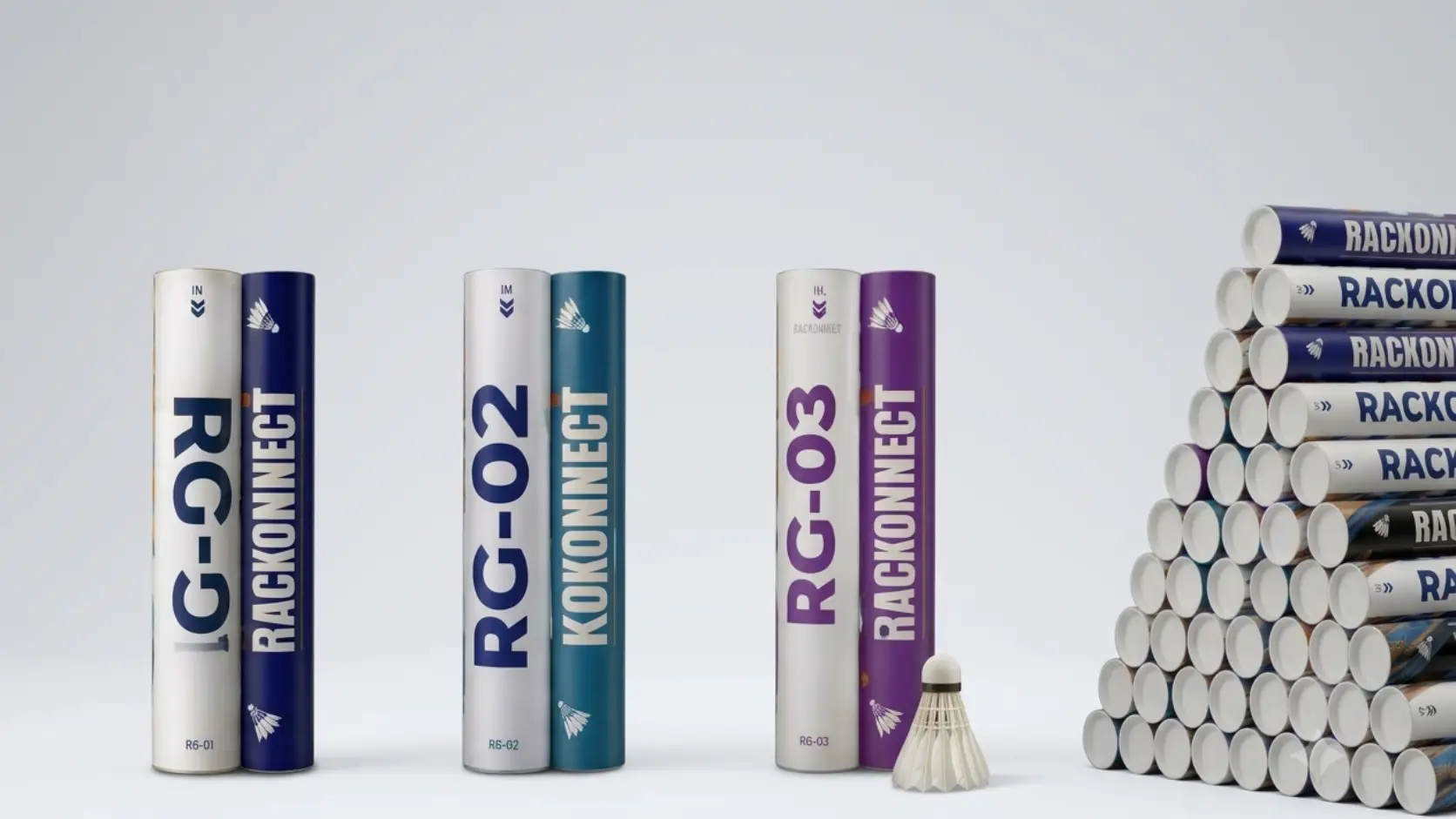
Shuttlecocks - Nylon (synthetic) shuttles are recommended for beginners. They are more durable, consistent, and significantly cheaper than feather shuttles - ideal for the high volume of rallying practice beginners need.
Shoes - Non-marking gum sole badminton shoes are essential. Never play in running shoes - the lateral movement demands of badminton require specific footwear support. More on this in Q8.
Play Indoors From the Start
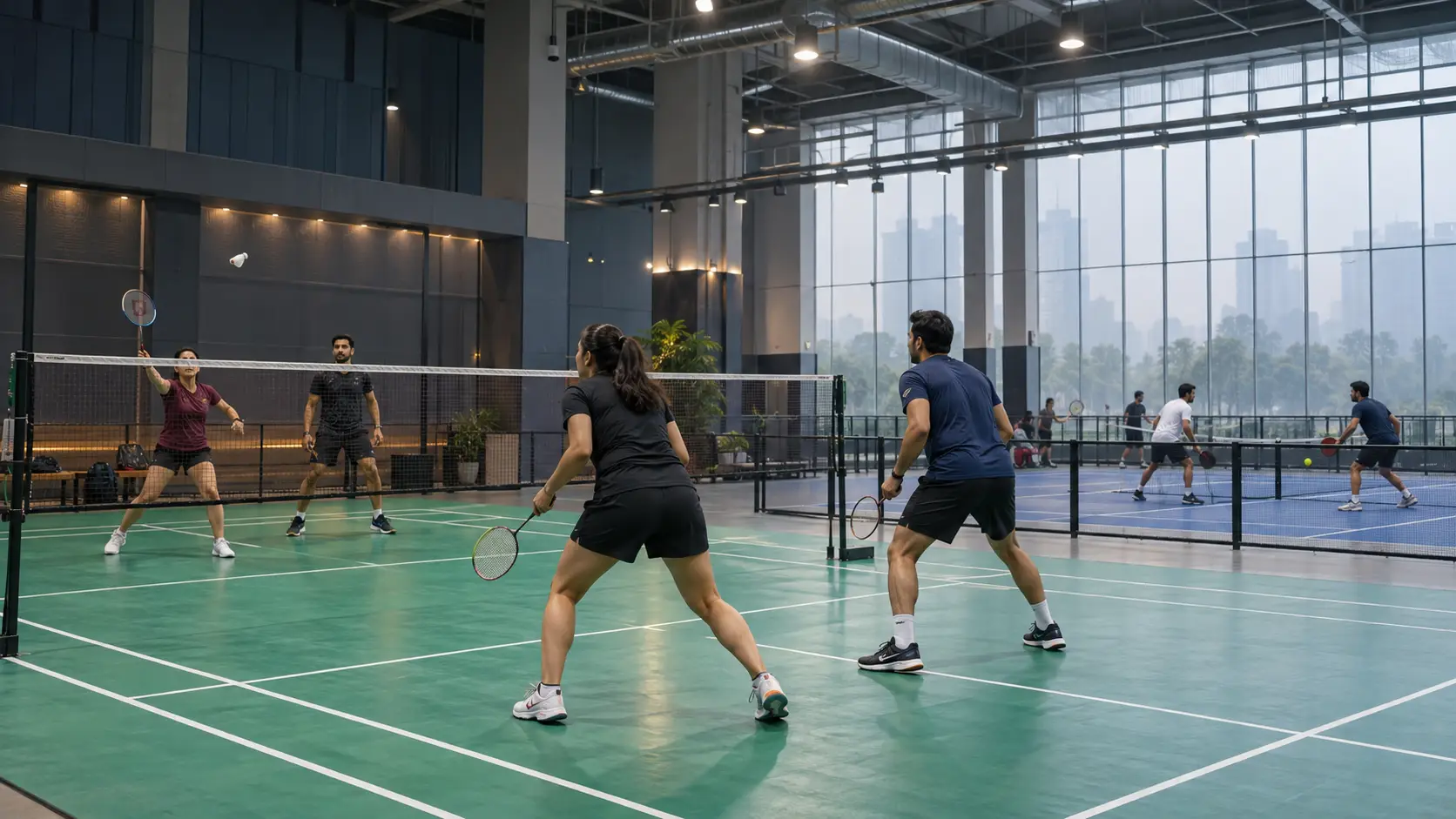
Playing indoors is strongly recommended for all beginners. Indoor courts offer consistent lighting that helps you track the shuttle, controlled airflow so the shuttle flies predictably, and safe, cushioned flooring that reduces injury risk during explosive movements.
Booking verified courts at https://rackonnect.com/venues ensures a consistent, professional indoor environment to learn proper technique from day one.
Basic Practice Structure for Beginners
A well-structured beginner session looks like this:
Warm-up (10 minutes): Light jogging, dynamic stretches, arm circles, ankle rotations
Grip and racket control (10 minutes): Practice holding the shuttle and racket without hitting - get the grip right before anything else
Simple forehand and backhand rallies (20–25 minutes): Focus on consistency, not power - aim for 10 consecutive rallies before increasing difficulty
Light footwork drills (10 minutes): Side shuffles, split step practice, forward-and-back movement
Cool-down (5 minutes): Static stretching - calves, quads, shoulders
Consistency in early sessions matters far more than intensity. Three relaxed, structured sessions per week will produce faster improvement than six exhausting ones.
Q2: What Is the Correct Way to Hold a Badminton Racket?
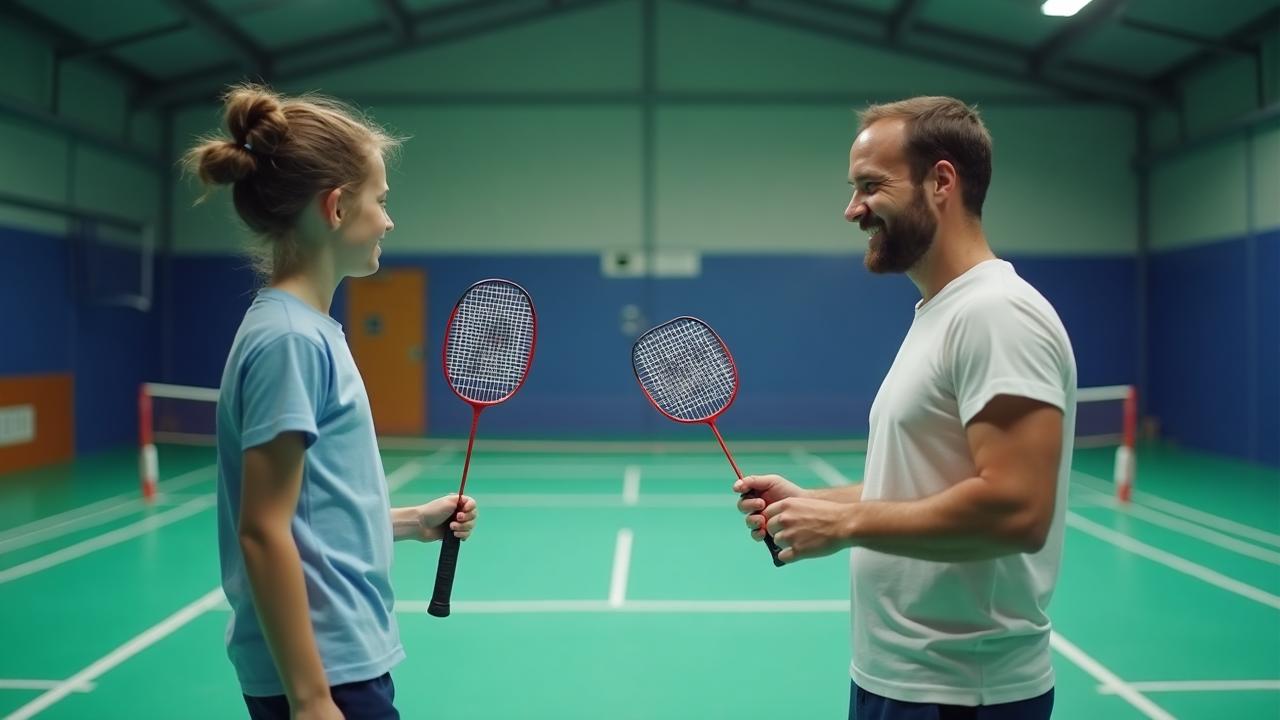
Grip technique is one of the most important fundamentals in all of badminton - and one of the most commonly wrong among beginners. An incorrect grip limits power, reduces control, and increases injury risk at the wrist, elbow, and shoulder.
The Forehand Grip
The forehand grip is used for shots played on the dominant side of the body - forehand clears, smashes, forehand drops, and forehand net shots.
How to grip correctly:
Hold the racket by the throat (the narrow part above the handle) with your non-racket hand
Let the racket hang naturally at your side
Shake hands with the handle - as if greeting someone
The "V" shape formed between your thumb and index finger should align along the top bevel (flat edge) of the handle
Your fingers should be spread slightly along the handle - not bunched together
Keep the grip relaxed - tighten only at the moment of contact
The frying pan grip mistake: Many beginners hold the racket flat - like a frying pan - with the strings facing the floor. This severely limits wrist flexibility and makes backhand shots almost impossible. If this is your current grip, correct it before developing any further.
The Backhand Grip
The backhand grip is used for shots played on the non-dominant side - backhand clears, backhand drops, backhand drives, and backhand net shots.
How to switch from forehand to backhand:
From the forehand grip, rotate the handle slightly toward you (anti-clockwise for right-handed players)
Place your thumb flat against the wider, back bevel of the handle
The thumb provides leverage and power for backhand strokes
Keep the grip relaxed throughout
Key Grip Principles
Relax between shots - a tight grip throughout a rally kills racket speed and causes arm fatigue. Squeeze only at impact.
Switch grips smoothly - forehand to backhand transitions must become automatic with practice. Shadow drill grip switching regularly.
Check your grip frequently - beginners often slip back into the frying pan grip unconsciously. Ask a partner or coach to check your grip at the start of every session until it becomes automatic.
Q3: What Are the Basic Rules of Badminton?
Understanding the rules correctly from the start prevents confusion, arguments during play, and the embarrassing situation of losing points to service faults you did not know about.
Scoring System
Badminton uses a rally-point scoring system - a point is scored on every single rally, regardless of who served.
Each game is played to 21 points
Matches are best of three games
A game must be won by a minimum two-point margin - if the score reaches 20-20, play continues until one player leads by two
At 29-29, the player who scores the 30th point wins - no further extension
The player or pair winning two games wins the match
Serving Rules
The serve is the most rule-heavy aspect of badminton - and the most common source of beginner errors.
The serve must be underhand - the racket head must be pointing downward at the moment of contact and the shuttle must be struck below the server's waist
The serve must travel diagonally across the net into the opponent's service court
In singles: Serve from the right service court when your score is even (0, 2, 4...) and from the left when your score is odd (1, 3, 5...)
In doubles: The serving side changes when the serving pair loses a rally. Within a pair, only the player in the correct service court serves.
Service faults: Overarm serve, serving above the waist, shuttle landing outside the correct service court, or any feinting motion during service
In and Out
A shuttle landing on any boundary line is considered in
In singles, the wider doubles tramlines (sidelines) are out - only the narrower singles court width is in play
In doubles, the full court width including the tramlines is in play for general rallies - but not for serves (the back tramlines are out for serves)
Common Faults to Know
Double hit - hitting the shuttle twice in one stroke
Net fault - touching the net or posts with your racket or body during play
Shuttle fails to cross the net - point to the opponent
Shuttle lands out of bounds - point to the opponent
Foot fault on serve - stepping on or across the service court boundary during the serve action
Q4: Which Badminton Racket Is Best for Beginners?
Choosing the right racket prevents frustration, supports correct technique development, and makes rallying more enjoyable from the start.
What to Look For as a Beginner
Weight: Look for a racket in the 4U (80–84g) or 5U (75–79g) weight category. Lighter rackets are easier to maneuver and reduce arm fatigue during long rallying sessions.
Balance: An even-balance racket is the best starting point for most beginners. It provides a comfortable combination of power and maneuverability without the extremes of head-heavy (power-focused) or head-light (speed-focused) options.
Shaft flexibility: A medium or flexible shaft is more forgiving for beginners - it generates power even on off-centre hits, which happen frequently when learning.
String tension: Factory string tension on beginner rackets is typically 20–22 lbs - this is ideal. Lower tension creates a larger sweet spot and more power assistance. Do not re-string at higher tension until technique is well established.
Grip size: The grip should feel comfortable in your hand without requiring excessive squeezing. Most adult players use G4 or G5 size - try the racket before purchasing if possible.
What to Avoid
Cheap heavy aluminium rackets - poor balance, heavy weight, and no power transfer
High-tension professional rackets - unforgiving on off-centre hits and demanding on the arm
Very head-heavy rackets - difficult to maneuver for beginners still developing arm strength and technique
💡 Want personalised racket and equipment advice? Rackonnect coaches can recommend the right setup for your playing level and style. Explore coaching
Q5: How Can I Improve My Footwork Quickly?
Footwork is the foundation of all badminton performance - yet it is the most commonly neglected area for beginners, who tend to focus entirely on hitting technique.
Here is the reality: a player with excellent footwork and average stroke technique will consistently outperform a player with excellent strokes but poor movement. Footwork determines whether you reach the shuttle early enough to play a quality shot or arrive late and scramble.
The Split Step - Learn This First
The split step is the single most important footwork habit in badminton. It is a small, balanced hop performed just as your opponent makes contact with the shuttle - loading your muscles for explosive movement in any direction.
Without the split step, your first step is always slow because your weight is not loaded and ready. With it, you can react and move in under half a second from a balanced position.
How to practise: Before any movement drill, practise the split step in isolation - small hop, land on both feet simultaneously, knees slightly bent, weight on the balls of your feet. Repeat 20–30 times until it feels natural.
Base Position Recovery
After every shot - without exception - return to your base position at the centre of the court. This gives you equal coverage of all six court zones for the next shuttle. Players who admire their shots and forget to recover give opponents easy open-court winners.
Shadow Footwork Drills
Shadow drills - moving to each of the six court corners and returning to base without a shuttle - are the most effective way to build automatic footwork patterns. They can be practised alone, anywhere, without a court or partner.
Basic shadow drill: Move to front-left corner → return to base → front-right corner → return to base → mid-left → return to base → mid-right → return to base → rear-left → return to base → rear-right → return to base. Repeat for 30–45 seconds. Rest. Repeat 3–4 times.
Side-to-Side Defensive Movement
Practise lateral shuffles across the court - keeping your weight on the balls of your feet, staying low, and never crossing your feet. This builds the defensive movement pattern used dozens of times in every match.
Structured coaching through https://rackonnect.com/coaching accelerates footwork development significantly - a coach can identify and correct specific movement errors that are almost impossible to self-diagnose.
Q6: How Often Should Beginners Practice?
The right practice frequency for beginners balances skill development, physical conditioning, and adequate recovery - without the overtraining that leads to fatigue, injury, and burnout.
Recommended Frequency
2–3 sessions per week is the ideal starting point for most beginners. This frequency allows enough repetition for skill development while providing sufficient rest for the body to adapt to the new physical demands of the sport.
2 sessions per week - suitable for absolute beginners in the first month
3 sessions per week - appropriate from month two onward as stamina and recovery improve
4+ sessions per week - only when physical conditioning is established and technique is well-founded
How to Structure Your Sessions
Not all three sessions need to be identical. A good beginner weekly structure looks like:
Session 1 (Technical focus): Grip practice, footwork drills, controlled forehand and backhand rally practice
Session 2 (Skill application): Conditioned rallies with specific shot targets, introduce serve practice, light match play
Session 3 (Match play and review): Competitive rally games or friendly match, identify what to improve next session
Quality Over Quantity
One focused 60-minute session with deliberate practice is worth more than three lazy 90-minute sessions playing the same shots repeatedly without improvement intention. Every session should have a specific focus - a skill or habit to improve.
You can use the Rackonnect technology platform to book courts, plan sessions, and track your progress as a beginner - keeping your development organised and consistent from the start.
Q7: Why Does My Shuttle Keep Going Out of the Court?
This is one of the most universally common beginner frustrations - and it almost always has a clear technical cause.
The Most Common Causes
Over-swinging without control - Beginners often try to hit as hard as possible. Excessive swing speed without correct technique sends the shuttle long. Focus on controlled, clean contact rather than maximum power.
Incorrect grip angle - A grip that is rotated too far in either direction changes the angle of the racket face at impact - sending the shuttle in an unintended direction. Check your grip against the forehand grip description in Q2.
Late contact point - Contacting the shuttle too late - when it has dropped below shoulder height for overhead shots - forces the racket face upward and sends the shuttle long. For all overhead shots, aim to contact the shuttle at the highest reachable point, slightly in front of your body.
Poor court awareness - Beginners often do not have an accurate mental sense of where the court boundaries are relative to their position. Spend time standing at different court positions and looking at the boundary lines to build spatial awareness.
Too much wrist snap without body rotation - Relying entirely on wrist for power without using body rotation creates an uncontrolled, inconsistent swing. Let your shoulder and torso rotation generate power - the wrist fine-tunes direction.
The Fix
Focus on these three things simultaneously: relaxed grip (tighten only at impact), correct contact point (in front of and above the head for overhead shots), and controlled swing speed (50–60% power until consistency improves). Accuracy always comes before power in skill development.
Q8: What Shoes Should I Wear for Badminton?
This question matters more than most beginners realise. Playing badminton in the wrong shoes is one of the leading causes of ankle injuries, knee strain, and poor court movement - all of which slow development and can force extended time off the court.
Why Running Shoes Are Wrong for Badminton
Running shoes are designed for forward linear movement and heel-strike cushioning. Badminton movement is lateral, explosive, and multi-directional - requiring very different support structures. Running shoes have insufficient lateral ankle support for badminton lunges and directional changes, raised heels that raise your centre of gravity and reduce stability, and soles that grip too aggressively on indoor court surfaces - causing dangerous knee and ankle torque during fast movements.
What to Look For in Badminton Shoes
Non-marking gum rubber sole - Required on all indoor court surfaces. Provides correct grip without damaging the floor.
Strong lateral support - Protects the ankle and knee during explosive side lunges and directional changes.
Low profile design - Keeps your centre of gravity close to the ground for faster directional changes and better stability during smashes and lunges.
Forefoot cushioning - Badminton players land on the forefoot constantly. Good forefoot cushioning reduces the cumulative impact on knees and ankles over a session.
Lightweight construction - Heavy shoes create foot fatigue and slow movement. Look for shoes under 350g where possible.
Investing in proper badminton shoes is the single most effective injury prevention measure available to any beginner - and it makes a noticeable immediate difference to movement confidence and court coverage.
Q9: How Long Does It Take to Become Good at Badminton?
Progress in badminton is highly individual - but there are clear general milestones that most players following structured practice experience.
Realistic Progress Timeline
First 1–3 months: Foundations
Consistent forehand and backhand rallies across the net
Basic serve control - short serve landing in the correct service court
Understanding of scoring rules and basic positioning
Ability to play enjoyable casual games with other beginners
3–6 months: Skill Development
Improved footwork patterns - split step and base position recovery becoming more automatic
Introduction of drop shots and clears alongside smashes
Better shot placement - hitting specific areas of the court more consistently
Winning points through tactical choices, not just opponent errors
6–12 months: Match Confidence
Confident participation in club-level friendly matches
Consistent serve and return game
Ability to construct 3–5 shot tactical sequences
Understanding of singles and doubles positioning
12+ months: Competitive Play
Entry-level tournament participation
Defined playing style with specific strengths
Physical fitness conditioned specifically for badminton demands
The players who progress fastest combine regular practice (2–3 sessions per week), quality coaching at least occasionally, and competition experience through friendly matches and beginner tournaments. Match experience accelerates development in ways that practice drills alone cannot.
Q10: Should Beginners Focus on Singles or Doubles?
Both formats develop different skills - and both are valuable for beginners. The right choice depends on your goals, physical fitness, and the playing partners available to you.
Benefits of Starting with Singles
Singles develops stronger foundational movement skills because you must cover the entire court alone - there is no partner to compensate for positioning errors. It builds cardiovascular stamina faster, develops individual tactical awareness and decision-making, and makes weaknesses very visible - which accelerates targeted improvement.
The challenge: Singles is physically demanding from the first session. Beginners without baseline fitness may find it exhausting initially.
Benefits of Starting with Doubles
Doubles is less physically demanding early on because court coverage is shared. It develops communication and teamwork skills, allows slightly more time on each shot (partner covers half the court), and is more socially enjoyable for many beginners - which keeps motivation high.
The challenge: Doubles can mask individual weaknesses - poor footwork and movement errors are less immediately punishing when a partner covers the court.
Recommended Approach
Most beginners benefit from playing both formats from early on - singles in at least one session per week to build movement foundations, doubles in another for enjoyment and social play. As footwork and shot control improve, singles becomes progressively easier and more enjoyable.
Q11: Common Beginner Mistakes to Avoid
Mistake 1: Ignoring Footwork Drills
Most beginners spend 90% of practice time hitting and 0% on footwork. This is backwards - footwork is the foundation on which all technique is built. Include at least 10 minutes of shadow footwork in every session.
Mistake 2: Practising Only Smashes
The smash is the most exciting shot - and the one beginners most want to learn. But overusing it prevents development of the drops, clears, net shots, and drives that make a complete player. Practice all shot types in every session.
Mistake 3: Skipping Warm-Up Sessions
Playing at full intensity without a proper warm-up is the leading cause of beginner badminton injuries - ankle sprains, muscle pulls, and shoulder strains. A 10-minute dynamic warm-up before every session is non-negotiable.
Mistake 4: Using Incorrect Footwear
Covered in Q8 - but worth repeating. Playing in running shoes significantly increases injury risk and limits your ability to move correctly. Proper badminton shoes make an immediate difference.
Mistake 5: Avoiding Coaching and Feedback
Many beginners practise regularly but never get their technique evaluated by a qualified coach. Without feedback, incorrect habits reinforce themselves with every session - making them progressively harder to correct. Even occasional coaching sessions accelerate development dramatically.
Mistake 6: Only Playing Matches Without Drilling
Match play is enjoyable but it reinforces existing habits - both good and bad. Structured drills that isolate specific skills (serve practice, footwork, net shots) create the improvement that match play alone never produces.
Mistake 7: Giving Up After Early Frustration
Badminton has a steeper early learning curve than many sports. The shuttle behaves differently from a ball, the court feels small and large simultaneously, and the rules create initial confusion. Almost every good badminton player went through the same early frustration. Consistent structured practice produces clear, noticeable improvement within 4–6 weeks.
Q12: How Do I Find Good Courts and Coaching Near Me?
Playing on the right courts and getting the right coaching from the start makes a significant difference to how quickly you develop and how much you enjoy the sport.
What to Look For in a Badminton Venue
Professional indoor courts with consistent lighting, good ventilation, and quality flooring - PVC vinyl or wooden surfaces provide the grip and cushioning that safe, effective practice requires
Court availability across morning, afternoon, and evening slots to fit your schedule
Flexible booking - hourly bookings without long-term membership commitments
Coaching availability at the same venue - being able to combine court booking with coaching sessions in one place removes friction
Rackonnect operates premium badminton venues across Delhi NCR and North India - with professional-grade courts, certified coaching programmes, and beginner-friendly tournaments available year-round.
Find a court near you:
Beginner Badminton Checklist
Use this checklist before and during your early sessions:
Equipment
Lightweight even-balance racket (4U or 5U weight category)
Nylon shuttlecocks for practice
Non-marking badminton shoes with lateral support
Overgrip tape for comfort and sweat absorption
Practice Routine
10-minute dynamic warm-up before every session
Grip check at the start of every session
Shadow footwork drill (10 minutes) in every session
Controlled rally practice before competitive play
5-minute cool-down and stretch after every session
Progress Strategy
Book quality indoor courts consistently - https://rackonnect.com/venues
Join at least occasional structured coaching - https://rackonnect.com/coaching
Enter beginner-friendly matches and tournaments - https://rackonnect.com/tournaments
Track sessions and manage your schedule - https://rackonnect.com/technology
Conclusion: Start Right, Improve Fast
Starting badminton the right way - with correct fundamentals, the right equipment, structured practice, and quality courts - builds long-term confidence, dramatically reduces injury risk, and makes the entire learning process more enjoyable.
The most common beginner journey mistake is practising frequently but without structure or feedback, reinforcing errors and wondering why improvement is slow. The players who progress fastest are those who get their grip right early, develop footwork alongside stroke technique, play competitive matches as soon as possible, and seek coaching before bad habits become deeply ingrained.
With the answers in this guide, you now have everything you need to start your badminton journey correctly - and to accelerate past the beginner phase faster than most players do.
Start playing today with Rackonnect: