Feathers in a Shuttlecock: Why 16 Are Essential for Badminton Performance
Have you ever wondered why a shuttlecock has exactly 16 feathers? This number is not random - it is the result of years of aerodynamic testing to find the perfect balance of speed, stability, and durability. In this article, we will explore the science behind this iconic design and how it directly affects your badminton performance.
Why Does a Shuttlecock Have 16 Feathers?
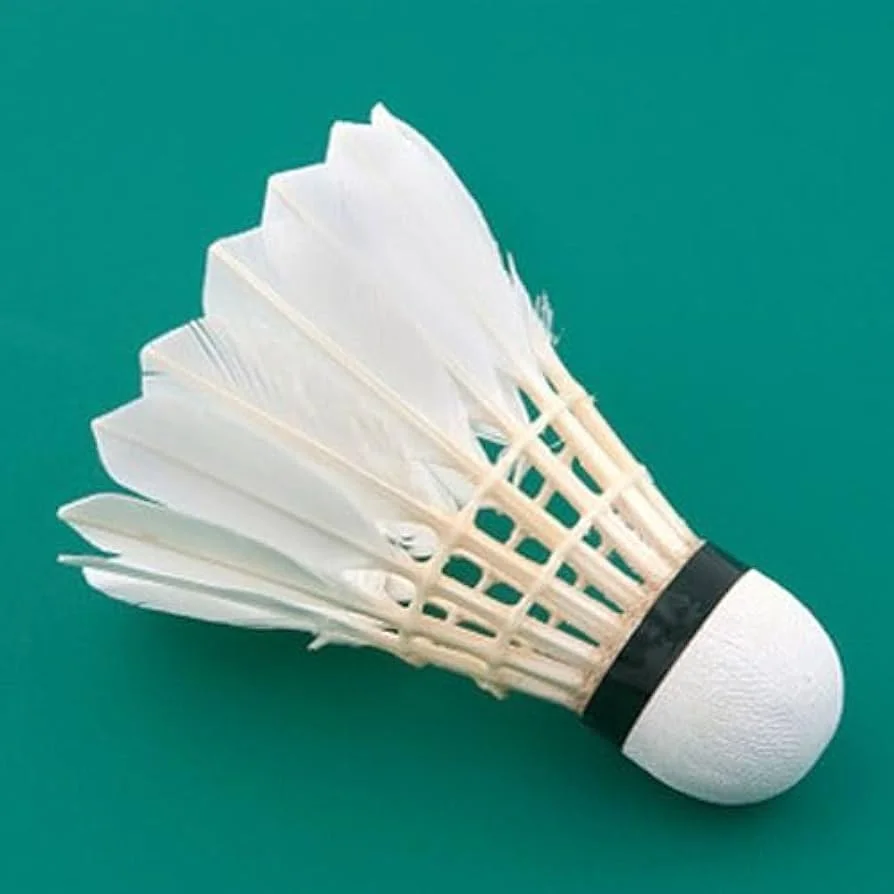
The use of 16 feathers is not a coincidence - it is backed by extensive aerodynamic research. Shuttlecock feathers are almost always taken from the left wing of a goose or duck. Left-wing feathers all curve in the same direction, which creates a uniform clockwise spin during flight. This spin is what keeps the shuttlecock stable and on a straight, predictable path. Using feathers from both wings would create mixed curves, disrupting the spin and causing erratic flight - completely unacceptable for competitive play. This 16-feather standard is recognized globally by the Badminton World Federation (BWF) and ensures consistent performance in every match.
Benefits of the 16-Feather Design in a Shuttlecock
The 16-feather arrangement delivers three key performance advantages that no other configuration has reliably matched.
Stable and Predictable Flight
The symmetrical arrangement of 16 feathers allows the shuttlecock to maintain a straight and consistent flight path. This gives players confidence in shot accuracy during smashes, drop shots, and net play.
Speed Regulation
The 16 feathers create the right amount of aerodynamic drag to control the shuttle's speed after a powerful smash. In elite matches, shuttlecocks can travel at over 300 km/h - the feathers are what bring that speed under control quickly enough for opponents to respond.
Durability
With 16 feathers evenly distributing the impact of each hit, stress is spread across the shuttlecock rather than concentrated on a single point. This means a well-made shuttlecock can survive multiple high-speed rallies without the feathers fraying quickly.
Types of Shuttlecocks
There are two main types of shuttlecocks used in badminton, and knowing the difference helps you choose the right one for your level and playing conditions.
Feather Shuttlecocks
Feather shuttlecocks are made from natural goose or duck feathers. They provide excellent flight control, a natural feel, and are the preferred choice in tournaments and by advanced players. The flight path of a feather shuttlecock closely mirrors the aerodynamic ideal, making them essential for developing proper shot technique. The main downside is cost - feather shuttlecocks are more expensive and have a shorter lifespan than synthetic alternatives.
Nylon Shuttlecocks
Nylon shuttlecocks are made from synthetic materials, making them significantly more durable and weather-resistant. They are a practical choice for beginners, recreational players, and outdoor games. While they do not perfectly replicate the flight of a feather shuttlecock, they are consistent and cost-effective over time.
BWF Official Standards for Shuttlecocks
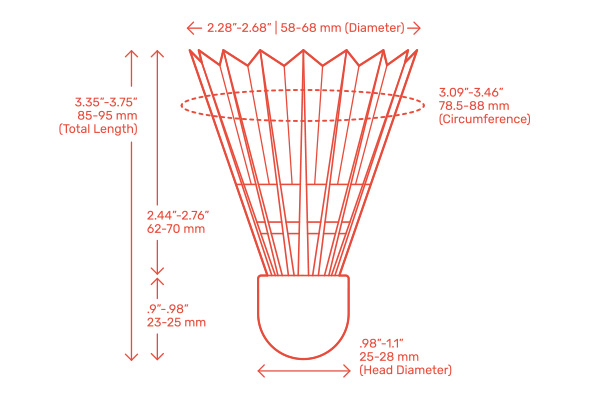
The Badminton World Federation (BWF) sets strict technical specifications that all shuttlecocks used in sanctioned competitions must meet. These standards exist to ensure fair and consistent play worldwide. According to the BWF, every competition shuttlecock must have exactly 16 feathers. Each feather must measure between 62mm and 70mm in length. The total weight of the shuttlecock must fall between 4.74 and 5.50 grams. The base, which is the cork that the feathers are embedded into, must have a diameter between 25mm and 28mm. Any shuttlecock that does not meet these specifications cannot be used in official BWF-sanctioned tournaments.
Fun Facts About Badminton Shuttlecocks
Only left-wing feathers are used in shuttlecocks to ensure a uniform spin direction. The fastest recorded shuttlecock smash in history was 493 km/h, achieved by Malaysian professional player Tan Boon Heong. In elite international matches, feather shuttlecocks regularly travel at over 300 km/h. Badminton is considered one of the fastest racket sports in the world largely because of how a shuttlecock behaves after a powerful smash.
How to Choose the Right Shuttlecock for Your Game
Choosing the right shuttlecock depends on your skill level, playing environment, and budget. If you are a competitive or advanced player training for tournaments, feather shuttlecocks are the right investment. They train your muscle memory for competition-standard equipment and provide the best possible feel. If you are a beginner or play recreationally, nylon shuttlecocks are a smart and budget-friendly choice. You should also consider the speed grade of the shuttlecock. In hot or high-altitude conditions, a slower-grade shuttle is recommended. In cooler environments, a faster-grade shuttle performs better. Speed 76 is the most versatile and works well in most standard indoor courts.
Where to Buy Quality Shuttlecocks
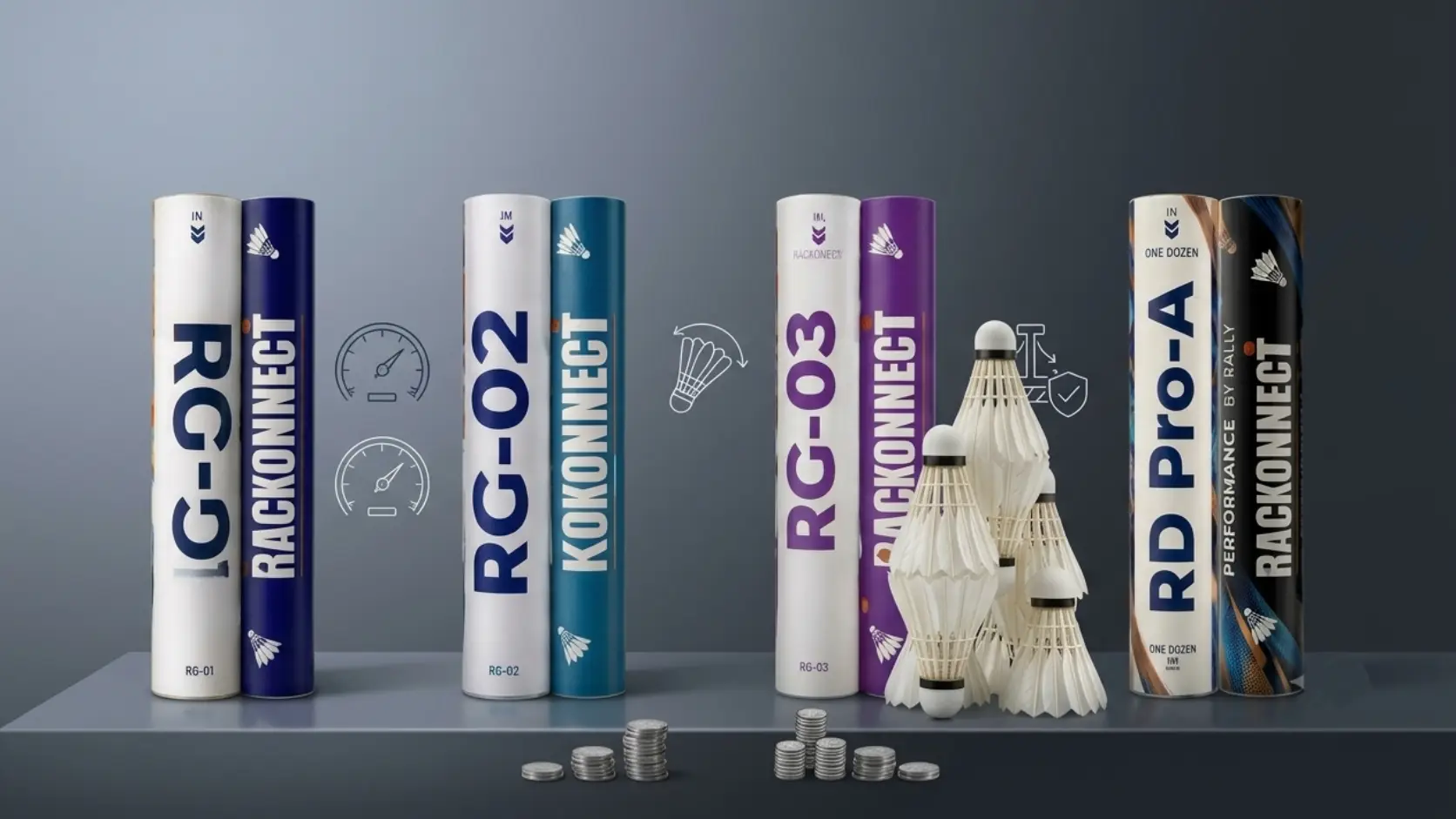
If you are looking for high-performance shuttlecocks for your next match or training session, Rackonnect offers a wide range of BWF-standard feather and nylon shuttlecocks suited for every level of play. Shop premium shuttlecocks at Rackonnect and find the right equipment to elevate your game.
Final Thoughts
Understanding the design and purpose behind the 16 feathers in a shuttlecock gives players a deeper appreciation for their equipment. Every feather, every millimetre, and every gram is governed by precision standards developed over decades of testing. Whether you are training professionally or playing for fun, choosing the right shuttlecock can make a real difference to your performance on the court.
Frequently Asked Questions About Shuttlecock Feathers
Why does a shuttlecock have exactly 16 feathers?
A shuttlecock has exactly 16 feathers because aerodynamic testing consistently showed this number provides the best balance of stable flight, speed control, and durability. The symmetrical 16-feather arrangement ensures the shuttle rotates predictably and travels in a straight arc during play.
What are the BWF standards for shuttlecock feathers?
The BWF requires every competition shuttlecock to have exactly 16 feathers measuring between 62mm and 70mm in length. The total weight must be between 4.74 and 5.50 grams and the cork base must measure between 25mm and 28mm in diameter.
Why are only left-wing feathers used in shuttlecocks?
Left-wing feathers have a consistent natural curve in the same direction. When 16 left-wing feathers are arranged symmetrically, they generate a uniform clockwise spin that keeps the shuttlecock stable. Using both left and right-wing feathers would create opposing curves and cause erratic flight.
What is the difference between feather and nylon shuttlecocks?
Feather shuttlecocks offer superior flight control and feel, preferred by advanced and tournament players. Nylon shuttlecocks are more durable and weather-resistant, making them ideal for beginners and casual play.
What is the fastest recorded shuttlecock speed?
The fastest recorded shuttlecock smash is 493 km/h, achieved by Malaysian player Tan Boon Heong. In elite matches, shuttlecocks regularly exceed 300 km/h after a powerful smash.