You have the racket. You have the shoes. You have booked a quality indoor court in Delhi NCR and you are genuinely committed to improving your game through regular practice.
There is just one problem.
You have nobody to play with.
This is one of the most common and most frustrating barriers that serious recreational badminton players face in Delhi NCR. Finding a court is easier than ever. Finding the right partner to play with consistently is a different challenge entirely.
The wrong partner can make even the best court feel like a waste of time. Someone who cancels regularly, plays at a dramatically different level, has a completely different attitude toward practice, or simply does not show up with the same commitment you do will quietly undermine your development and your motivation over time.
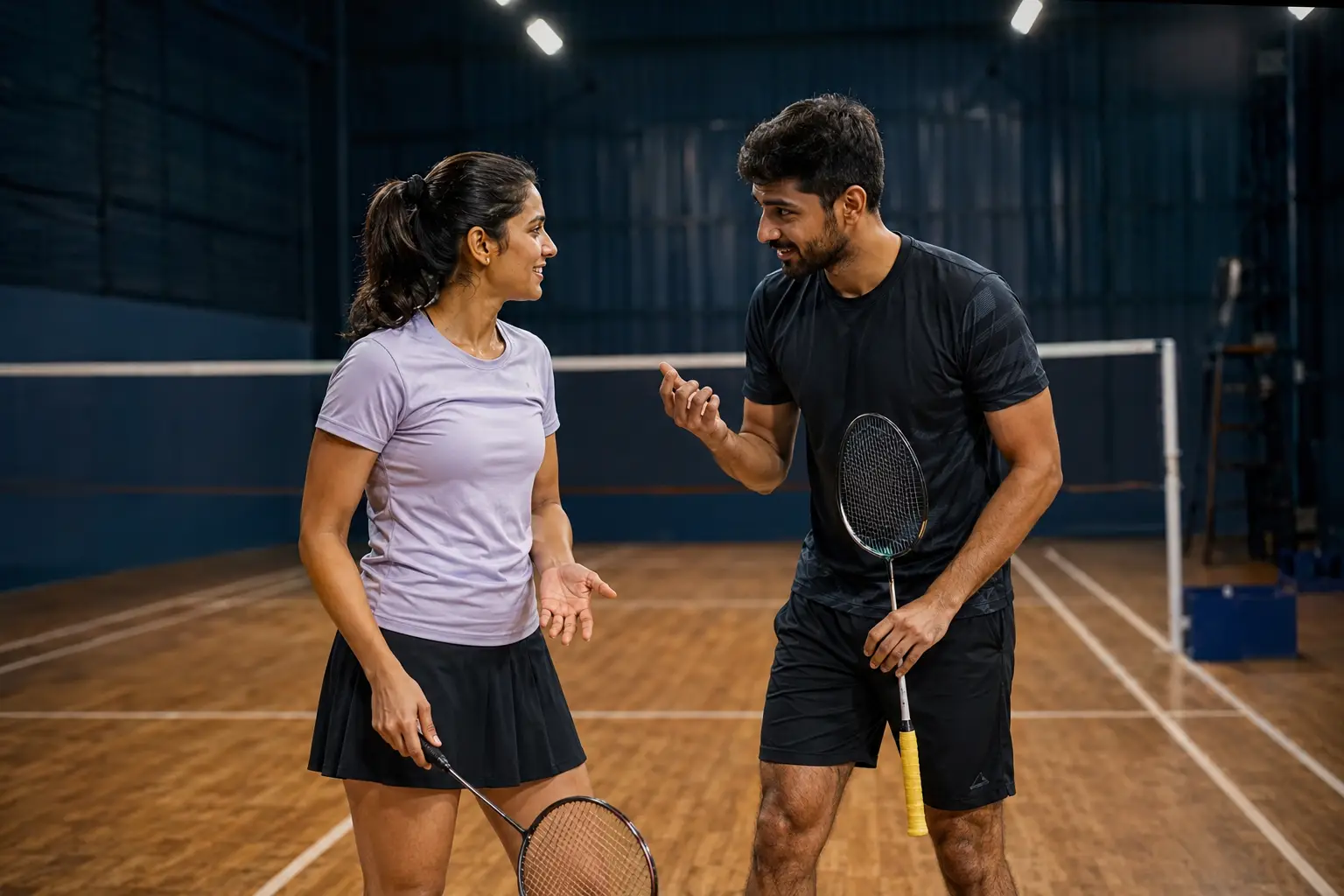
The right partner, on the other hand, is genuinely transformative. A well-matched, reliable, equally committed practice partner accelerates your improvement, keeps your motivation high through the inevitable difficult periods, and makes every session something you genuinely look forward to rather than something you have to push yourself to attend.
This guide is about finding that person in Delhi NCR and building the kind of practice partnership that actually lasts.
Why Your Practice Partner Matters More Than You Think
Most badminton players think about their practice partner purely in terms of skill level. They want someone at roughly their level so the rallies are competitive. That is a reasonable starting point but it is only one dimension of what makes a practice partnership work over time.
Consider what a practice partner actually provides in your badminton development:
Consistent opposition that builds your reactive skills. Unlike solo drilling, playing with a partner forces you to read real shots, adapt to real tactics, and make real-time decisions under genuine pressure. No amount of solo practice fully replicates this.
Accountability that keeps you showing up. On the days when your motivation is low and skipping feels tempting, knowing that your partner is already at the court waiting for you is often the deciding factor that gets you there. This accountability effect is one of the most underrated benefits of a committed practice partnership.
Feedback and perspective on your game. A regular partner sees your game from the other side of the net every session. Over time they develop genuine insight into your patterns, your weaknesses, and your tendencies that you simply cannot see yourself.
Shared motivation and competitive drive. Playing regularly against the same opponent creates a specific kind of healthy competitive rivalry that pushes both players to improve. You both know each other's game deeply and the drive to find new ways to compete effectively against a familiar opponent is a powerful development motivator.
Given all of this, choosing your practice partner deserves far more thought and care than most players give it.
What to Look For in a Badminton Practice Partner
Before you start searching, get clear on what you actually need from a practice partnership. The right partner for a competitive junior player training five days a week is completely different from the right partner for a working professional playing twice a week for fitness and enjoyment.
Skill Level Compatibility
This is the obvious starting point. Playing regularly against someone dramatically better or worse than you has limited development value for both players.
That said, a slight skill level mismatch in either direction is not necessarily a problem. Playing occasionally against someone slightly better than you is genuinely beneficial because it pushes you to a higher standard. Playing against someone slightly less skilled gives you the opportunity to work on specific shots and tactics in a lower-pressure environment.
The problematic mismatches are the dramatic ones. If one player is consistently winning every point with minimal effort while the other struggles to return basic shots, neither player is getting meaningful practice.
A good rule of thumb is to look for a partner where competitive games are genuinely competitive, where both players win some points and lose some points, and where the outcome of a game is not predictable before it starts.
Availability and Schedule Compatibility
Skill level compatibility means nothing if your schedules never align. Before investing time in building a practice partnership, have an honest conversation about availability.
In Delhi NCR specifically, this means discussing:
Which days of the week work consistently for both of you
Whether morning or evening sessions fit both schedules
How far in advance you need to confirm sessions
How you handle last-minute schedule changes
The best practice partnerships in Delhi NCR tend to be between people whose schedules align naturally rather than those who have to work hard to find overlapping windows. If coordinating a session requires extensive negotiation every week, the partnership will struggle to sustain regularity over time.
Attitude Toward Practice and Improvement
This is the factor that most players overlook when choosing a practice partner and it is the one that most frequently causes partnerships to break down.
If you are genuinely serious about improving your game and your potential partner views badminton primarily as a social activity and casual exercise, you are likely to find the partnership frustrating over time. Not because either attitude is wrong but because they lead to very different expectations about how sessions should be structured, how hard to push, and how to respond to mistakes and poor performance.
Look for someone whose attitude toward practice matches yours as closely as possible. If you want to drill specific shots, do structured footwork work, and play competitive games with genuine intensity, find a partner who wants the same things. If you are primarily looking for enjoyable, moderately competitive games with some social element, find someone who shares that priority.
Reliability and Commitment
A practice partner who cancels frequently is worse than no practice partner at all in some respects. Repeated last-minute cancellations waste your booked court time, disrupt your training schedule, and gradually erode the reliability of your practice routine.
Before committing to a regular partnership, get a sense of how seriously the other person takes their commitments. Someone who mentions frequently that they cancel plans when something better comes up is telling you something important about how they will treat your practice sessions.
The most valuable quality in a long-term practice partner, beyond skill and attitude, is simply showing up consistently when they said they would.
Physical Fitness Level
Badminton is physically demanding. A significant mismatch in fitness levels between practice partners can make sessions unproductive for both players.
A highly fit partner playing with someone significantly less fit either has to hold back considerably or risks sessions that are punishing for the less fit player and insufficiently challenging for the fitter one. Neither situation produces optimal practice conditions.
This does not mean both partners need to be athletes. It means their general fitness levels should be compatible enough that both can sustain competitive rallies throughout a session without one player being completely exhausted while the other is barely warmed up.
Where to Find a Badminton Partner in Delhi NCR
Now that you know what you are looking for, here is where to actually find them.
1. Your Regular Badminton Facility
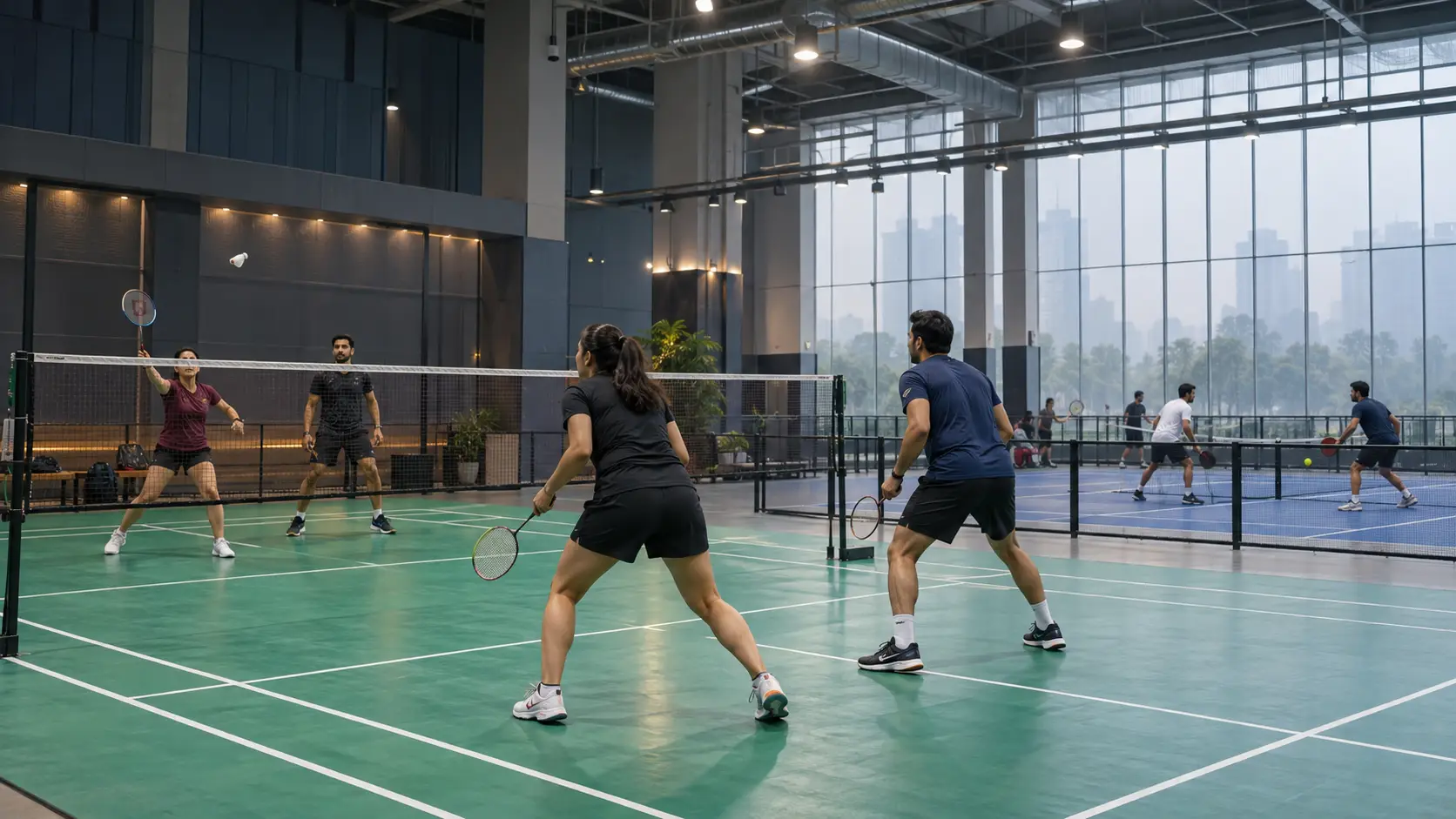
The most natural and often most effective place to find a practice partner is at the court where you already play regularly. Players who book the same facility consistently tend to have compatible schedules, similar commitment levels, and shared standards around court quality.
Introduce yourself to other regular players at your facility. Most badminton players are genuinely friendly and welcoming to other serious players looking for practice partners. Strike up conversations before or after sessions. Offer to join a casual doubles game. Be open and approachable about the fact that you are looking for a regular practice partner.
The advantage of finding a partner at your regular facility is that the logistics are already solved. You both already go to the same place at compatible times. Building a regular practice partnership from there is simply a matter of coordinating your existing schedules.
Rackonnect operates multiple badminton facilities across Delhi NCR including the Rackonnect Next Level Badminton Arena in Noida Sector 141 and the Rackonnect Smashers Badminton Arena where active communities of regular players make finding compatible practice partners significantly easier than searching from scratch.
2. Badminton Groups on WhatsApp and Telegram
Delhi NCR has a thriving ecosystem of badminton community groups on WhatsApp and Telegram where players of all levels connect, organise sessions, find partners, and share court availability.
Search for Delhi NCR badminton groups on these platforms and join a few that seem active and well-moderated. Introduce yourself with a brief message about your level, your preferred playing times, and your location. Most active groups have a culture of welcoming new members who are genuine about their interest in regular practice.
The advantage of these groups is scale. A large active group gives you access to a much larger pool of potential partners than any single facility. The disadvantage is that the filtering process takes more time because you need to assess compatibility through conversation before committing to sessions.
3. Social Media Badminton Communities
Facebook groups, Instagram badminton communities, and Reddit threads focused on badminton in Delhi NCR are all active sources of potential practice partners.
Search specifically for Delhi NCR badminton communities on Facebook where several large groups exist with thousands of members regularly posting about finding partners, organising sessions, and discussing the local badminton scene.
When reaching out through social media, be specific about what you are looking for. Mention your approximate skill level, your preferred session frequency, your location in Delhi NCR, and your preferred playing times. Vague posts asking generally if anyone wants to play get far fewer useful responses than specific, detailed requests from clearly serious players.
4. Workplace and Corporate Networks
Delhi NCR's large corporate sector is home to millions of professionals many of whom play badminton regularly or are looking to start. Your immediate workplace is often an underexplored source of potential practice partners.
Mention your badminton practice to colleagues casually. You may be surprised by how many share the interest. Corporate badminton partnerships have the significant advantage of built-in schedule compatibility since you and your partner are both working in the same location with broadly similar working hours.
Many organisations in Delhi NCR also have internal sports groups or welfare committees that organise regular badminton sessions for employees. If your organisation has this, joining it is an excellent way to both find potential partners and get additional court time.
5. Badminton Coaching Groups and Academies
If you are enrolled in a coaching programme or group session at a badminton academy in Delhi NCR, your fellow participants are natural potential practice partners. You already know they share your commitment to improvement, their skill level is broadly compatible with yours since you are in the same group, and your schedules already overlap at least during coaching sessions.
Building practice partnerships within your coaching group is one of the most efficient ways to find compatible partners because the initial compatibility screening has essentially already been done by the fact that you are both in the same programme.
How to Test a Potential Partner Before Committing
Before settling into a regular practice partnership, it is worth doing a few trial sessions to assess compatibility across all the dimensions discussed earlier.
The Trial Session Approach
Arrange two or three sessions with a potential partner before discussing a regular commitment. During these trial sessions observe:
Punctuality and reliability. Did they show up on time? Did they communicate promptly if there was any change to the plan? First impressions of reliability tend to be accurate.
Attitude during play. How do they respond to their own mistakes? How do they respond to yours? Are they encouraging and focused or negative and distracted? Playing style and attitude during a session reveal character in ways that conversations beforehand cannot.
Post-session communication. Do they follow up after the session? Are they interested in scheduling the next one? Enthusiasm about continuing is a good signal of genuine compatibility.
Physical and skill compatibility in practice. Did the session feel productive for both of you? Were the rallies genuinely competitive? Did the intensity level feel right for both players?
If two or three trial sessions feel consistently good across these dimensions, you have likely found a genuine practice partner worth committing to regularly.
How to Make a Practice Partnership Last
Finding the right partner is only the first step. Maintaining a productive and sustainable practice partnership over time requires some deliberate attention to how the partnership is structured and managed.
Set Clear Expectations From the Start
Have an explicit conversation about expectations before committing to a regular schedule. Discuss:
How many sessions per week you both want to commit to
How much notice is needed for cancellations
Whether sessions will be purely competitive games or include some structured drilling
How you will handle significant skill level changes if one partner improves much faster than the other
Whether you want to occasionally include other players or keep the partnership exclusive
These conversations feel slightly formal when a partnership is new and enthusiastic. But having them early prevents the misunderstandings and resentments that quietly destroy many practice partnerships over time.
Build a Regular Consistent Schedule
The most durable practice partnerships are built on a fixed regular schedule rather than ad-hoc arrangements negotiated week by week.
Agree on specific days and times that work consistently for both of you and treat those slots as committed appointments rather than flexible suggestions. A Tuesday and Thursday morning partnership where both players block those slots in their calendars from the start creates the kind of rhythm and routine that sustains regular practice over months and years.
Keep the Partnership Productive and Fresh
Long-term practice partnerships can fall into comfortable patterns that feel pleasant but stop being genuinely developmental. Playing the same game the same way against the same opponent every session produces diminishing returns over time.
Keep sessions fresh and productive by:
Occasionally introducing structured drilling alongside competitive games
Setting specific improvement goals for each session or training block
Watching matches or coaching videos together and discussing tactics
Occasionally playing doubles with other partners to expose each other to different playing styles
Organising participation in local tournaments together to add external competitive goals to your partnership
Handle Skill Level Divergence Thoughtfully
Sometimes one partner in a practice partnership improves significantly faster than the other. This is natural but it needs to be handled thoughtfully to preserve the partnership's value for both players.
If you are improving faster, consider ways to make sessions productive for your partner too rather than simply playing at full intensity in ways that become discouraging. Handicap arrangements, focusing on specific technical challenges, or adding a coaching dimension to sessions can maintain value for both partners even when the skill gap grows.
If your partner is improving faster, be honest about whether the sessions are still providing you with adequate challenge. A good practice partner will respect this honesty and work with you to find ways to keep the partnership valuable for both of you.
A Note on Playing Doubles for Partner Finding
If finding a singles practice partner is proving difficult, doubles badminton is an excellent alternative route that also has the advantage of exposing you to a wider pool of potential future singles partners.
Joining regular doubles sessions at a quality facility introduces you to multiple players in each session. Over time you will naturally identify individuals whose game, attitude, and availability align with what you are looking for in a singles practice partner.
Many of the strongest practice partnerships in Delhi NCR's badminton community began in exactly this way, through doubles sessions where two players recognised their compatibility and subsequently arranged singles practice together.
Frequently Asked Questions
Q1. What skill level should my badminton practice partner be relative to mine?
Ideally your practice partner should be at a similar skill level so that competitive games are genuinely competitive for both players. A slight mismatch in either direction is not problematic and can even be beneficial. The key is that both players should be winning some points and the outcome of games should not be predictable before they start. Dramatic skill mismatches where one player is consistently dominant produce poor practice conditions for both players.
Q2. How do I find a badminton partner in Delhi NCR if I am new to the city?
The most effective approach for newcomers to Delhi NCR is to join a quality badminton facility and attend sessions regularly. Regular attendance at the same facility quickly builds familiarity with other regular players and creates natural opportunities to connect with potential partners. Joining Delhi NCR badminton WhatsApp and Telegram groups is also highly effective for newcomers as these communities are generally welcoming to genuine players looking to connect.
Q3. What should I do if my practice partner keeps cancelling sessions?
Address it directly and early rather than letting frustration build silently. Have a straightforward conversation about the impact of frequent cancellations on your practice routine and give your partner the opportunity to explain and commit to more reliable attendance. If the cancellation pattern continues despite this conversation, it is a signal that your partner's commitment level does not match yours and you should begin looking for an additional or alternative partner rather than continuing to be let down repeatedly.
Q4. Is it better to have one regular practice partner or multiple partners?
Both have advantages. A single dedicated regular partner provides consistency, deep familiarity, and strong accountability. Multiple practice partners expose you to different playing styles, tactical approaches, and shot patterns that develop your adaptability more broadly. The ideal situation for most serious recreational players is one primary regular partner supplemented by occasional sessions with other players of different styles and levels.
Q5. Can I use Rackonnect facilities to find badminton partners in Delhi NCR?
Yes. Rackonnect's facilities across Delhi NCR attract communities of regular, committed badminton players making them excellent environments for meeting potential practice partners organically. Regular attendance at any Rackonnect venue quickly builds familiarity with the regular player community and creates natural opportunities to connect with compatible partners for regular practice sessions.
Final Thoughts
Finding the perfect badminton partner for regular practice in Delhi NCR takes a little patience and some deliberate effort. But it is one of the most valuable investments you can make in your badminton development.
The right partner does not just give you someone to hit with. They give you accountability, competition, feedback, motivation, and the kind of consistent practice environment that produces real and lasting improvement.
Be clear about what you need. Be deliberate about where you look. Be honest in your trial sessions. And when you find someone whose commitment, attitude, and game align with yours, invest in building that partnership with the same seriousness you bring to your game itself.
Your best badminton is almost certainly played with the right person on the other side of the net.