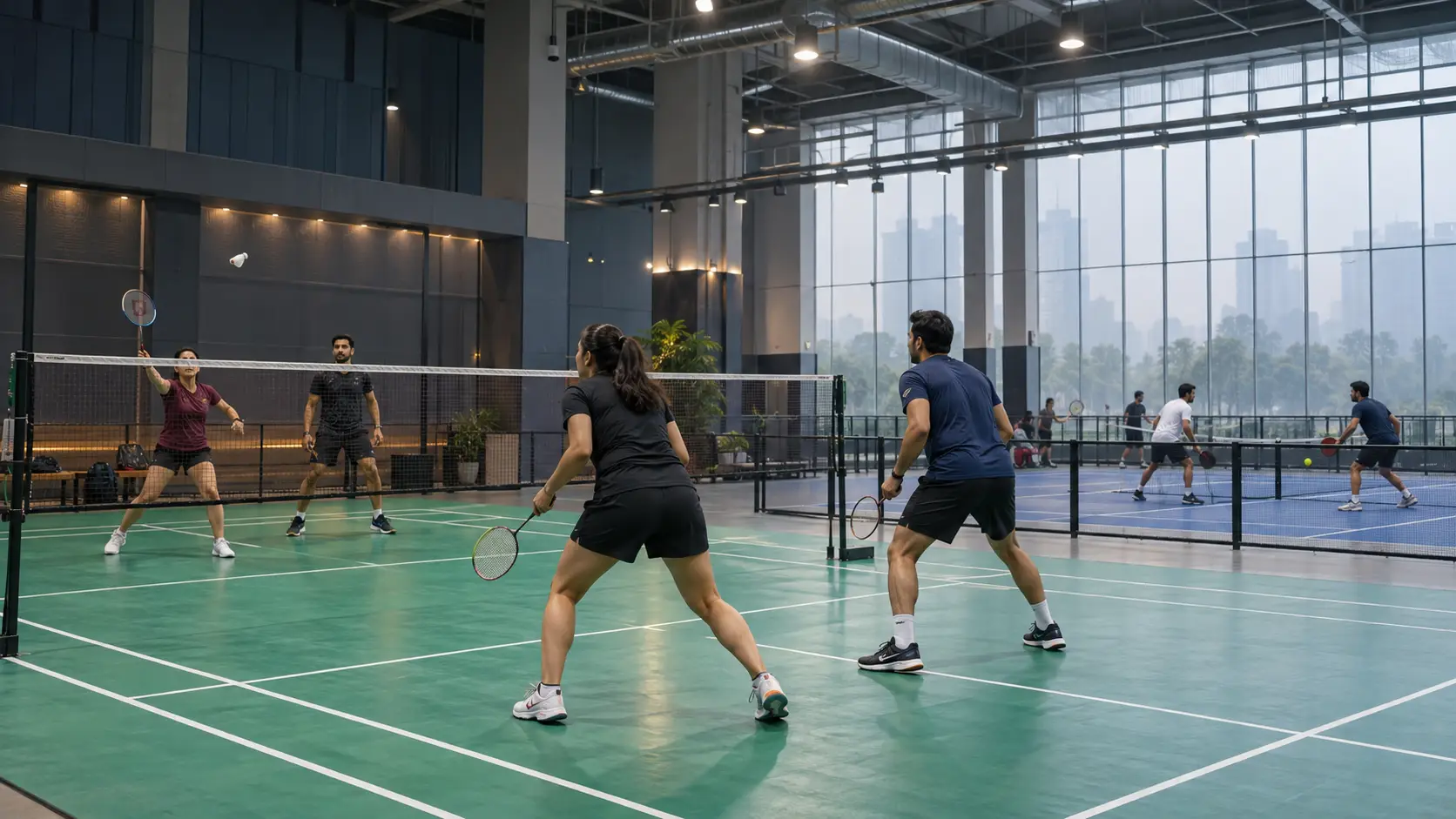
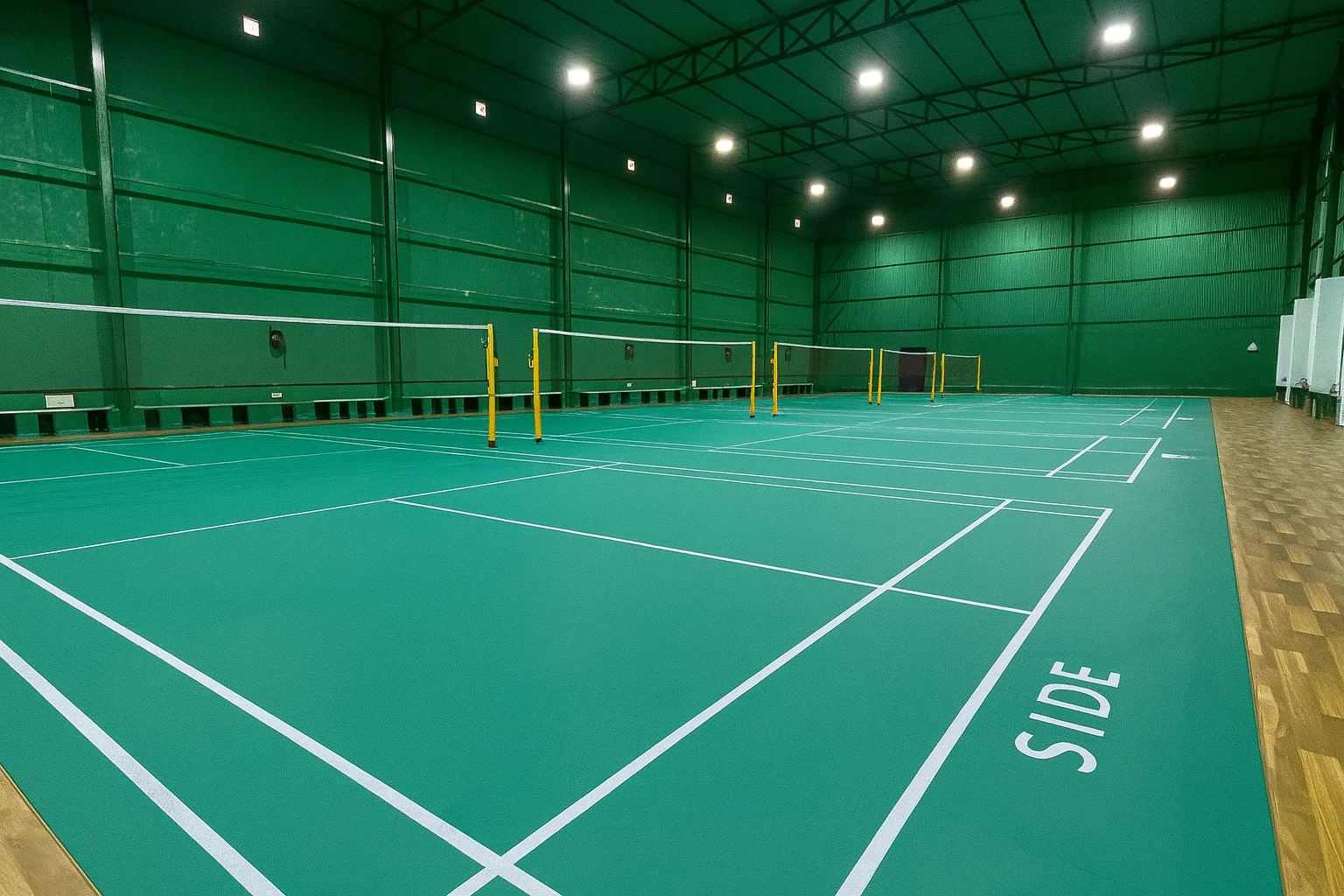
Whether you are picking up a racket for the first time or grinding toward competitive play, finding the right indoor court and coaching setup makes all the difference. This guide covers what to look for in a quality badminton venue, how structured academy training accelerates improvement, and where to find and book the best courts across Delhi NCR.
Why Indoor Courts Produce Better Players Faster
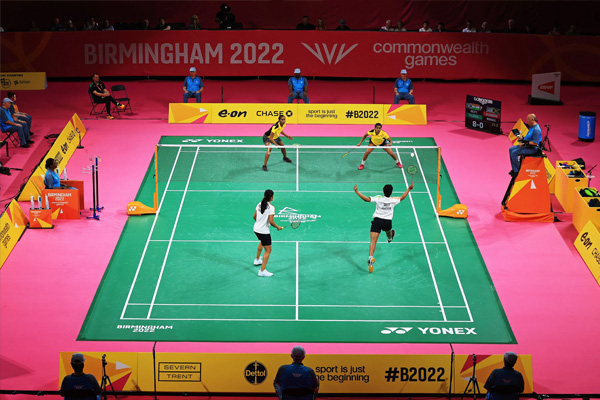
Outdoor badminton sessions are unpredictable. Wind disrupts shuttle trajectory, surface inconsistency affects footwork rhythm, and lighting changes mid-session. Indoor badminton courts remove all of those variables. The shuttle flies true, the floor gives consistent grip, and every rally reflects real match conditions.
Consistent indoor practice helps players develop:
Stroke muscle memory — backhands, smashes and net drops trained in stable conditions carry over to match play more reliably
Footwork speed — synthetic mat flooring with proper cushioning allows players to push off hard without injury risk
Rally endurance — uninterrupted sessions build cardiovascular fitness and point-play stamina
Tactical testing — controlled environments let players experiment with cross-court angles, body smashes and deceptive drops without external interference
For players in Delhi NCR looking to train seriously, book a badminton court in Delhi that meets these indoor standards — consistent lighting, maintained shuttles and clean synthetic flooring.
What Makes a Badminton Academy Worth Joining
Not all academies are built the same. The difference between a productive coaching program and a generic "pay and play" setup comes down to a few key factors.
Structured session design is the most important marker. A quality academy runs warm-up rotations, shadow footwork drills, multi-shuttle feeding, rally simulations and match practice — in that order. Sessions that skip straight to free play produce slower improvement.
Small batch sizes matter because coaches can only give meaningful feedback to four to six players at a time. Larger batches mean less individual correction, which means technique errors go unaddressed for weeks.
Video analysis is now increasingly available at serious academies. Watching your own smash, return of serve or net position in slow motion is one of the fastest ways to identify and correct a flaw.
Progress tracking — good coaches note improvements in serve consistency, backhand control, net dominance and defensive recovery times. If your academy does not track this, ask them to start.
Rackonnect lists verified badminton academy options in Faridabad with structured coaching tiers for beginners, intermediate and advanced players.
Indoor Court Features to Check Before Booking
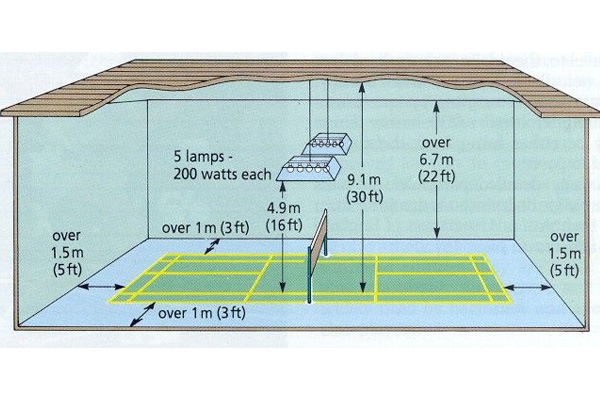
Booking the cheapest court nearby often costs more in the long run — poor flooring leads to knee injuries, bad lighting causes eye strain and low ceiling height cuts off your lob game entirely. Here is a quick checklist before committing to any venue:
Flooring: Look for anti-slip synthetic mats with adequate cushioning. Hard concrete or wooden courts without matting are injury risks for players doing lateral footwork.
Ceiling height: BWF-standard courts require a minimum of 9 metres of clearance. Anything lower penalises lift shots, clears and high defensive lobs — core parts of every rally.
Lighting: Anti-glare LED lighting at 500–750 lux is the standard. Courts that still use yellow-tinted tube lighting make shuttle tracking harder, especially for net play.
Shuttle quality: Courts that replace shuttles regularly give better rallies. Ask whether the venue uses feather or nylon shuttles and how frequently they rotate stock.
Ventilation: Multi-shuttle drill sessions generate significant heat. Adequate air circulation keeps sessions productive even in peak summer months.
Changing rooms: Clean, accessible changing areas are a basic quality marker. They signal that the facility is maintained to a decent standard overall.
For a premium indoor experience in Noida, check out the Rackonnect Next Level Badminton Arena in Noida Sector 141 — featuring professional flooring, regulated lighting and structured coaching programs.
How Location Affects Your Training Consistency
The biggest predictor of improvement is not which academy you join. It is how often you actually show up. Players who book courts 30 minutes away skip sessions more frequently, reschedule less reliably and plateau faster than players who train nearby.
Choosing an indoor court or academy close to home or your workplace removes the friction. It becomes easier to set fixed weekly slots — Tuesday and Thursday evenings, Saturday mornings — and stick to them. That consistency compounds over months into measurable gains in stamina, shot accuracy and match reading.
Delhi NCR players have strong options across zones. Noida players training in Sector 141 can access courts quickly from most of the eastern NCR. Faridabad-based players benefit from dedicated academy infrastructure without travelling into central Delhi. South Delhi and Gurgaon players can find coaching venues that fit commute patterns.
If you are looking for a multi-sport facility alongside badminton, Players Den at Rackonnect Sports Turf offers a broader training environment for players who want variety in their weekly fitness schedule.
Why Online Booking Has Become Essential for Regular Players
Peak court hours — weekday evenings between 6 PM and 9 PM, and Saturday mornings — fill up within hours of slots opening. Walk-in availability at good venues has dropped significantly as more players shift to structured weekly bookings.
Online booking through Rackonnect gives players real-time slot visibility across multiple venues simultaneously. You can compare pricing, check court availability, read verified user reviews and confirm your booking without a phone call. The platform also shows photos of courts and lists amenities so you know exactly what to expect before you arrive.
This matters especially for players switching venues or trying a new academy. Comparing three or four venues side by side — on lighting quality, flooring type, coaching availability and price — takes three minutes online versus three separate visits in person.
Playing Trends Across Delhi NCR Badminton Communities
Badminton culture across Delhi NCR has distinct regional characteristics that shape what players look for in a venue.
Noida players tend to prioritise synthetic mat courts with grip-optimised surfaces due to the high volume of competitive club players in the region. Academy coaching with strength and conditioning add-ons is growing in demand.
Gurgaon players frequently prefer coaching-integrated venues. Many corporate players in Gurgaon use badminton as a structured fitness activity and look for training environments that combine technique coaching with fitness programming.
Delhi players — particularly in South and West Delhi — skew toward early morning sessions. Evening slots fill fastest, so regular players often lock in 6 AM or 7 AM bookings to ensure court availability without competing with post-work crowds.
Faridabad has seen growing interest in structured academy programs, especially for junior players. Parents and young players are increasingly looking for year-round coaching rather than seasonal pickup sessions.
Frequently Asked Questions
What should I look for in a badminton academy near me? Prioritise structured session design, small batch sizes (ideally under eight players), coaching credentials and a clear progression framework. Video analysis and match simulation sessions are strong indicators of a serious program.
How do I book a badminton court in Delhi or Noida? Use Rackonnect to search by location, filter by amenities and check real-time availability. You can compare courts across Delhi, Noida, Faridabad and Gurgaon and book instantly without calls or deposits at most venues.
What is the ideal ceiling height for an indoor badminton court? The BWF standard is a minimum of 9 metres of clearance. Courts below this height restrict defensive clears and high lifts, which changes gameplay significantly for intermediate and advanced players.
How often should I train at a badminton academy for visible improvement? Two to three structured sessions per week, each 60 to 90 minutes, will produce visible improvement in shot consistency and footwork within six to eight weeks for most players.
Are synthetic mat courts better than wooden courts for badminton? Synthetic mats with anti-slip surfaces and cushioning tend to be better for regular training because they reduce knee impact during lateral movement and maintain consistent grip. Wooden sprung floors are also suitable but less common in NCR academies.
Ready to find and book your nearest indoor badminton court or academy? Browse verified venues in Delhi, Noida, Faridabad and Gurgaon on Rackonnect and book your slot in minutes.