
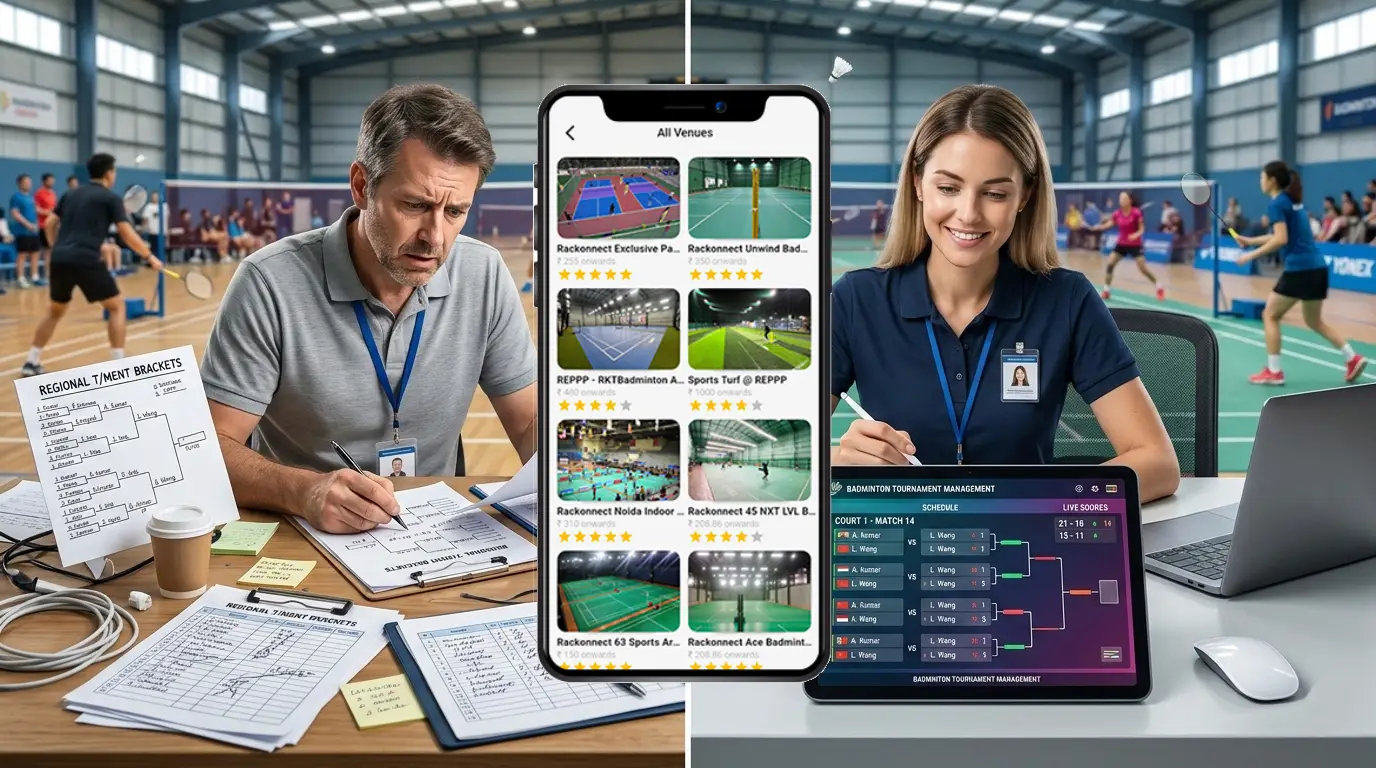
Competitive badminton has evolved rapidly over the past decade. Local club events have grown into structured tournaments with multiple age categories, larger player pools, and increasingly professional expectations from participants. Organizing a badminton tournament today requires managing registrations, match draws, court scheduling, score tracking, and communication with dozens or sometimes hundreds of players. While the scale of tournaments has increased, many organizers still rely on traditional manual methods to manage events.
Paper brackets, spreadsheets, and messaging groups have long been the standard tools for tournament organizers. These systems were workable when tournaments involved a small number of participants and limited categories. However, as badminton communities expand and competitions become more competitive, manual management methods are struggling to keep up with the operational demands of modern tournaments.
The challenge is not simply about convenience. Inefficient tournament management affects scheduling accuracy, player experience, and the overall professionalism of the event. Delayed match updates, scheduling conflicts, and communication gaps can quickly create frustration for players and spectators alike. For competitive badminton tournaments aiming to deliver a smooth and professional experience, relying entirely on manual processes is no longer sustainable.
The Growing Complexity of Competitive Badminton Tournaments
Badminton tournaments today involve far more moving parts than they did in the past. From grassroots competitions to academy level events, tournaments now include multiple formats, larger participation numbers, and expectations for real time updates. As tournaments scale, the complexity of managing matches, players, and schedules increases significantly.
More Players and Multiple Event Categories
Modern badminton tournaments rarely focus on a single category. Most events include multiple divisions such as men’s singles, women’s singles, men’s doubles, women’s doubles, and mixed doubles. In addition to these formats, tournaments are often segmented by age groups or skill levels, such as under-13, under-17, amateur, and advanced categories.
This multi-category structure means that a single tournament can easily involve dozens of brackets running simultaneously. Players may also participate in more than one category, which introduces additional scheduling challenges for organizers trying to avoid match overlaps.
Multi Court Scheduling Challenges
Unlike sports that require a single playing field, badminton tournaments are usually conducted across multiple courts at the same venue. Each court must be scheduled efficiently to avoid delays while ensuring players receive adequate rest between matches. When multiple brackets progress at different speeds, scheduling becomes even more complicated.
Manual scheduling systems often struggle to balance court utilization with player availability. A delay in one match can affect the entire schedule, forcing organizers to constantly adjust match timings and communicate changes to participants.
Rising Expectations From Players and Spectators
Players participating in competitive tournaments expect timely information about their match schedules, opponents, and results. Spectators and coaches also look for instant updates on match outcomes and bracket progress. In the era of digital platforms and real time sports updates, participants expect tournament information to be easily accessible.
When organizers rely solely on manual processes, providing real time updates becomes difficult. Participants may need to repeatedly check physical draw boards or wait for announcements, which slows down the tournament experience and reduces overall engagement.
How Manual Tournament Management Typically Works
Despite the growing complexity of badminton tournaments, many events are still organized using traditional manual workflows. These systems rely heavily on spreadsheets, printed draw sheets, and manual coordination by volunteers or tournament staff. While these methods have served tournaments for many years, they often become inefficient when the number of participants increases.
Paper Draws and Brackets
One of the most common methods used in manual tournament management is the printed bracket chart. Tournament organizers prepare the draw sheets in advance and display them at the venue so players can view their match schedules and opponents. As matches are completed, volunteers update the brackets manually using handwritten scores.
This approach may appear straightforward, but it becomes increasingly difficult to manage when tournaments include multiple categories and several rounds progressing simultaneously.
Spreadsheet Based Scheduling
Spreadsheets such as Excel or Google Sheets are frequently used to plan match schedules and court allocations. Organizers manually enter player names, create match orders, and assign courts for each round. While spreadsheets offer flexibility, they require constant manual updates whenever match results or delays occur.
When several matches finish around the same time, organizers must quickly update the spreadsheet and determine the next set of matches. Even small data entry errors can disrupt the entire schedule.
WhatsApp and Manual Communication
Communication in manually managed tournaments often relies on messaging platforms or public announcements. Organizers may create WhatsApp groups to share match timings or inform players about schedule changes. In some cases, announcements are made verbally at the venue.
While messaging groups help distribute information quickly, they are not always reliable. Players may miss updates, messages can become buried in group conversations, and important scheduling changes may not reach every participant in time.
Manual Score Recording
In many tournaments, referees or volunteers record match results on paper before updating the main draw board. The process requires staff to collect score sheets from each court and manually update the tournament brackets.
This approach can slow down tournament progression because the next matches cannot begin until the results are verified and the brackets are updated. As the number of matches increases, managing results manually becomes increasingly time consuming.
Major Problems With Manual Tournament Management
While manual systems may appear manageable at first, the limitations become clear once tournaments scale in size. Competitive badminton events involve multiple courts, overlapping categories, and continuous match progression. Managing these moving parts through spreadsheets, paper brackets, and messaging groups introduces several operational challenges that can disrupt the flow of a tournament.
Scheduling Errors and Match Conflicts
One of the most common issues in manually managed tournaments is scheduling conflicts. When players participate in multiple categories such as singles and doubles, match timings must be carefully coordinated to avoid overlaps. Manual scheduling often requires organizers to constantly track each player’s availability, which becomes increasingly difficult when dozens of matches are running across several courts.
Even a small oversight can create a chain reaction. A player may be called to two courts at the same time, forcing delays and adjustments to the match order. These disruptions not only slow down the event but also affect fairness when players receive insufficient rest between matches.
Delayed Score Updates
Manual score recording introduces delays in updating tournament brackets. Results must first be recorded on paper at the court, then collected by tournament staff and transferred to the main bracket chart or spreadsheet. During busy stages of the tournament, this process can take significant time.
Delayed updates create uncertainty for players waiting for their next matches. Without immediate visibility into bracket progression, participants often gather around notice boards to check results, which can lead to confusion and congestion around tournament information areas.
Registration and Data Management Issues
Handling player registrations manually can become a logistical challenge, especially when tournaments attract a large number of participants. Organizers often receive entries through multiple channels such as emails, forms, and messaging platforms. Consolidating these entries into a single spreadsheet requires careful data entry and verification.
Manual registration systems increase the risk of duplicate entries, incorrect player details, or missed registrations. These errors may only become visible after the tournament draw has been created, requiring organizers to modify brackets and schedules at the last minute.
Communication Breakdowns
Clear communication is essential for the smooth running of any tournament. In manual systems, information about match timings, court changes, or delays is often shared through announcements or group messages. However, this approach depends heavily on participants actively monitoring updates.
Players who step away from the venue area or miss an announcement may not receive critical information in time. This can result in missed matches, confusion at courts, and additional administrative work for organizers who must locate players and reorganize the schedule.
Limited Transparency for Participants
Another limitation of manual tournament management is the lack of transparency. Players typically rely on printed draw sheets to track their progress or view upcoming matches. If the bracket chart is crowded or not updated quickly, participants may struggle to understand how the tournament is progressing.
In competitive environments where players and coaches want clear visibility into match outcomes and future opponents, limited access to tournament information can reduce the overall experience and professionalism of the event.
Operational Risks for Tournament Organizers
Beyond the challenges faced by players, manual tournament management creates significant operational risks for organizers. Running a successful badminton tournament requires precise coordination across scheduling, scoring, communication, and logistics. When these responsibilities rely heavily on manual processes, the margin for error becomes much higher.
Increased Administrative Workload
Manual tournament management demands constant attention from organizers and volunteers. Staff must handle player registrations, create match draws, update schedules, track results, and communicate updates throughout the day. As the number of matches increases, these responsibilities can quickly overwhelm the organizing team.
Instead of focusing on improving the quality of the event, organizers often spend most of their time managing paperwork and resolving operational issues.
Higher Risk of Human Error
Human error is an unavoidable risk in manually managed tournaments. Incorrect data entry, misreported scores, or scheduling mistakes can easily occur when staff members are handling large volumes of information under time pressure.
Even a minor mistake, such as assigning the wrong player to a bracket or entering an incorrect match result, can disrupt the tournament structure and require time consuming corrections.
Poor Participant Experience
The efficiency of tournament management directly influences how players perceive the event. Long waiting times, unclear schedules, and last minute changes can create frustration among participants. Competitive players invest significant effort in preparing for tournaments, and disorganized management can negatively impact their experience.
For academies and organizers aiming to build credibility within the badminton community, delivering a smooth and well structured tournament experience is essential.
Limited Scalability
Manual systems may function adequately for small club events with a limited number of participants. However, as tournaments grow in scale, these systems struggle to handle the increased workload. Managing hundreds of matches manually requires a large organizing team and extensive coordination.
This lack of scalability often prevents tournaments from expanding or hosting larger participation numbers, limiting the potential growth of competitive badminton events.
Why Competitive Sports Are Moving Toward Digital Tournament Systems
As the scale and professionalism of sports events continue to grow, many organizers are adopting digital tournament management platforms. These systems are designed to automate administrative tasks, streamline scheduling, and provide real time access to tournament information. In competitive badminton, digital solutions are becoming an essential tool for managing events efficiently.
Automated Scheduling and Draw Generation
Modern tournament management systems can automatically generate match draws based on the selected tournament format, whether it is knockout, round robin, or hybrid structures. The software can also account for player participation across multiple categories, helping avoid scheduling conflicts.
Automated scheduling significantly reduces the time required to organize matches while ensuring that courts are used efficiently throughout the tournament.
Real Time Score Updates
Digital scoring systems allow referees or officials to enter match results directly from courts using mobile devices or centralized dashboards. Once scores are entered, tournament brackets update instantly for players, coaches, and spectators.
This real time visibility improves the overall tournament experience and helps players prepare for upcoming matches without unnecessary delays.
Centralized Player Registration
Online registration platforms simplify the entry process for both players and organizers. Participants can submit their details through structured forms, which automatically feed into the tournament database. This reduces manual data entry and ensures consistent player records.
Centralized registration also helps organizers manage entry limits, verify participant eligibility, and organize categories more efficiently.
Improved Communication and Notifications
Digital tournament systems provide built in communication tools that keep players informed throughout the event. Notifications about match timings, court assignments, and schedule updates can be delivered through mobile alerts, email, or integrated messaging features.
This level of communication ensures that players receive accurate information without relying solely on announcements or messaging groups, improving coordination across the entire tournament.
Key Features Modern Badminton Tournament Platforms Provide
Modern badminton tournaments increasingly rely on digital management platforms designed specifically for sports events. These platforms combine multiple administrative functions into a single system, allowing organizers to manage registrations, scheduling, scoring, and communication from one centralized dashboard. By reducing manual processes, tournament organizers can focus more on delivering a smooth and professional competition experience.
Online Registration and Player Management
Digital tournament platforms allow players to register online through structured entry forms. Organizers can collect essential information such as player names, contact details, category selection, and partner information for doubles events. Once submitted, these entries are automatically stored in a centralized database.
This system eliminates the need to manually compile registration lists from emails or messages. It also reduces the risk of duplicate entries or missing participant details, making it easier for organizers to verify and manage player data.
Automated Match Scheduling
One of the most valuable capabilities of tournament management platforms is automated match scheduling. Based on the selected format and available courts, the system can generate match orders that minimize scheduling conflicts and optimize court usage.
Automated scheduling also helps account for players participating in multiple categories. The system can prevent overlapping match assignments and provide adequate rest intervals between matches.
Live Scoring and Standings
Live scoring features allow referees or tournament officials to enter match results directly into the system from courtside devices. As scores are submitted, tournament brackets and standings update automatically.
This instant visibility allows players, coaches, and spectators to follow the progress of the tournament in real time without needing to check physical notice boards.
Tournament Microsites and Live Results
Many modern tournament platforms generate dedicated tournament pages where participants can view draws, match schedules, and results. These microsites provide a centralized location where players and spectators can track the event remotely.
Providing online access to tournament information enhances the professionalism of the event and improves engagement from the wider badminton community.
Performance Data and Tournament Analytics
Digital systems can also capture valuable data throughout the tournament. Match results, player performance metrics, and participation trends can be analyzed after the event to gain insights for future tournaments.
For academies and organizers running regular competitions, this data can help improve event planning, player development tracking, and category structuring.
The Competitive Advantage of Digital Tournament Management
Beyond operational efficiency, digital tournament management offers several competitive advantages for organizers aiming to deliver high quality badminton events. As tournaments become more professional, adopting digital tools helps organizers create a structured and transparent competition environment.
Faster Tournament Execution
Automated scheduling and real time score updates help tournaments progress more smoothly. Organizers can quickly determine the next matches without waiting for manual bracket updates. This efficiency reduces downtime between matches and ensures courts remain active throughout the event.
Professional Experience for Players
Players appreciate tournaments that are well organized and transparent. Digital platforms provide clear visibility into match timings, opponents, and tournament progression. This clarity allows players to focus on their performance rather than worrying about scheduling confusion.
Better Visibility and Audience Engagement
Online tournament pages and live scoring features make it easier for spectators and the badminton community to follow the event. Friends, coaches, and supporters can track results remotely, which increases engagement and visibility for the tournament.
This visibility also benefits academies and clubs looking to build credibility within the competitive badminton ecosystem.
Data for Future Event Planning
Every tournament generates valuable operational insights. Digital management platforms store historical tournament data that organizers can review when planning future events. Participation numbers, match durations, and category popularity can all help inform better planning decisions.
Over time, this data driven approach helps organizers run larger and more efficient tournaments.
The Future of Badminton Tournament Organization
The structure of badminton tournaments continues to evolve alongside advancements in sports technology. As participation levels increase and expectations from players rise, tournament organizers are adopting smarter systems that combine automation, data management, and digital communication.
Integration With Player Rankings and Databases
Future tournament systems are likely to integrate with regional or national player ranking databases. This integration allows organizers to seed players accurately, verify eligibility, and maintain consistent player records across tournaments.
Mobile Score Entry and Referee Tools
Mobile based scoring tools are becoming increasingly common in competitive tournaments. Referees and officials can enter match scores directly from courts using mobile devices, reducing delays and minimizing the need for manual score collection.
This approach ensures that tournament brackets remain accurate and up to date throughout the competition.
Data Driven Tournament Insights
Advanced tournament platforms can analyze match results and participation patterns to provide deeper insights into the event. Organizers can evaluate match durations, identify scheduling bottlenecks, and understand player participation trends across categories.
These insights support better planning for future tournaments and help organizers continuously improve event management.
Scalable Systems for Regional and National Events
As badminton tournaments grow in scale, scalable management systems become essential. Digital platforms allow organizers to manage hundreds of participants, multiple venues, and complex tournament formats without overwhelming administrative teams.
By adopting structured digital systems, badminton tournaments can maintain efficiency, transparency, and professionalism even as the sport continues to expand at competitive levels.