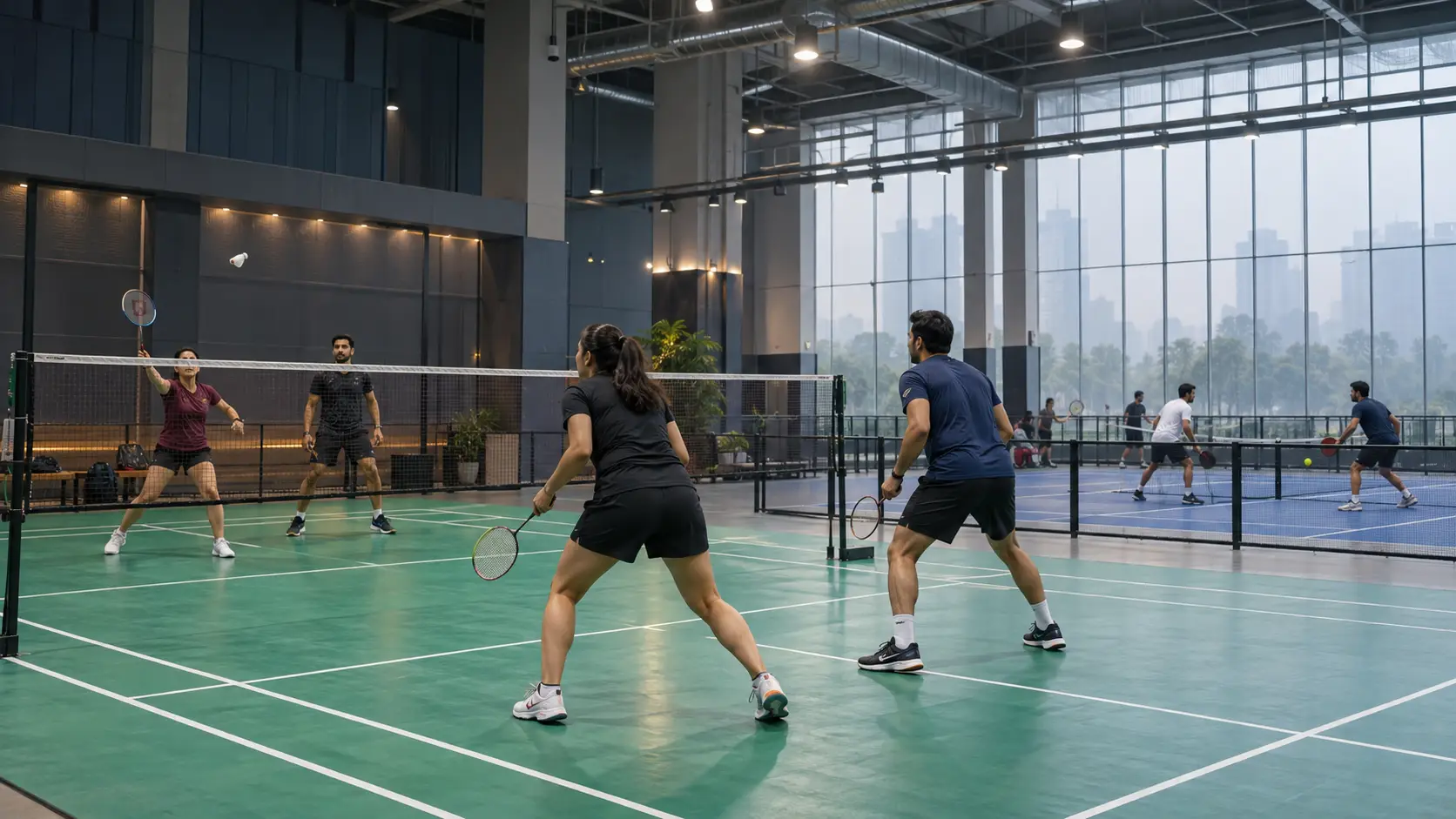
The way you hold your badminton racket affects every single shot you play. Your grip determines how much power you can generate, how accurately you can place the shuttle, and how quickly you can switch between attacking and defensive strokes. Most players never receive proper instruction on grip technique and develop habits that quietly limit their game for years. This guide covers everything you need to know about how to hold a badminton racket correctly - including the three primary grip types, how to manage grip pressure, how to position your fingers for different shots, and how to adapt your grip to your playing style.
Why Your Badminton Grip Technique Matters
Your grip is the only point of contact between your body and your racket, which means it is the foundation of your entire badminton technique. A correct grip gives you the wrist flexibility to generate racket head speed, the control to direct the shuttle precisely, and the relaxed muscle state needed to sustain performance across long rallies and matches. An incorrect grip, by contrast, creates tension that slows your swing, reduces your reach, limits your shot options, and over time contributes to overuse injuries in the wrist, forearm, and elbow. Getting your grip right is not just a technical detail - it is the single most impactful adjustment a developing badminton player can make.
The Three Primary Badminton Grip Types
There are three main grip types used in badminton. Each one is suited to a specific range of shots and court situations. Learning when and how to use all three - and how to switch between them quickly - is what separates players with versatile, deceptive shot-making ability from those whose game is predictable and one-dimensional.
The Forehand Grip
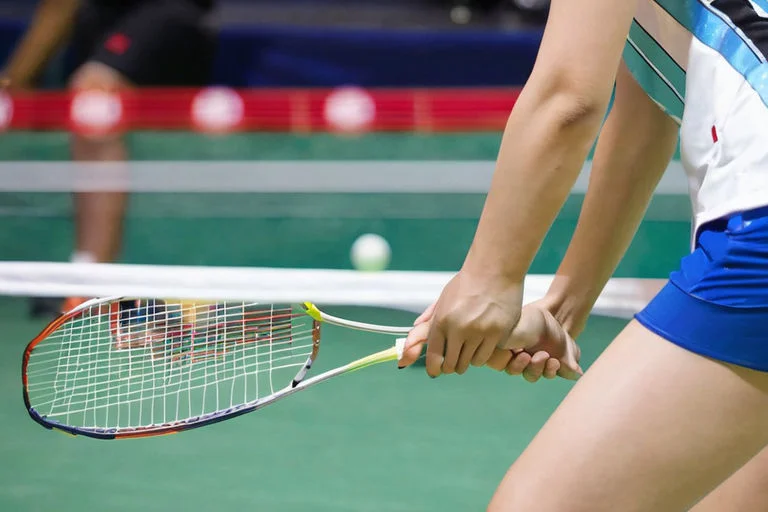
The forehand grip is the most commonly used grip in badminton and the starting point for all players learning correct racket technique. To form the forehand grip, hold the racket handle with your non-dominant hand and position it so that the base knuckle of your index finger rests on the third bevel of the handle. Wrap your fingers naturally around the handle and press your thumb lightly against the back surface of the grip. The V-shape formed between your thumb and index finger should sit on top of the handle.
The forehand grip is the correct choice for all shots played on the forehand side of your body, including overhead clears, smashes, drop shots, and forehand drives. It gives you the wrist freedom and arm angle needed to generate power and control on these shots. When playing overhead strokes, adjust the angle of your racket face slightly to optimise contact with the shuttle at the highest point of your reach.
The Backhand Grip
The backhand grip is used for all shots played on the backhand side of your body. To switch from the forehand grip to the backhand grip, rotate the handle slightly so that the base knuckle of your index finger moves from the third bevel to the second bevel. As you make this adjustment, move your thumb from the back surface of the handle to the wider flat surface on the side, pressing it firmly against the grip. This thumb repositioning is the key feature of the backhand grip - it gives your thumb a platform to push against during the swing, generating power and control on backhand strokes that would be impossible to achieve with a forehand grip.
The backhand grip is essential for backhand net shots, backhand clears, backhand drives, and backhand drops. Many players avoid backhand shots because they find them uncomfortable, but this discomfort almost always comes from using the wrong grip rather than any inherent difficulty in the stroke itself. Mastering the backhand grip opens up the entire backhand court as a genuine attacking option rather than just a defensive necessity.
The Panhandle Grip
The panhandle grip is a specialised grip used primarily for flat, net-level shots and certain serving situations. To form the panhandle grip, hold the racket as if you were shaking hands with it - your palm facing the side, your thumb running along the back surface of the handle, and your fingers wrapped around the front. This positions the racket face perpendicular to the floor and gives you a flat, driving contact surface ideal for net kills, flat drives, and push shots when the shuttle is at net height or below.
The panhandle grip is particularly effective for quick net exchanges in doubles play and for attacking shuttle that sits just above the tape. It should not be used for overhead strokes or deep court shots, as it severely limits the range of motion available for those shots. One of the advanced applications of the panhandle grip is using it to disguise deceptive net shots that look identical to a push or kill until the last moment.
Understanding Grip Pressure in Badminton
Grip pressure is one of the most misunderstood aspects of badminton technique. The instinct most players have is to grip tighter when they want to hit harder, but this is exactly the wrong approach. A tight grip throughout the swing creates muscular tension that restricts wrist movement, slows racket head speed, and reduces both power and control. The correct technique is to maintain a relaxed grip throughout the preparation and swing phase, and then apply a sharp, brief increase in grip pressure only at the precise moment the strings make contact with the shuttle.
This loose-to-tight grip transition is what creates the whip-like acceleration that generates genuine power in badminton shots. It allows the racket head to travel freely through the swing and snap through the shuttle at maximum speed, producing far more pace and spin than any amount of sustained tight gripping can achieve. After contact, immediately release the grip back to a relaxed state so your hand and forearm are ready for the next shot.
In practical terms, your grip should feel firm enough that the racket cannot slip from your hand, but relaxed enough that someone could pull the racket from your grip without significant resistance between shots. If your forearm feels fatigued after a short rally or your knuckles are visibly white during play, your grip pressure is too high throughout the swing.
Hand Positioning and Finger Placement
Beyond grip type and pressure, the precise positioning of each finger on the handle has a meaningful effect on your shot-making ability. The index finger plays the most significant role of any individual finger in controlling the racket head. Positioning the index finger slightly extended along the handle, rather than wrapped tightly alongside the other fingers, gives you significantly greater directional control over where the racket face points at contact.
For powerful shots - smashes and clears - focus on pressing through the middle and ring fingers during the contact phase to drive the racket forward with maximum force. For delicate shots - net drops and tight net returns - use the pad of your index finger to guide the racket with precision and softness. Experimenting with minor thumb and finger positioning adjustments during practice will help you identify the configurations that give you the best combination of power and control for each shot type.
Ensure that both hands work together during preparation. Your non-dominant hand should hold the racket throat while you move into position, releasing it as you begin your swing. This two-handed preparation keeps the racket stable and allows your dominant hand to take over smoothly at exactly the right moment.
How to Adapt Your Grip for Different Playing Styles
The ideal grip configuration is not identical for every player. Singles players, who need to cover the entire court alone and frequently play from deep positions, generally benefit from a grip that prioritises power and swing speed - particularly a strong forehand grip with a well-developed wrist snap for overhead shots. Doubles players, who face faster exchanges and need to react quickly at shorter distances, often benefit from a slightly more compact grip that enables faster transitions between forehand and backhand and quicker net-level reactions.
Take time to assess what your playing style demands most. If your backhand is a consistent weakness, focus specifically on perfecting your backhand grip transition so that switching to it becomes fast and automatic. If you play a lot of doubles and struggle with quick net exchanges, spend dedicated time practising the panhandle grip in net-play scenarios. Tailoring your grip development to the specific demands of your game accelerates improvement far faster than practising grip technique in isolation.
Hand and Wrist Exercises to Strengthen Your Grip
A technically correct grip requires adequate strength and endurance in the muscles of the hand, wrist, and forearm to maintain its quality across a full match. Grip strength that fades under fatigue leads to compensatory habits - over-gripping, using the palm instead of the fingers, losing the backhand thumb position - that undo your technical improvements during exactly the high-pressure moments when correct technique matters most.
Wrist rotations, finger extensions against resistance, towel wringing exercises, and controlled racket shadow swings focusing on wrist snap are all effective for building the specific strength needed for badminton grip technique. Incorporate five to ten minutes of hand and wrist conditioning into your training routine two to three times per week. Over several weeks, you will notice that maintaining correct grip form across long rallies and full match conditions becomes significantly easier.
Common Badminton Grip Mistakes and How to Fix Them
Using the palm instead of the fingers is the most foundational grip error. The palm provides no sensitivity or flexibility. If you feel the racket sitting deep in your palm rather than resting across the base of your fingers, reposition the handle immediately. The racket should always feel controlled by your fingers, with the palm providing structural support but not primary contact.
Failing to switch grips between shots is a mistake that severely limits your shot options. If you play all shots - forehand and backhand - with the same grip, you are either giving up power on your backhand or reducing control on your forehand. Practise grip transitions as a deliberate skill during feeding drills until switching between forehand, backhand, and panhandle grips becomes completely automatic.
Maintaining the same grip pressure throughout the entire rally is a power and endurance killer. Sustained gripping fatigues your forearm muscles quickly and prevents the wrist snap needed for powerful shots. Always return to a relaxed grip between shots and apply pressure only at contact.
Frequently Asked Questions - How to Hold a Badminton Racket
What is the correct way to hold a badminton racket for beginners?
Beginners should start by learning the forehand grip. Hold the racket handle so that the base knuckle of your index finger sits on the third bevel, wrap your fingers naturally around the handle, and press your thumb lightly against the back surface. The grip should feel secure but relaxed, with the racket resting across the base of your fingers rather than deep in your palm. Once the forehand grip feels natural, begin learning the backhand grip transition.
What is the difference between the forehand and backhand grip in badminton?
The forehand grip positions the base knuckle of your index finger on the third bevel of the handle, with the thumb pressed against the back surface. The backhand grip shifts the index finger knuckle to the second bevel and moves the thumb to the wider flat side surface of the handle, where it can actively push through backhand shots. The backhand grip gives you power and control on backhand strokes that is impossible to achieve with a forehand grip.
Should I grip the badminton racket tightly or loosely?
You should maintain a relaxed grip throughout your swing and tighten it sharply only at the moment of contact with the shuttle. A grip that is tight throughout the swing creates tension, slows your racket, and fatigues your forearm muscles quickly. The loose-to-tight transition at contact is what generates genuine racket speed and shot power in badminton.
When should I use the panhandle grip in badminton?
Use the panhandle grip for flat, net-level shots - particularly net kills, flat pushes, and certain serving situations in doubles. It is not suitable for overhead strokes or shots from deep in the court, as it severely restricts the wrist movement needed for those shots. The panhandle grip is most effective in fast net exchanges where a flat, driving contact is needed quickly.
How do I switch grips quickly during a badminton rally?
Quick grip switching is a skill that requires deliberate practice. The transition between forehand and backhand grips is a small rotation of the handle in your fingers - the palm barely moves. Practise this transition slowly during shadow swings until the movement is smooth and automatic, then gradually increase the speed until you can switch grips in less than a second during feeding drills. Over several weeks of consistent practice, the switch will become completely automatic during live rally situations.
Mastering how to hold a badminton racket correctly is one of the highest-return improvements any player can make. The right grip gives you access to power, control, and shot variety that no amount of physical training can compensate for if the foundation is wrong. Take time to practise each grip type, develop the loose-to-tight contact habit, and build the strength to maintain correct form across full match conditions. Every improvement you make to your grip will show up in your shots almost immediately.