
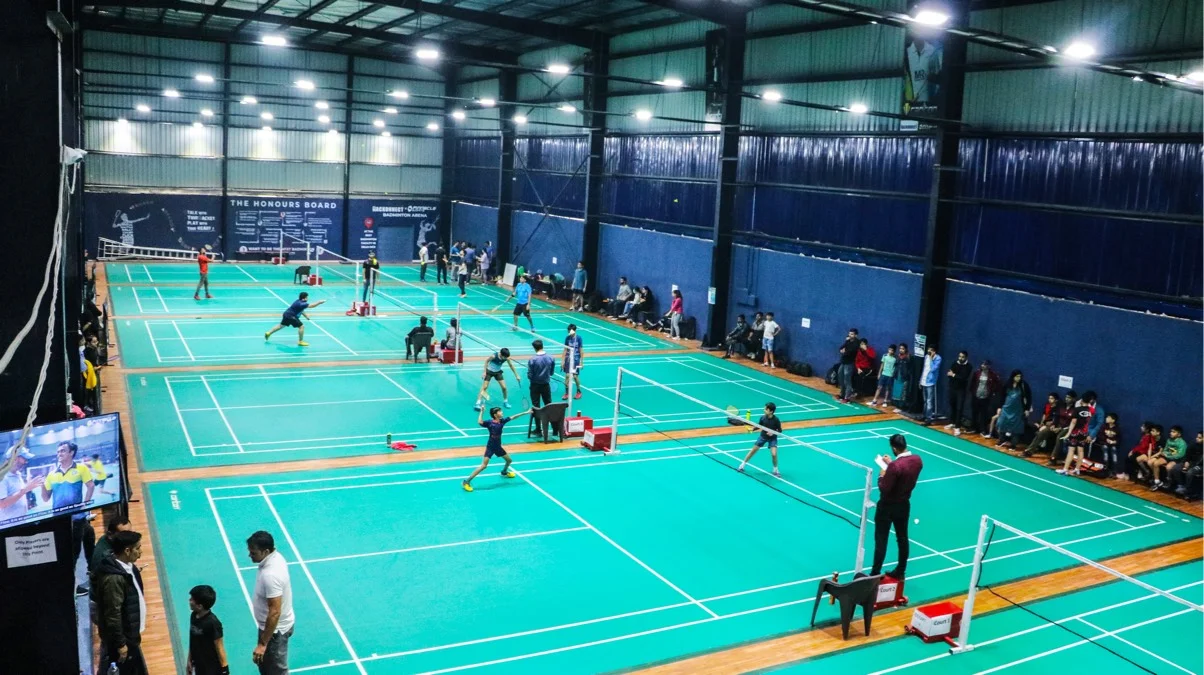
Indian badminton has long been synonymous with a handful of elite training centres - institutions whose names carry the weight of decades of national champions and international medallists. But something significant is shifting. At the grassroots and sub-junior level, a new generation of players is rising not from the corridors of Hyderabad or Bengaluru's most prestigious academies, but from smaller, leaner, and increasingly effective training centres spread across the country. The results are turning heads at the Badminton Association of India, and they are forcing a reappraisal of where Indian badminton's next generation of stars will come from.
A Tournament That Changed the Conversation
The All India Sub-Junior Ranking Tournament - featuring Under-15 and Under-17 categories - has traditionally been a stage where players from the Pullela Gopichand Badminton Academy in Hyderabad and the Prakash Padukone Badminton Academy in Bengaluru dominate the draw. For decades, these two institutions produced the vast majority of India's top junior talent, and their representation in the final rounds of national sub-junior events was taken as a near-certainty.
The recent edition of this tournament in Jaipur produced a result that defied that expectation entirely. Players from smaller, less-resourced academies swept all ten titles across the Under-15 and Under-17 categories. Not a single title went to a representative of PGBA or PPBA. For officials at the Badminton Association of India, the results were not just surprising - they were significant enough to be celebrated as evidence of a structural change in Indian badminton's talent landscape.
What the Jaipur Results Mean for Indian Badminton
The sweeping of all ten titles by players from smaller academies is not simply a good tournament result - it is a data point that supports a broader argument about the decentralisation of elite badminton development in India. For years, the assumption within the sport was that the only pathway to national-level success ran through the major academies in Hyderabad and Bengaluru. Players and families made major sacrifices - relocating families, disrupting education, separating children from their home environments - based on the belief that access to these elite centres was essential for competitive success.
The Jaipur tournament results challenge that assumption directly. A BAI official commenting on the results described what is happening as a paradigm shift: players from smaller towns and academies are now rising to compete at and win national titles, bringing genuine depth to India's talent pool and reducing the sport's historical dependence on a small number of elite training hubs. This is exactly the kind of structural breadth that national sports programmes need to sustain long-term international competitiveness.
The Players Who Are Proving the Point
Among the standout performers at the Jaipur tournament were Dev Ruparelia from Maharashtra and Parul Choudhary from Rajasthan - two players whose stories illustrate the changing reality of elite junior badminton development in India. Dev trains at the Nitesh Badminton Academy rather than at one of the established national powerhouses. Parul is coached by Manish Sharma in Gurgaon, another example of a player choosing quality local training over relocation to a major academy.
Both players chose to stay and develop within their local training environments rather than making the move that previous generations of ambitious junior players felt compelled to make. Their victories at Jaipur suggest that this choice - staying local and training under dedicated coaches in smaller setups - is no longer a compromise. For a growing number of talented young players, it is becoming the path of choice, and it is delivering results that demand attention at the national level.
How Rackonnect Is Accelerating This Shift
One of the key organisations driving and supporting this wave of decentralised badminton development is Rackonnect - a sports technology platform founded by Dhruv M. Bagla that operates 15 badminton academies across North India, including facilities in Gurugram, Noida, and Faridabad. Rackonnect's model is built on a simple but powerful premise: that world-class coaching and training infrastructure should not be confined to a handful of elite centres in two cities. Every talented young player, regardless of where they grow up, deserves access to the coaching quality and competitive exposure needed to reach their potential.
Rackonnect academies offer high-quality coaching, structured competitive tournament programmes, and comprehensive equipment support - creating training environments that genuinely compete with what the traditional powerhouses offer, but delivered locally and accessibly. If you are looking for a top-quality badminton academy in your area, Rackonnect operates facilities across North India:
The individualised coaching approach that Rackonnect prioritises - tailoring training programmes to each player's strengths, weaknesses, and development stage - is one of the key differentiators that smaller academies have consistently demonstrated over the larger, volume-driven training environments of the established powerhouses. When coaches can give genuine individual attention to each player rather than managing large groups, the quality of technical and tactical development accelerates significantly.
Why Smaller Academies Are Producing Better Results
The success of smaller academies at national sub-junior level is not accidental. Several structural factors are working in their favour that were not present or were less developed a decade ago.
Access to quality coaching has improved dramatically across India outside the traditional major centres. A new generation of qualified coaches - many of whom trained at or competed against the established academies - is now working in cities and towns across the country, bringing genuinely high technical standards to local training environments. The quality gap between coaching available at PGBA or PPBA and what is now available at smaller academies in cities like Gurgaon, Jaipur, and Noida has narrowed considerably.
Court infrastructure has also improved. The growth of indoor badminton facilities in Tier 2 and Tier 3 cities means that players no longer need to travel to Hyderabad or Bengaluru to access synthetic courts, proper lighting, and professional training environments. Platforms like Rackonnect have accelerated this infrastructure development significantly, creating facilities that meet national competitive standards in locations that were previously underserved.
Finally, the psychological advantage of training at home should not be underestimated. Players who develop within their home environments - supported by family, settled in their schools and communities, and training with coaches who know them well - often show greater mental resilience and consistency than players who relocate at young ages and face the additional pressures of adapting to new environments away from their support systems.
What This Means for the Future of Indian Badminton
The implications of this shift extend well beyond the sub-junior tournament circuit. If smaller academies across India continue to develop talent at this rate and quality, the long-term effect on India's international badminton programme will be transformative. A deeper and more geographically diverse national talent pool means more competition for national team places, higher standards of domestic competition, and a broader base from which future international medallists can emerge.
For parents and young players considering their development pathway, the Jaipur results send a clear message: you do not need to leave home and join an elite academy in another city to reach national level. The right coaching, the right environment, and the right support infrastructure - now increasingly available through platforms like Rackonnect across North India - can get you there from wherever you are starting.
The BAI's positive response to these developments suggests that India's national badminton administration understands and welcomes the structural change that is happening. A decentralised model of talent development is more resilient, more inclusive, and ultimately more likely to produce the sustained international success that Indian badminton is capable of achieving.
Frequently Asked Questions - Smaller Badminton Academies and Indian Badminton Development
Which smaller academies are challenging the established powerhouses in Indian badminton?
Several smaller academies across India are producing top national sub-junior results, including the Nitesh Badminton Academy in Maharashtra and academies in Rajasthan and Gurgaon. Rackonnect's network of 15 badminton academies across North India - in cities including Delhi, Noida, Gurugram, and Faridabad - is also a significant part of this emerging ecosystem of decentralised elite development.
What happened at the All India Sub-Junior Badminton Ranking Tournament in Jaipur?
At the recent All India Sub-Junior Ranking Tournament in Jaipur, players from smaller academies swept all ten titles across the Under-15 and Under-17 categories - defeating representatives from the Pullela Gopichand Badminton Academy and the Prakash Padukone Badminton Academy, the two institutions that had historically dominated these events. The BAI described the results as evidence of a paradigm shift in Indian badminton's talent development landscape.
What is Rackonnect and how is it supporting Indian badminton development?
Rackonnect is a sports technology platform founded by Dhruv M. Bagla that operates 15 badminton academies across North India, including in Delhi, Noida, Gurugram, and Faridabad. The platform provides high-quality coaching, competitive tournament opportunities, and equipment support to young players, with a model focused on accessibility and individualised training. Rackonnect is actively contributing to the decentralisation of elite badminton development in India by bringing national-standard training infrastructure and coaching to players outside the traditional major academy cities.
Do players need to join a major academy like PGBA or PPBA to succeed in Indian badminton?
The recent All India Sub-Junior tournament results suggest that joining a major academy is no longer a prerequisite for national-level success in Indian badminton. Players like Dev Ruparelia and Parul Choudhary have demonstrated that dedicated coaching in smaller, local academies can produce players capable of winning national titles. As smaller academies and platforms like Rackonnect continue to raise training standards across the country, the advantage historically associated with the major academy centres is continuing to narrow.
Where can I find a Rackonnect badminton academy near me?
Rackonnect operates badminton academies and court facilities in Delhi, Noida, Faridabad, Gurugram, and other locations across North India. You can find and book your nearest Rackonnect venue through the links below - each facility offers quality coaching, well-maintained courts, and structured training programmes for players at every level.
Badminton Court in Delhi
Badminton Academy in Faridabad
Noida Indoor Stadium
The rise of smaller badminton academies across India is one of the most encouraging developments in Indian sport in recent years. It signals that the country's badminton talent is broader, deeper, and more geographically distributed than the sport's historical concentration in a few elite centres suggested. As platforms like Rackonnect continue to build world-class training infrastructure and coaching across North India - in Delhi, Noida, Faridabad, and beyond - the pathway to national-level success is opening up for talented players from every background and every part of the country. The next generation of Indian badminton champions could come from anywhere. And increasingly, they are.