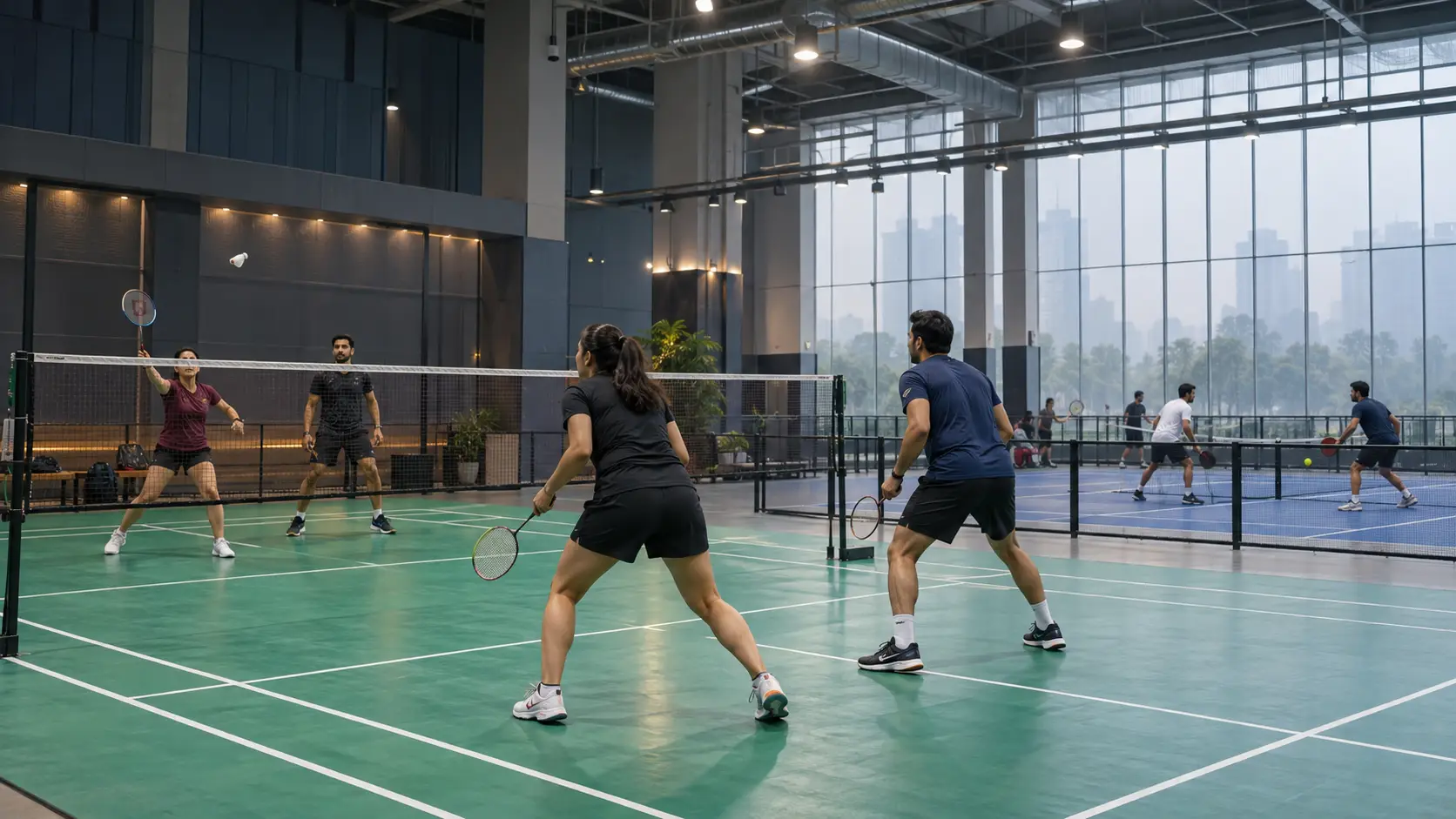
Knowing the official rules of badminton is essential for players, coaches, and enthusiasts who aim to compete at recognized levels. The global governing authority responsible for standardizing these regulations is the Badminton World Federation (BWF).
Whether participating in local tournaments at a badminton court in Delhi or training at a structured badminton academy in Faridabad, understanding official BWF rules ensures fair play and competitive readiness.
This comprehensive guide explains scoring formats, service regulations, faults, court dimensions, officiating roles, and professional conduct standards aligned with international competition guidelines.
Overview of the Badminton World Federation
The Badminton World Federation governs international badminton competitions, including world championships and Olympic events. It establishes standardized rules, tournament structures, and officiating procedures followed globally.
Scoring System Explained
Rally Point Scoring
Matches are played using the rally point system. A point is scored on every rally regardless of which side served.
Game Format
Games are played to 21 points
A match is best of three games
A two point lead is required to win a game
If the score reaches 29 all, the first side to reach 30 wins
Intervals
60 second break at 11 points
Two minute break between games
Service Rules
Correct Service Position
The server and receiver must stand within their respective diagonal service courts without touching boundary lines.
Legal Service Height
The shuttle must be hit below 1.15 meters from the court surface at the time of contact in official tournaments.
Doubles Service Rotation
In doubles, service rotates between partners depending on point outcome, following a fixed service order.
Common Service Faults
Shuttle hit above legal height
Feet lifting off ground during serve
Shuttle not struck in one continuous motion
Faults and Let Situations
Common Faults
Shuttle landing outside boundary lines
Shuttle passing under or through net
Double hits by same player
Racket touching net during rally
Let Situations
A let is called when an unforeseen interruption occurs. The rally is replayed without penalty.
Court Dimensions and Equipment Standards
Court length: 13.40 meters
Singles width: 5.18 meters
Doubles width: 6.10 meters
Net height at center: 1.55 meters
All international matches use BWF approved shuttle specifications and equipment standards.
Indoor facilities such as Noida Indoor Stadium typically adhere to official measurement guidelines for competitive preparation.
Singles vs Doubles Rule Differences
Service Court Variation
Singles uses narrow long court for serve. Doubles uses wide short court during service.
Rotation System
Doubles players must maintain proper service order throughout the match.
Match Conduct and Code of Behavior
Players must respect officials and opponents
Deliberate delay is penalized
Coaching allowed only during intervals
Card System
Yellow card for warning
Red card for fault penalty
Black card for disqualification in extreme cases
Umpire and Line Judge Roles
The umpire has final authority over match decisions. Line judges monitor shuttle landings. Players may challenge calls where review systems are available.
Recent Rule Interpretations
Service height monitoring devices in major tournaments
Instant review challenge system
Standardized officiating signals
Frequently Asked Questions
Why is badminton scored to 21 points
The rally point scoring system was introduced to make matches more dynamic and time predictable.
What happens at 29 all
The first side to reach 30 points wins the game.
Can the shuttle touch the net during serve
Yes, if it crosses over and lands in the correct service court.
What is considered a fault
Any violation of service, rally, or conduct rules defined by official regulations.
Why Understanding BWF Rules Matters
Understanding badminton BWF rules enhances competitive confidence, prevents unnecessary faults, and ensures fair match conduct. Players who study official regulations gain a strategic advantage and avoid avoidable penalties during tournaments.
Rule awareness is not only for professional athletes. It benefits recreational players aiming for structured competition and consistent improvement.