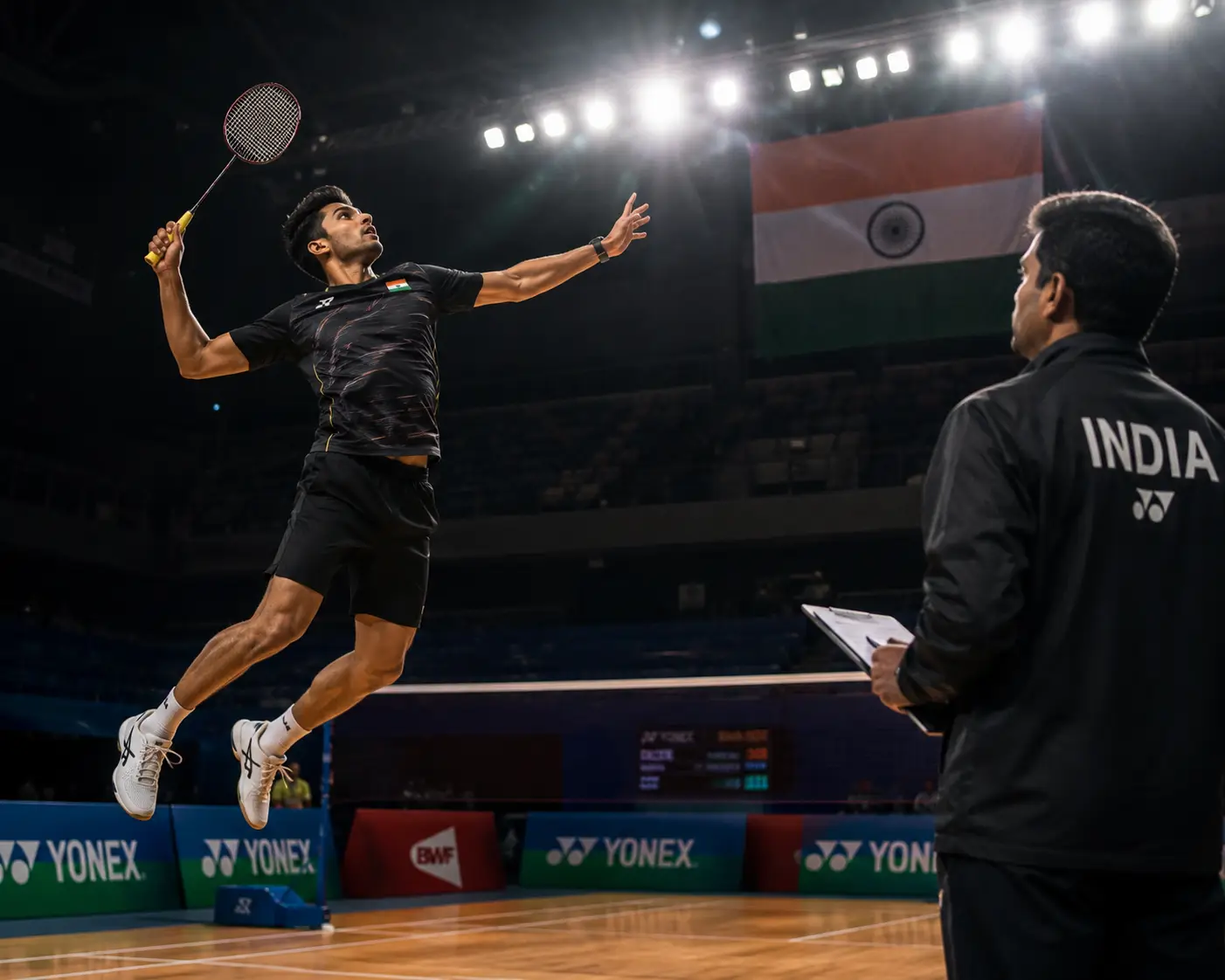
Every child who picks up a badminton racket for the first time dreams of playing like PV Sindhu or Lakshya Sen. The explosive smashes, the lightning-fast footwork, the roar of the crowd at the All England Open or the Olympics. It all looks thrilling from the outside.
But what does the journey to professional badminton actually look like in India? What separates the millions of children who play badminton in their neighbourhoods and school playgrounds from the handful who go on to represent their state, their country, and eventually compete on the world stage?
The honest answer is that going professional in badminton in India is one of the most demanding journeys a young athlete can undertake. It requires exceptional talent, yes. But talent alone has never been enough. The players who make it combine natural ability with years of structured training, the right coaching, genuine sacrifices, and an almost obsessive commitment to improvement.
This is the real roadmap. Not the glamorous highlight reel version but the actual step by step reality of what it takes to build a professional badminton career in India.
Step 1: Start Early and Start Right
The foundation of every professional badminton career in India is laid early. Most players who reach the national level began their formal training between the ages of 6 and 10. This is not to say that starting later makes success impossible but the physical and technical habits formed in early childhood create advantages that are genuinely difficult to replicate later.
Why Early Training Matters
Badminton is a sport that demands exceptional reflexes, coordination, and spatial awareness. These attributes are most efficiently developed during childhood when the brain is most receptive to motor skill learning. Players who begin structured training early develop movement patterns, court sense, and racket skills that become deeply ingrained and automatic by their teenage years.
What Early Training Should Look Like
Starting early does not mean pushing a 6-year-old into intense competitive training. The early years should focus on:
Developing basic hand-eye coordination through fun, game-based activities
Building fundamental movement skills including running, jumping, and changing direction
Introducing basic racket skills in a non-pressured environment
Building a genuine love for the game rather than fear of losing
The worst thing parents and early coaches can do is impose intense competitive pressure on young children before they have developed the physical and emotional foundation to handle it. Many potentially great players burn out or quit the sport entirely because their early experience was driven by adult ambition rather than the child's own joy in the game.
Step 2: Find the Right Coach Early
If there is one single factor that separates players who reach professional level from those who plateau at club level, it is the quality of coaching they receive in their formative years.
India has produced several world-class badminton coaches but the gap between the best coaching available and what most young players actually have access to remains significant. Finding a genuinely qualified, experienced coach is one of the most important investments a family can make in a young player's career.
What to Look For in a Badminton Coach
BWF or BAI certified coaching qualification
Experience of producing players who have competed at state or national level
A training philosophy that balances technical development with physical conditioning
The ability to identify and correct technical flaws before they become deeply ingrained habits
A genuine interest in the player's overall development, not just match results
The Danger of Poor Coaching
Many talented young players in India never reach their potential because they spent their formative years with unqualified coaches who taught them technically flawed strokes and footwork patterns. Unlearning bad habits that have been practiced thousands of times is far harder than learning correctly from the beginning.
For families in Delhi NCR looking for structured, professionally coached badminton development, the Rackonnect Strings and Feathers Badminton Academy offers coaching programmes designed and delivered by qualified coaches who understand the pathway from beginner development to competitive play.
Step 3: Build the Physical Foundation
Professional badminton is one of the most physically demanding racket sports in the world. A top-level singles match can last anywhere from 45 minutes to over an hour with players covering distances of 6 kilometres or more during a single game. The physical demands include explosive speed, exceptional agility, outstanding endurance, and the strength to maintain technique under fatigue.
Physical Attributes Required for Professional Badminton
Speed and Agility:
Badminton requires players to cover every corner of a 6.1 metre wide court within fractions of a second. The ability to accelerate explosively, change direction instantly, and recover back to the centre after every shot is non-negotiable at professional level.
Cardiovascular Endurance:
A professional badminton player needs the cardiovascular capacity to sustain high-intensity rallies repeatedly over the course of a match and then recover between games. Players at national and international level typically have VO2 max scores comparable to middle-distance runners.
Strength and Power:
Despite what the sport looks like from the outside, badminton demands significant strength, particularly in the core, legs, and shoulder complex. The power behind a professional smash comes not just from the arm but from a coordinated kinetic chain that starts at the feet and moves through the entire body.
Flexibility and Mobility:
The extreme reach positions badminton requires, particularly for net shots, cross-court lunges, and overhead clears, demand exceptional flexibility and joint mobility. Without this, players cannot cover the full court efficiently and risk serious injury trying to do so.
When Physical Training Should Begin
Serious physical conditioning should be introduced gradually from around age 12 to 14, once the young player has developed a solid technical foundation. Before this age, physical development should happen naturally through the sport itself and general athletic play rather than structured gym-based conditioning.
Step 4: Master the Technical Fundamentals Completely
Many players reach an intermediate level in badminton on the strength of natural athleticism and basic technique. But reaching professional level requires a completely different standard of technical mastery.
Core Technical Areas Every Aspiring Professional Must Master
Footwork:
Professional-level footwork is not just about reaching the shuttle. It is about reaching it efficiently, maintaining balance throughout, and recovering to the centre court position after every single shot without losing momentum. Footwork training is arguably the most time-consuming aspect of professional badminton development and should be practiced as a dedicated discipline separate from stroke practice.
Serve and Return of Serve:
At professional level, serves and returns are tactical weapons, not just ways to start a rally. The ability to vary serve placement, speed, and trajectory to exploit opponent weaknesses is a skill that takes years of deliberate practice to develop fully.
Net Play:
The ability to dominate net play is what separates good players from great ones. Tight net shots, tumbling net returns, and deceptive net kills require extraordinary racket control and anticipation that can only be built through thousands of hours of focused practice.
Deception:
Professional badminton players use deception constantly. The ability to make an opponent commit to one direction while playing the shuttle in another is a high-level skill that requires exceptional body control and the ability to delay the final moment of shot execution.
Smash and Defence:
A powerful, well-placed smash is one of the most effective weapons in badminton. But at professional level, the ability to defend against smashes is equally important. The best players in the world are as impressive in defence as they are in attack.
Step 5: Compete, Compete, Compete
Technical skill and physical fitness developed in training mean very little without competitive experience. The pressure of competition develops mental attributes that simply cannot be replicated in practice sessions, no matter how realistic the training environment.
The Indian Badminton Tournament Pathway
India has a well-structured competitive pathway for aspiring professional players:
District Level Tournaments:
The starting point for most young competitive players. District tournaments expose young players to competition outside their training group and provide early experience of match pressure.
State Level Championships:
Performing well at state level is the first major milestone on the professional pathway. State championships are organised by State Badminton Associations affiliated to the Badminton Association of India.
All India Ranking Tournaments:
These are the critical stepping stones toward national recognition. Performing consistently well at All India Ranking tournaments builds a player's national ranking and attracts the attention of selectors.
National Championships:
The BAI National Badminton Championship is the premier domestic competition in India. Reaching and performing well at national level is the clearest signal that a player has genuine professional potential.
Junior International Tournaments:
For players under 19, the BWF Junior circuit provides crucial international exposure. Indian junior players have increasingly been performing strongly on the international junior circuit in recent years.
Step 6: Get the Right Academic and Family Support Structure
One aspect of the professional badminton journey that rarely gets discussed openly is the enormous sacrifice it demands from families. The financial cost of quality coaching, equipment, tournament travel, and sports science support is substantial. Many talented players from less privileged backgrounds never reach their potential simply because the financial resources required are beyond their family's means.
What Families Need to Understand
Professional badminton development typically costs between ₹5 lakh and ₹15 lakh per year when coaching, equipment, travel, and nutrition are factored in
Academic flexibility is essential as training and tournament schedules frequently conflict with regular school timetables
Emotional support from family is as important as financial support
Parents must balance encouragement with allowing the player to develop their own intrinsic motivation
Government and Institutional Support
India has improved significantly in terms of government support for promising badminton players. The Sports Authority of India (SAI) runs training centres across the country that provide coaching, facilities, and financial support to identified talent. State governments increasingly offer sports scholarships and employment guarantees to national-level players, which reduces but does not eliminate the financial burden on families.
Step 7: Develop the Mental Game
At professional level, the physical and technical differences between top players are often marginal. What consistently separates winners from losers at the highest level is mental strength.
Mental Attributes Required for Professional Badminton
Pressure Management:
The ability to perform your best when the stakes are highest is perhaps the single most difficult mental skill to develop. Many technically gifted players never fulfil their potential because they cannot maintain composure under match pressure.
Resilience:
Professional badminton involves constant setbacks. Injuries, bad losses, selection disappointments, and periods of poor form are all inevitable parts of the journey. The players who reach the top are invariably those who respond to setbacks by working harder and smarter rather than losing confidence.
Focus and Concentration:
A badminton match can last over an hour with hundreds of individual points. Maintaining tactical focus and concentration throughout without mental lapses is a skill that requires as much deliberate practice as any physical or technical attribute.
Self-Belief:
Perhaps the most intangible but most important mental quality. The players who consistently perform at professional level have an unshakeable belief in their own ability that allows them to compete aggressively even when things are not going well.
Step 8: Embrace Sports Science and Recovery
The modern professional badminton player is not just an athlete. They are a highly optimised sports performance machine supported by a team of specialists.
What Modern Professional Badminton Development Includes
Physiotherapy and injury prevention programmes to protect the body during intense training periods
Sports nutrition planning to fuel training, optimise recovery, and maintain peak physical condition
Video analysis of both the player's own performance and upcoming opponents
Mental conditioning work with sports psychologists
Strength and conditioning programmes specifically designed for badminton movement demands
Many of these resources were previously available only to elite national squad players. Increasingly however, serious academies and training centres across India are integrating sports science support into their programmes for promising junior players.
The Reality Check: How Many Make It?
It is important to be honest about this. Of the millions of children who play badminton in India, only a tiny fraction will ever reach professional level. Of those who reach national level, only a handful will achieve international success.
This does not mean the journey is not worth taking. The discipline, resilience, teamwork, physical fitness, and mental strength developed through serious badminton training are attributes that benefit every area of life regardless of whether the player ultimately goes professional.
But families and young players should enter this journey with clear eyes. The path is long, expensive, physically demanding, and genuinely uncertain. The ones who make it are not just talented. They are extraordinarily dedicated, exceptionally well-supported, and often quite fortunate in terms of finding the right coaches and opportunities at the right moments.
Starting Your Journey in Delhi NCR
If you or your child is serious about exploring what a structured badminton development pathway looks like, starting with the right facility and coaching environment is the most important first step.
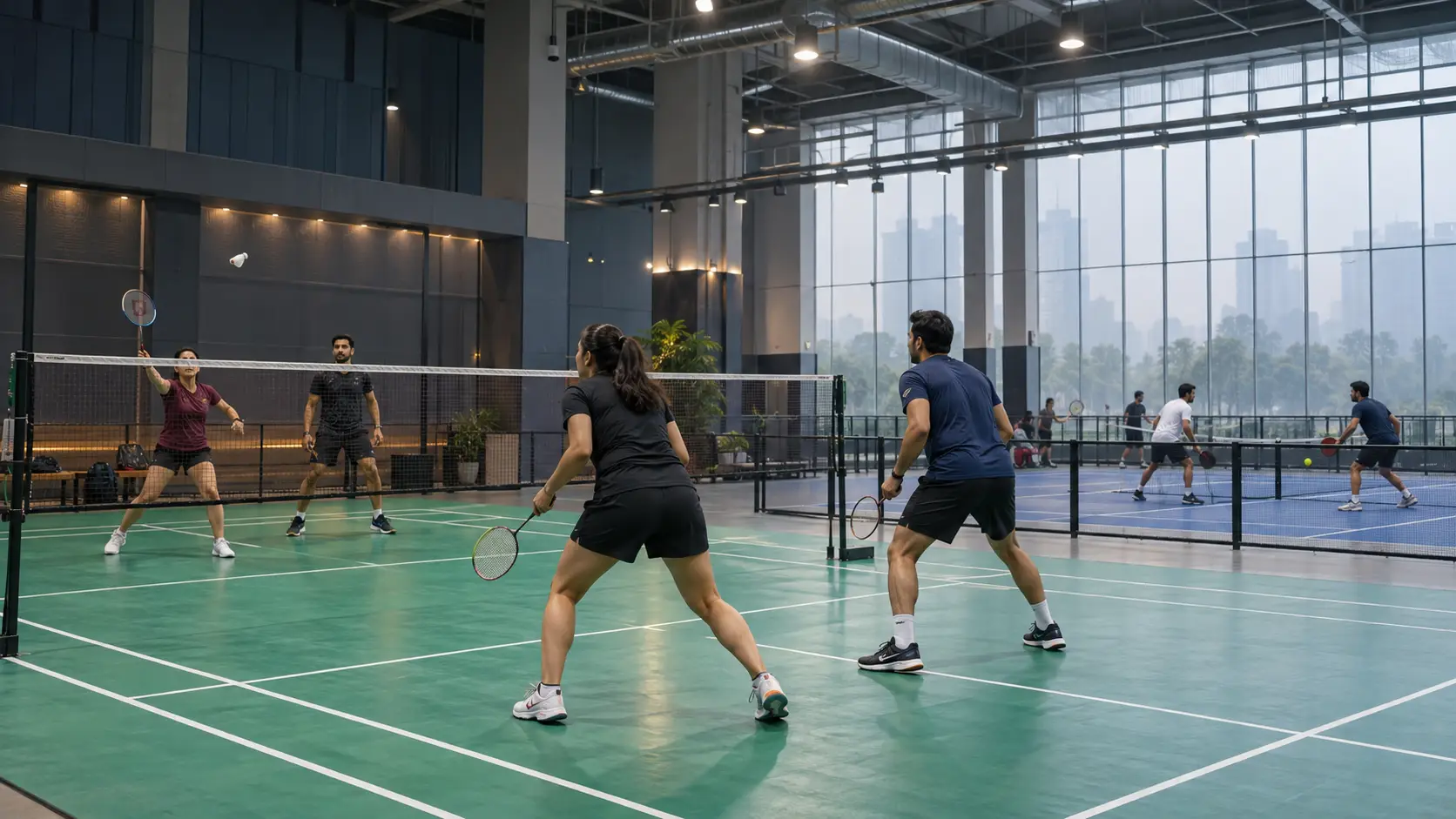
The Rackonnect Badminton Academy in Faridabad offers structured coaching programmes for young players at various stages of development, providing the kind of professional environment that gives serious players the best possible foundation for their journey.
For those based in Noida, the Rackonnect Next Level Badminton Arena in Noida Sector 45 provides professional-grade courts and training facilities that support both recreational players and those with serious competitive ambitions.
Frequently Asked Questions
Q1. At what age should a child start badminton training in India to go professional?
Most professional badminton players in India began formal training between the ages of 6 and 10. Starting early allows players to develop fundamental movement patterns and racket skills during the most receptive period for motor skill development. However structured competitive training is best introduced gradually from around age 10 to 12 rather than pushing young children into intense competition too early.
Q2. How much does it cost to develop a professional badminton player in India?
The total cost of professional badminton development in India typically ranges from ₹5 lakh to ₹15 lakh per year when quality coaching, equipment, tournament travel, nutrition, and sports science support are included. Government schemes through SAI and state sports bodies can offset some of these costs for players who demonstrate exceptional talent at national level.
Q3. Is the Badminton Association of India the only pathway to professional badminton?
The BAI is the primary governing body for competitive badminton in India and the official pathway to national and international competition runs through BAI-affiliated state associations. However private academies, corporate sponsorships, and BWF development programmes also play important roles in identifying and supporting talented players outside the formal government structure.
Q4. Can someone become a professional badminton player without attending a dedicated academy?
It is possible but increasingly unlikely at the highest levels. The modern professional badminton environment demands access to professional coaching, high-quality training facilities, sports science support, and a structured competitive programme that individual self-training simply cannot replicate. The best academies in India now offer development pathways that rival international standards.
Q5. What is the role of mental training in professional badminton development?
Mental training is as important as physical and technical training at professional level. The ability to manage pressure, maintain focus over long matches, recover from setbacks, and compete with confidence under scrutiny are mental skills that require deliberate development. Many leading Indian academies now incorporate mental conditioning as a formal part of their training curriculum.
Final Thoughts
Going professional in badminton in India is one of the most demanding and rewarding journeys an athlete can undertake. It demands years of disciplined training, the right coaching at the right time, exceptional physical development, competitive experience across multiple levels, and a mental strength that most people never need to develop.
The pathway is clear. The requirements are understood. What it ultimately comes down to is whether the player has the passion, the support structure, and the relentless commitment to walk that path every single day for years on end.
If that fire exists, the journey is absolutely worth beginning. And it begins with a single step: finding the right court, the right coach, and the right environment to grow.