1. Introduction: Why a Structured Youth Badminton Program Matters
A well-designed Youth Badminton Development Program is more than just weekly practice sessions — it is a structured pathway that builds technical skills, physical fitness, discipline, and long-term athletic potential.
Badminton is one of the fastest racket sports in the world. For young players, early exposure to correct techniques, movement patterns, and game awareness significantly improves long-term performance and reduces injury risk. Research and coaching frameworks developed by the Badminton World Federation (BWF) emphasize age-appropriate training, progressive skill development, and coach education to ensure sustainable athlete growth.
A structured youth program helps:
• Develop fundamental movement skills such as agility, balance, and coordination
• Improve cardiovascular fitness and reflexes
• Build technical shot accuracy and footwork efficiency
• Encourage teamwork, sportsmanship, and confidence
• Create a clear pathway from beginner to competitive levels
Unlike informal play, a structured development program ensures that training is aligned with scientifically supported models such as Long-Term Athlete Development (LTAD), where training intensity and complexity increase gradually based on the child’s biological and psychological readiness.
When designed correctly, a youth badminton program doesn’t just produce good players — it builds lifelong athletes.
2. Core Principles That Guide a Youth Badminton Development Program
To align with international best practices, a successful youth badminton program should follow structured principles recommended by organizations such as the Badminton World Federation (BWF) and supported by Long-Term Athlete Development models used worldwide.
2.1 Long-Term Athlete Development (LTAD) Framework
The LTAD model emphasizes:
• Training based on developmental age, not just chronological age
• Building strong movement fundamentals before advanced competition
• Gradual increase in training volume and intensity
• Avoiding early specialization pressure
In badminton, this means younger players focus on coordination and enjoyment first, while advanced players gradually shift toward tactical awareness and competitive readiness.
2.2 Skill-First Approach
Technical mastery is the foundation of badminton success. Early years should prioritize:
• Proper grip techniques
• Basic forehand and backhand strokes
• Footwork patterns
• Shuttle control
Overloading young athletes with intense physical conditioning before technical mastery can slow long-term development.
2.3 Play-Based Learning
Children learn best through engagement and enjoyment. Programs should include:
• Mini-games
• Relay drills
• Skill-based competitions
• Modified court formats
This approach improves retention rates and keeps children motivated to continue training long-term.
2.4 Safety and Inclusivity
A modern youth program must prioritize:
• Injury prevention warm-ups
• Age-appropriate equipment
• Safe training environments
• Equal opportunities regardless of gender or skill level
This approach ensures both performance development and emotional well-being.
3. Program Goals and Expected Outcomes
A well-structured Youth Badminton Development Program aims to achieve measurable and long-term outcomes across physical, technical, tactical, and psychological domains.
3.1 Physical Development
Participants should experience:
• Improved agility and speed
• Enhanced cardiovascular endurance
• Better hand-eye coordination
• Increased muscular strength appropriate to age
Badminton places high demands on reaction time and lateral movement, making structured training essential for physical literacy development.
3.2 Technical Skill Mastery
By the end of early development phases, players should demonstrate:
• Consistent serve accuracy
• Controlled clear and drop shots
• Proper defensive positioning
• Efficient footwork recovery
Technical refinement during youth years creates a strong competitive advantage later.
3.3 Tactical Awareness
As players mature, they begin learning:
• Shot selection strategy
• Court positioning
• Reading opponents’ movement
• Match pacing and control
Tactical learning should evolve gradually as cognitive maturity increases.
3.4 Psychological and Social Growth
Youth badminton programs also nurture:
• Discipline and time management
• Confidence and self-esteem
• Team collaboration (especially in doubles play)
• Resilience after losses
These life skills often become as valuable as athletic achievements.
3.5 Long-Term Athlete Pathway
The ultimate objective is to create a sustainable pathway:
Beginner → Development Squad → Competitive Player → Advanced/Elite Athlete
Not every participant will pursue elite competition — and that is completely acceptable. The goal is to provide both recreational and competitive pathways within the same structured framework, ensuring lifelong engagement in the sport.
4. Age-Based Development Phases
A structured Youth Badminton Development Program should follow progressive age-based phases. Each stage focuses on specific physical, technical, and tactical priorities aligned with long-term athlete development principles.
4.1 Phase 1: Active Start and Fundamental Movement (Ages 5–7)
Primary Focus: Fun, movement, and coordination development
At this stage, the goal is not competition but physical literacy. Children should develop fundamental movement skills that form the foundation for all sports.
Training Objectives
• Improve balance, agility, and coordination
• Introduce basic racket handling
• Develop hand-eye coordination
• Build enjoyment and confidence
Weekly Training Time
1–2 sessions per week (45–60 minutes each)
Sample Session Focus
• Fun warm-up games (tag, shuttle relay)
• Basic grip introduction
• Balloon or soft shuttle rallies
• Mini-court play
• Cool-down stretching
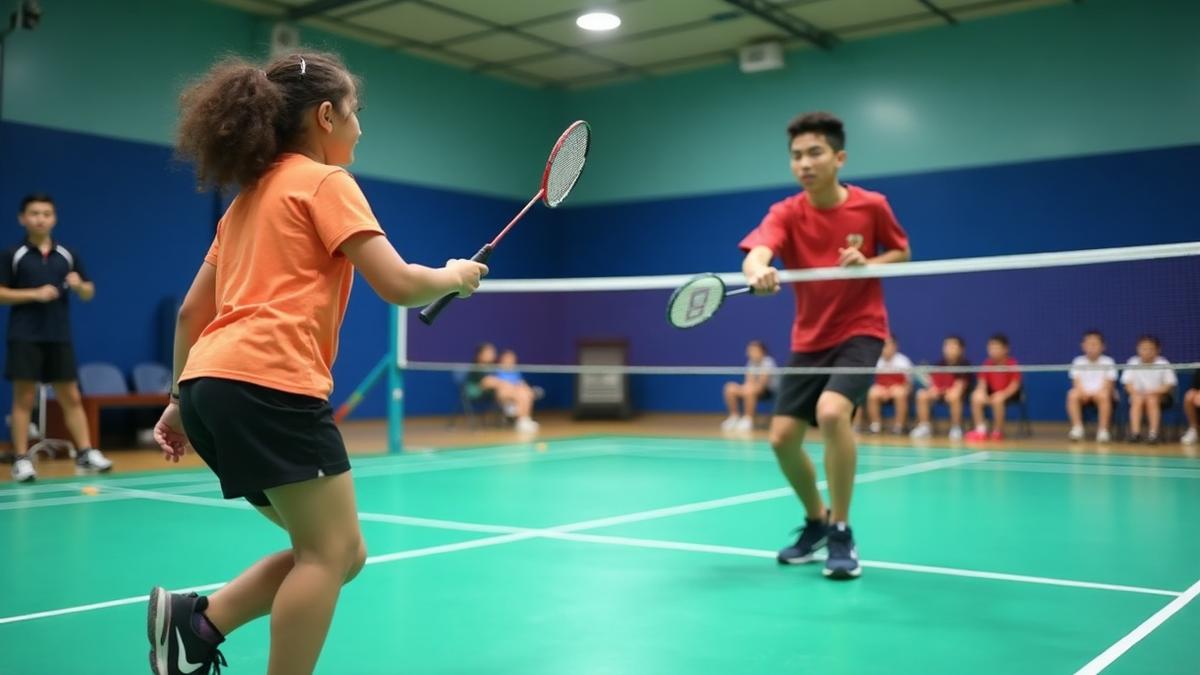
Competition at this stage should be informal and game-based, emphasizing participation rather than winning.
4.2 Phase 2: Fundamental Badminton Skills (Ages 8–10)
Primary Focus: Technical foundations and controlled movement
Players begin learning structured badminton skills while maintaining a fun and engaging environment.
Training Objectives
• Proper forehand and backhand grip
• Basic overhead clear
• Underarm serve
• Introduction to footwork patterns
• Basic rally consistency
Weekly Training Time
2–3 sessions per week (60 minutes each)
Sample Session Focus
• Dynamic warm-up drills
• Shuttle control exercises
• Multi-shuttle forehand practice
• Footwork ladder drills
• Mini matches with modified scoring
Competition can be introduced in friendly formats with shorter matches and simplified rules.
4.3 Phase 3: Skill Development and Tactical Awareness (Ages 11–13)
Primary Focus: Refining technique and introducing strategy
Players begin understanding tactical concepts and game situations.
Training Objectives
• Advanced stroke development (drop, smash, net shot)
• Improved footwork speed and recovery
• Defensive positioning
• Introduction to singles and doubles tactics
Weekly Training Time
3–4 sessions per week (60–90 minutes each)
Sample Session Focus
• Movement-based warm-up
• Multi-shuttle attack and defense drills
• Net play combinations
• Tactical game simulations
• Physical conditioning (age-appropriate strength exercises)
Players at this stage may participate in structured local competitions to gain match experience.
4.4 Phase 4: Train to Compete (Ages 13–15)
Primary Focus: Competitive readiness and physical conditioning
This stage increases training intensity while maintaining technical refinement.
Training Objectives
• Consistent shot precision under pressure
• Advanced tactical play
• Match analysis skills
• Strength and endurance development
Weekly Training Time
4–5 sessions per week (90 minutes each)
Sample Session Focus
• High-intensity multi-shuttle drills
• Tactical pattern training
• Match simulation
• Structured fitness sessions
• Recovery protocols
Competition participation becomes more structured and performance-focused.
4.5 Phase 5: Train to Excel (Ages 15–17)
Primary Focus: High-performance preparation
Athletes showing competitive commitment may transition into elite-level preparation.
Training Objectives
• Advanced technical consistency
• High-speed tactical execution
• Mental conditioning
• Strength and conditioning program
Weekly Training Time
5–6 sessions per week (90–120 minutes each)
At this stage, athletes compete at regional or national levels depending on ability and progression.
5. Sample Weekly Training Structure
A consistent weekly structure ensures balanced development across all skill areas.
Example Weekly Schedule (Ages 11–13)
Day 1 – Technical Focus
• Warm-up and agility drills (15 minutes)
• Stroke refinement drills (30 minutes)
• Footwork recovery patterns (15 minutes)
• Controlled match play (20 minutes)
Day 2 – Tactical Focus
• Dynamic warm-up (10 minutes)
• Multi-shuttle attack and defense (25 minutes)
• Tactical scenario training (30 minutes)
• Match play with feedback (25 minutes)
Day 3 – Conditioning and Game Play
• Speed and agility drills (20 minutes)
• Strength exercises (bodyweight circuits) (20 minutes)
• Doubles coordination drills (20 minutes)
• Competitive match play (30 minutes)
6. Coach Qualifications, Safety, and Program Management
A successful Youth Badminton Development Program depends heavily on trained and responsible coaching staff.
6.1 Coach Qualifications
Youth coaches should:
• Understand child development principles
• Possess certified coaching credentials
• Demonstrate technical expertise
• Maintain first-aid and safeguarding certification
Continuous education ensures coaches remain updated with modern training methodologies.
6.2 Safety Guidelines
Safety must always be prioritized.
• Proper warm-up before training
• Age-appropriate rackets and shuttles
• Hydration breaks during sessions
• Safe court spacing and supervision
• Monitoring signs of overtraining
6.3 Program Management
Effective program administration includes:
• Clear communication with parents
• Structured registration and attendance tracking
• Performance evaluation every 8–12 weeks
• Organized tournament participation
• Feedback sessions with athletes
A transparent structure builds trust and improves long-term retention.
7. Measuring Progress and Performance Evaluation
A Youth Badminton Development Program must include structured evaluation methods to track improvement and ensure long-term growth. Measurement should be age-appropriate, consistent, and development-focused rather than purely performance-driven.
7.1 Physical Performance Indicators
Regular testing (every 8–12 weeks) can include:
• 20-meter sprint test (speed)
• Agility T-test (directional change speed)
• Shuttle run endurance test
• Vertical jump (power development)
• Reaction time drills
These metrics help coaches monitor athletic progression and adjust training intensity accordingly.
7.2 Technical Skill Assessment
Skill evaluation should focus on consistency and accuracy:
• Serve accuracy percentage
• Clear and drop shot placement
• Smash success rate
• Net control precision
• Unforced error count during match play
Tracking these indicators provides measurable evidence of technical improvement.
7.3 Tactical Development Tracking
Tactical growth can be observed through:
• Shot selection under pressure
• Court positioning awareness
• Ability to anticipate opponent movement
• Decision-making speed
Coaches may use match analysis sheets or simple performance journals to monitor improvement.
7.4 Athlete Progress Reports
Every 2–3 months, players should receive structured feedback including:
• Strengths
• Areas for improvement
• Training goals for the next phase
• Competition readiness evaluation
Clear communication helps athletes stay motivated and focused.
8. Parental and Community Engagement
Youth development programs are most successful when parents and the community actively support athletes.
8.1 Role of Parents
Parents should:
• Encourage consistent attendance
• Promote balanced nutrition and hydration
• Support recovery and adequate sleep
• Reinforce positive sportsmanship
Overemphasis on winning should be avoided. The focus must remain on development and enjoyment.
8.2 Community Involvement
Community engagement strengthens program sustainability through:
• Local tournaments
• School partnerships
• Club open days
• Volunteer opportunities
• Sponsorship support
A strong support system increases retention and long-term success.
9. Common Challenges and Solutions
Every Youth Badminton Development Program may face operational challenges. Addressing them proactively ensures sustainability.
9.1 Early Burnout
Challenge: Excessive training intensity at a young age.
Solution: Follow age-based progression and prioritize enjoyment.
9.2 Dropout Rates
Challenge: Loss of motivation during early adolescence.
Solution: Introduce varied drills, social events, and balanced competition.
9.3 Skill Gaps Between Players
Challenge: Mixed ability levels within a group.
Solution: Divide sessions into ability-based subgroups for focused coaching.
9.4 Limited Resources
Challenge: Limited courts or equipment.
Solution: Use rotational drill stations and small-group activities.
10. Frequently Asked Questions (FAQs)
1. At what age should children start badminton training?
Children can begin basic movement-based badminton activities around ages 5–6. Structured skill training typically begins at ages 7–8.
2. How many hours per week should youth players train?
For beginners, 2–3 hours per week is sufficient. Intermediate players may train 4–6 hours weekly depending on development stage.
3. Is strength training safe for young badminton players?
Yes, when properly supervised and age-appropriate. Bodyweight exercises are recommended before introducing resistance training.
4. When should children start competing?
Modified, fun competitions can begin around ages 8–10. Formal competitive tournaments are suitable once technical consistency is developed.
5. What equipment is suitable for beginners?
• Lightweight rackets
• Nylon shuttles for beginners
• Non-marking court shoes
• Comfortable sports clothing
11. Conclusion
A structured Youth Badminton Development Program provides a clear pathway from beginner participation to competitive excellence. By combining age-based progression, technical skill development, physical conditioning, tactical education, and psychological growth, young athletes can build a strong foundation for long-term success.
More importantly, such programs promote lifelong engagement in sport, healthy habits, and personal development beyond the badminton court.
A well-managed youth program does not simply aim to produce champions — it aims to develop confident, disciplined, and resilient individuals.
With proper coaching, structured evaluation, and community support, a Youth Badminton Development Program can transform potential into performance and passion into lifelong participation.