Many adults want to learn badminton but postpone joining a class because they think they have started too late. Some have never received formal coaching. Others played casually in school and want to return after years away from the court.
The good news is that you do not need to begin as a child to enjoy badminton or become a capable player. Adult badminton coaching focuses on building sound technique, improving movement and helping you play safely at a level that suits your fitness and goals.
Whether you are in your twenties, thirties or forties, structured coaching can help you progress faster than relying only on casual matches. This guide explains what adult beginners can expect, how often they should train and how to find suitable badminton coaching for adults in Delhi NCR.
Can You Start Learning Badminton as an Adult?
Yes. Adults regularly begin badminton for fitness, recreation, social play and local competition. Your age may influence the pace and intensity of training, but it does not prevent you from learning the sport.
Adult beginners often understand instructions and tactical ideas quickly. The greater challenge is usually physical. Years of limited activity can affect mobility, balance, stamina and recovery. A responsible coach will consider these factors instead of putting every beginner through the same session.
You do not need exceptional fitness before joining. Training should develop your fitness gradually while teaching you how to move efficiently around the court.
Why Take Coaching Instead of Learning Through Casual Games?
Casual matches are enjoyable, but they do not always correct poor technique. A player can spend years using the wrong grip, swinging with excessive force or moving inefficiently and never understand why progress has stopped.
Formal coaching provides a clear learning sequence. A coach can identify mistakes early and help you build habits that make the game easier.
Adult badminton coaching can help you:
Learn the correct basic grip and ready position
Move around the court without wasting energy
Develop consistent serves, clears, drops and net shots
Understand singles and doubles positioning
Improve balance, coordination and reaction time
Reduce unnecessary strain caused by poor movement
Build confidence before joining competitive matches
If you are still comparing training options, explore badminton coaching through Rackonnect to understand what is available near you.
Starting Badminton in Your Twenties
Players starting in their twenties can usually adapt to regular training relatively quickly. Some want a new fitness activity, while others hope to compete in corporate, amateur or local tournaments.
Your first priority should be technique rather than power. Many young adult beginners try to hit hard from the first session. This often produces inconsistent contact and poor control. A better approach is to establish the grip, swing path and contact point before increasing racket speed.
With consistent coaching, players in their twenties can work towards demanding footwork drills, longer rallies and competitive match play. Progress still depends on attendance, practice quality and previous sporting experience.
Starting Badminton in Your Thirties
Work and family responsibilities often make consistency the main challenge for players in their thirties. Two well-planned sessions every week may produce better results than an ambitious schedule that becomes impossible to maintain.
Warm-up and recovery also become more important. A good beginner programme should include mobility, controlled movement drills and gradual increases in intensity. You should not be expected to perform repeated jumping smashes during your first class.
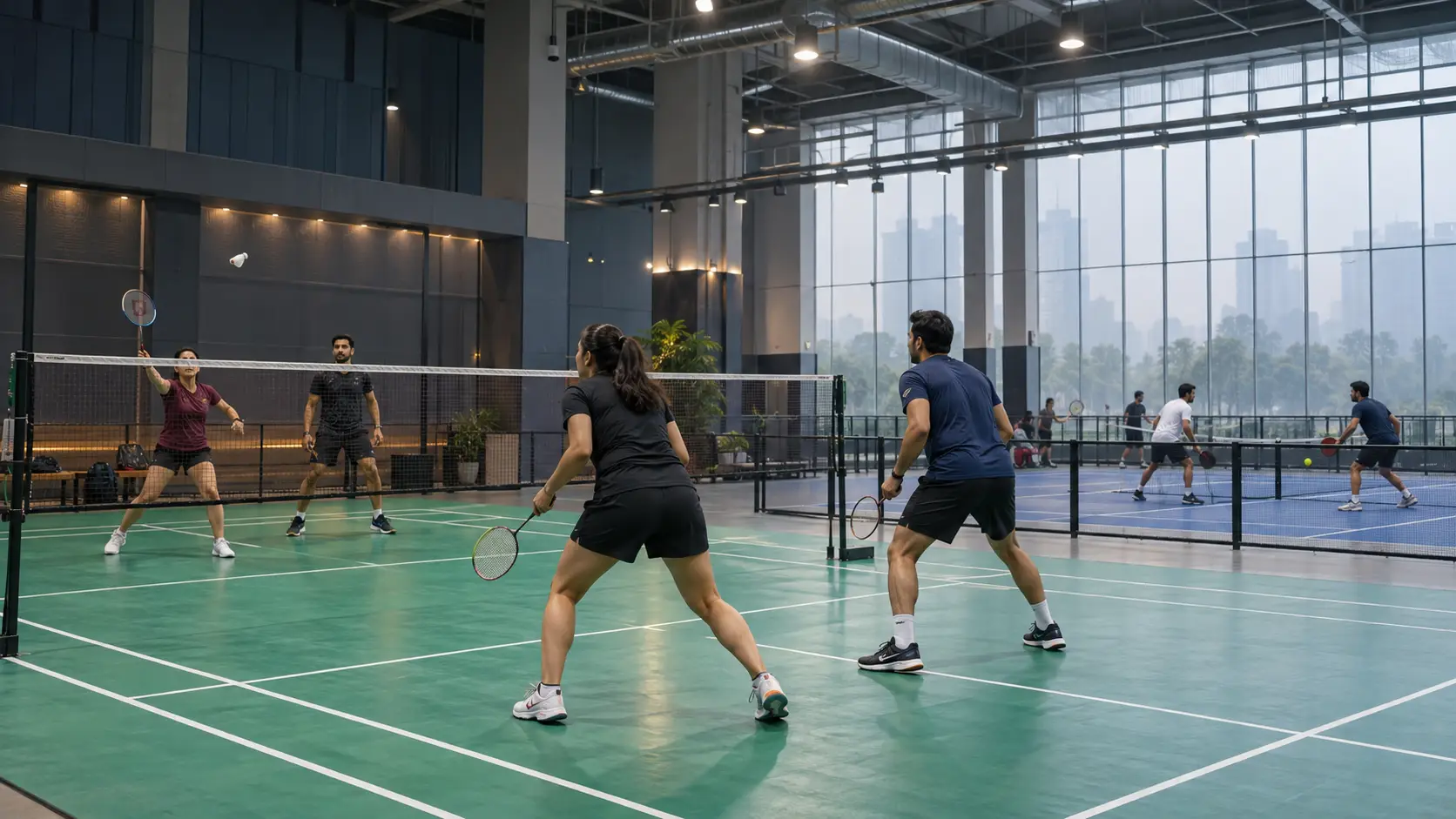
Many players in this age group enjoy doubles because it combines movement, strategy and social interaction. Coaching can teach you how to serve, return, rotate with a partner and cover the court intelligently instead of chasing every shuttle.
Starting Badminton in Your Forties
Starting after 40 is entirely realistic when the training matches your current condition. The objective is not to copy the workload of a competitive teenager. It is to develop efficient technique, better movement and enjoyable match fitness.
Tell the coach about any previous injury, recurring discomfort or medical restriction before training begins. The coach can adjust movement depth, jumping volume and session intensity. If you have a medical condition or have been inactive for a long time, seek appropriate medical guidance before beginning strenuous exercise.
Players over 40 can benefit greatly from learning efficient court positioning. Reaching the shuttle early and recovering to the correct base position reduces the need for desperate lunges and rushed movements.
What Happens in an Adult Beginner Badminton Class?
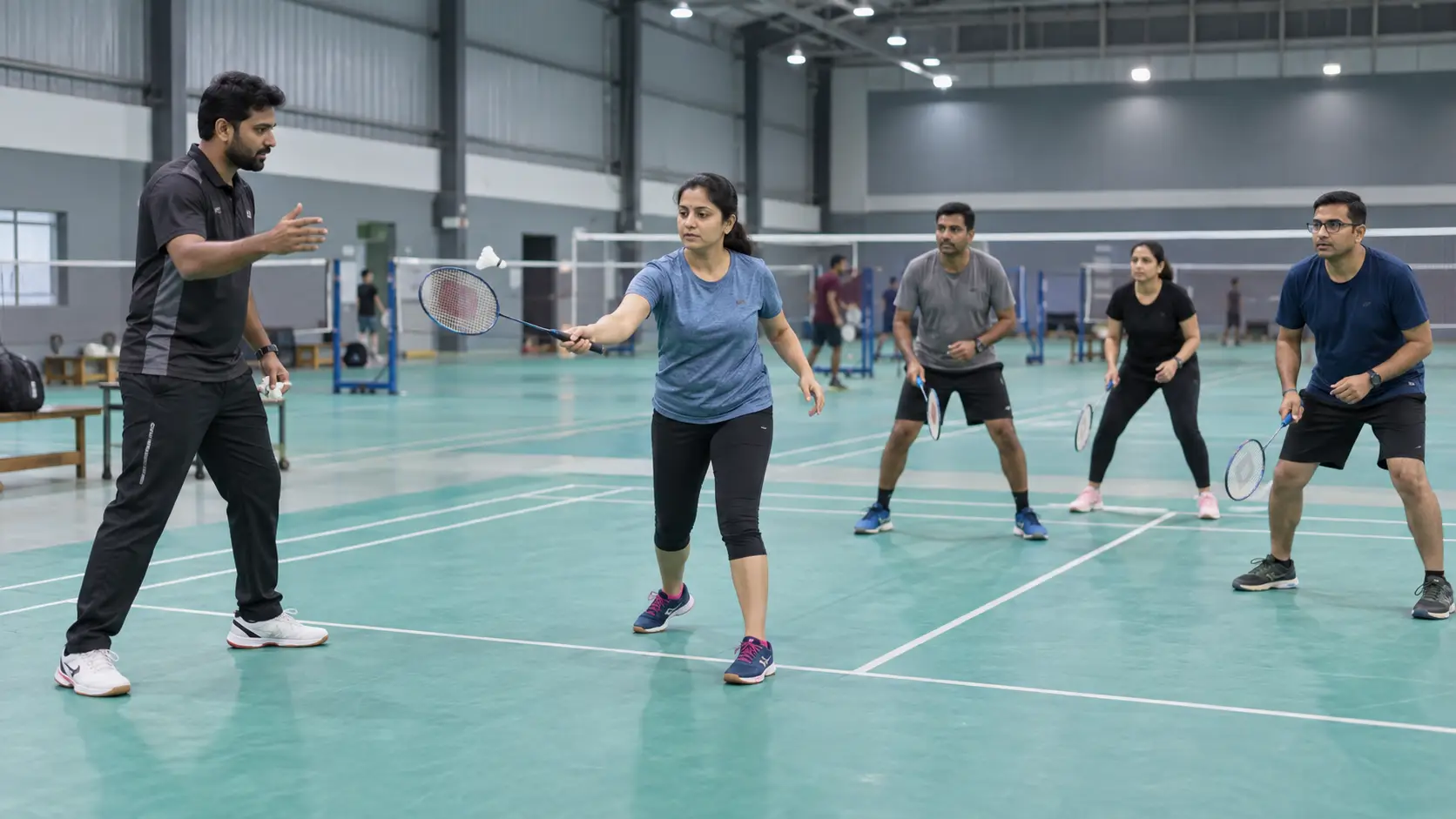
A well-structured class normally progresses from simple movement and racket control to rally-based exercises. Although every academy has its own system, a beginner session may include:
Warm-up: Light movement, mobility exercises and preparation for the session.
Grip and stance: Learning how to hold the racket and prepare for the next shot.
Footwork: Moving towards different corners while maintaining balance.
Stroke practice: Developing basic serves, clears, drops, drives and net shots.
Feeding drills: Returning shuttles delivered by the coach from controlled positions.
Rally practice: Applying the lesson with another player.
Match play: Learning scoring, positioning and shot selection.
Cool-down: Reducing intensity gradually after the session.
The first few sessions may feel repetitive. That is normal. Reliable technique develops through controlled practice, not by rushing through every shot in the badminton handbook.
What Should You Learn During the First Month?
Your first month should create a foundation rather than promise instant mastery. A realistic beginner programme may cover:
Forehand and backhand grip changes
Basic serving technique
Ready position and split step
Movement to the front and rear court
Forehand overhead clear
Simple net returns and lifts
Basic doubles positioning
Scoring and court etiquette
You may still mistime the shuttle or forget your footwork during a match. That does not mean the training is failing. Applying a new technique under pressure takes longer than performing it in a controlled drill.
For a more detailed progression, read Rackonnect’s guide to the first three months at a badminton academy.
How Often Should Adult Beginners Train?
Two or three coached sessions per week provide a practical starting point for most adults. This schedule gives you enough repetition while allowing time for recovery.
If your schedule permits only one coached session, add a relaxed practice game during the week. Try to apply one or two points from the lesson rather than returning immediately to old habits.
Daily intensive training is rarely necessary for recreational beginners. Consistency over several months matters more than completing many sessions in one week and then stopping.
Group Coaching or Private Coaching?
Group coaching is usually the better starting option when you want an affordable programme, regular playing partners and exposure to different styles. It works best when the academy keeps players of similar ability together and limits the number sharing each court.
Private coaching provides more individual feedback and allows the session to focus on your specific problems. It may suit players with limited time, a clear competitive goal or a technique that needs detailed correction.
A combination can also work well. You can attend regular group sessions and occasionally book an individual class for focused feedback.
How Much Does Adult Badminton Coaching Cost?
Fees vary according to the academy, city, coach, batch size and number of weekly sessions. Group programmes in Delhi NCR commonly fall within a few thousand rupees per month, while individual coaching is usually charged per session or through a private package.
Before comparing prices, check whether court access, shuttlecocks, registration and fitness sessions are included. Our guide to badminton academy fees in Delhi NCR explains the common charges and possible additional costs.
What Equipment Does an Adult Beginner Need?
You do not need an expensive professional kit. Begin with equipment that is comfortable, safe and suitable for regular practice.
A lightweight badminton racket with a comfortable grip
Non-marking court shoes with suitable lateral support
Breathable sports clothing that allows free movement
A water bottle and small towel
An extra racket grip if your palms become sweaty
Avoid buying a very stiff or head-heavy racket simply because an advanced player uses it. Ask your coach what suits your strength, technique and training frequency.
How to Choose an Adult Badminton Academy in Delhi NCR
Location matters more than people expect. If reaching the academy requires a long journey through peak traffic, maintaining regular attendance can become difficult. Start by shortlisting facilities near your home or workplace.
You can browse sports venues on Rackonnect and explore options such as:
Before joining, ask whether the academy has a dedicated adult batch. A mixed group can work, but adults often benefit from training with players who have similar schedules, fitness levels and expectations.
What to Check During a Trial Class
A trial session should help you judge more than the quality of the court. Pay attention to how the class is actually conducted.
Does the coach ask about your experience and goals?
Are beginners separated from advanced players?
Does the coach explain why a movement or stroke is being taught?
How many players share one court?
Do students receive individual corrections?
Are warm-up and safety treated seriously?
Does the batch timing fit your weekly routine?
Avoid choosing an academy solely because it promises rapid results. Good coaching should provide a sensible progression and honest expectations.
Frequently Asked Questions
Is 30 too late to start badminton?
No. Adults can learn badminton at 30 and beyond. Your training should match your current fitness, available time and reason for playing.
Can I start badminton at 40 if I have never played?
Yes. Begin with controlled coaching, suitable footwear and gradual increases in intensity. Inform your coach about injuries or health concerns before starting.
How long does it take to learn basic badminton?
Many adults can learn the basic grip, serve, movement and simple strokes within a few months of consistent coaching. Reliable match performance usually takes longer because technique must hold up during unpredictable rallies.
Can adult beginners participate in tournaments?
Yes. Recreational, corporate and amateur tournaments often include categories suitable for developing players. Ask your coach when you are ready for match competition.
Is badminton good for adults who dislike the gym?
Badminton can provide an engaging form of physical activity because exercise occurs through drills and rallies. Coaching also adds structure, technique and measurable progress.
Start at the Right Level and Stay Consistent
Starting badminton after 20, 30 or 40 is not unusual. The best programme is one that respects your current level, teaches sound technique and fits your weekly routine. You do not need to arrive fit, experienced or equipped like a professional player.
Attend a trial class, ask about adult batches and choose a schedule you can maintain. When you are ready, explore badminton coaching with Rackonnect or find a sports venue near you.