Choosing between group and private badminton coaching is not simply a question of which option is better. The right format depends on your playing level, budget, schedule and reason for learning the sport.
Group coaching gives you regular practice partners and a structured programme at a more accessible monthly cost. Private coaching gives the instructor more time to observe your technique and build sessions around your individual needs. Both can work well when the training quality is good.
This guide compares group vs private badminton coaching across cost, coach attention, match practice, flexibility and expected progress. It will help you choose a format that suits your goals without paying for training you do not need.
What Is Group Badminton Coaching?
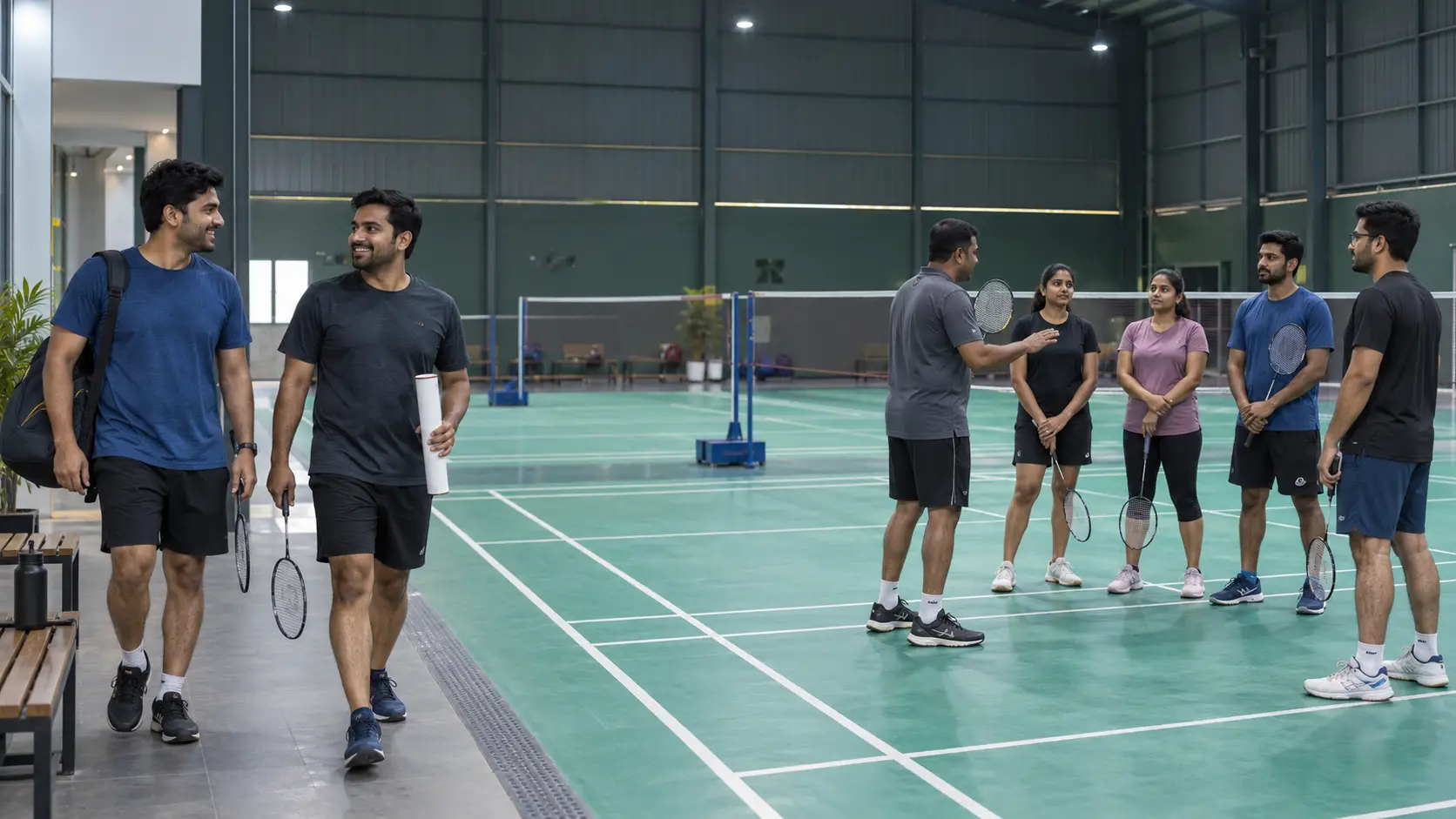
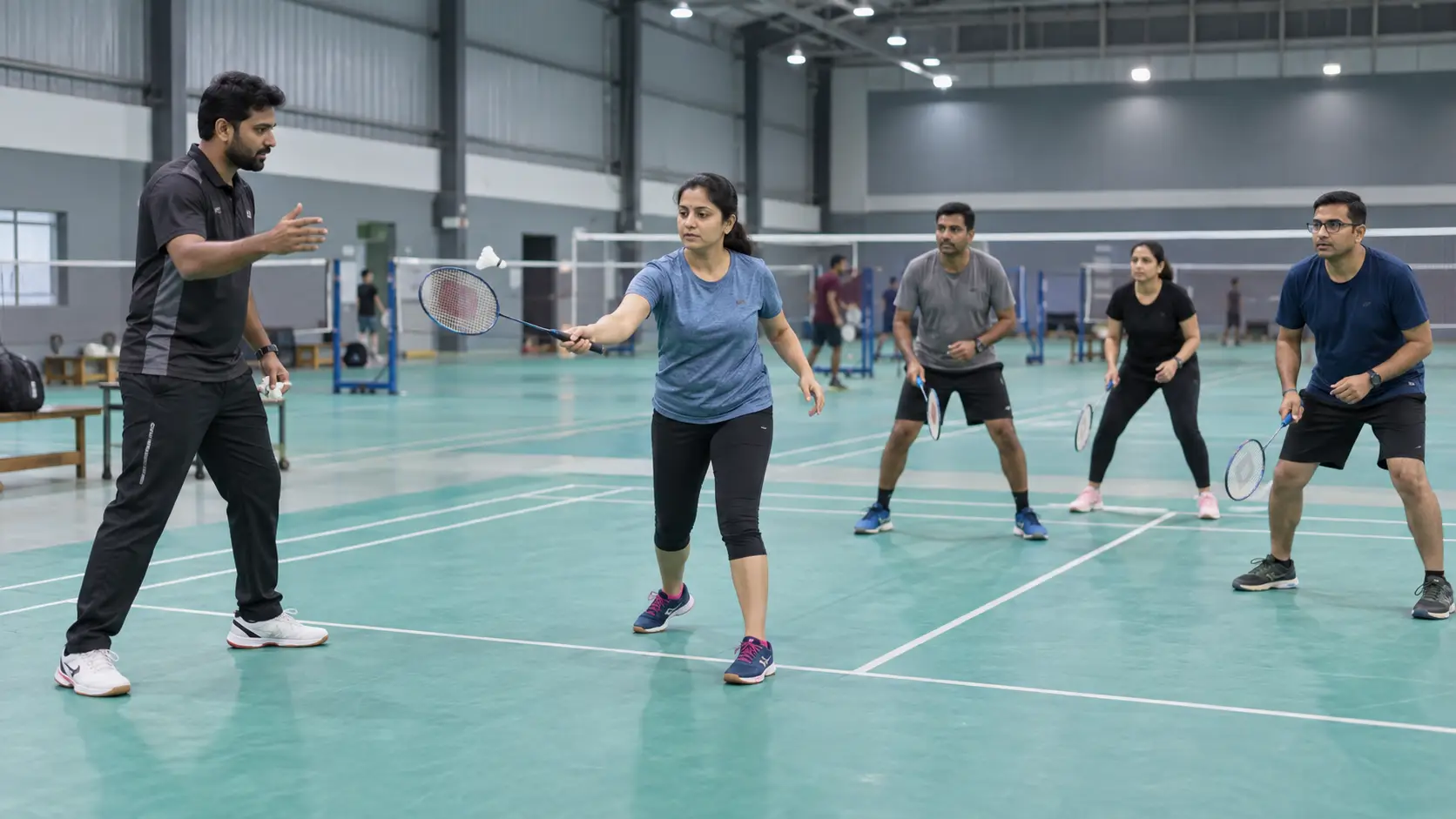
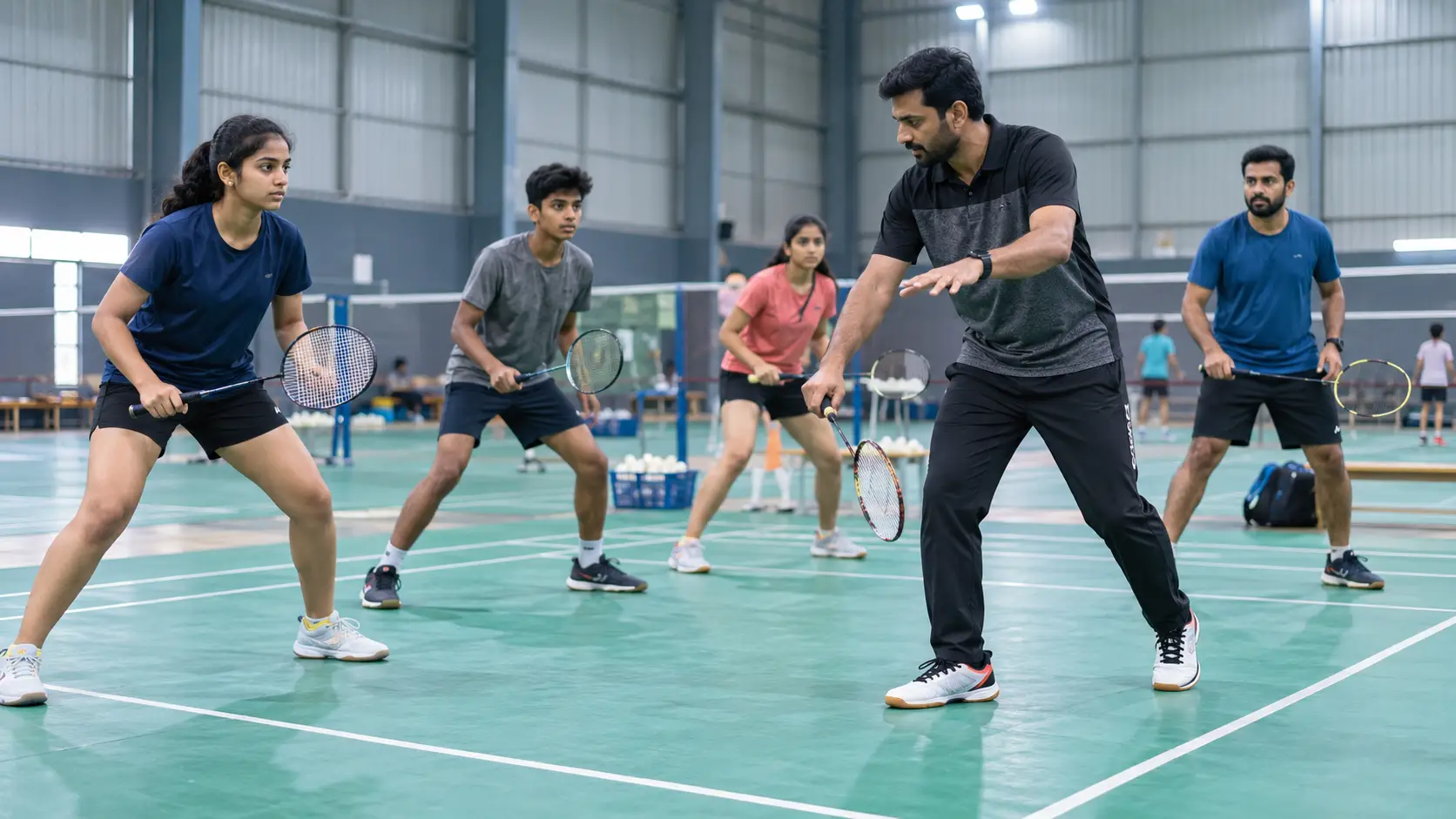
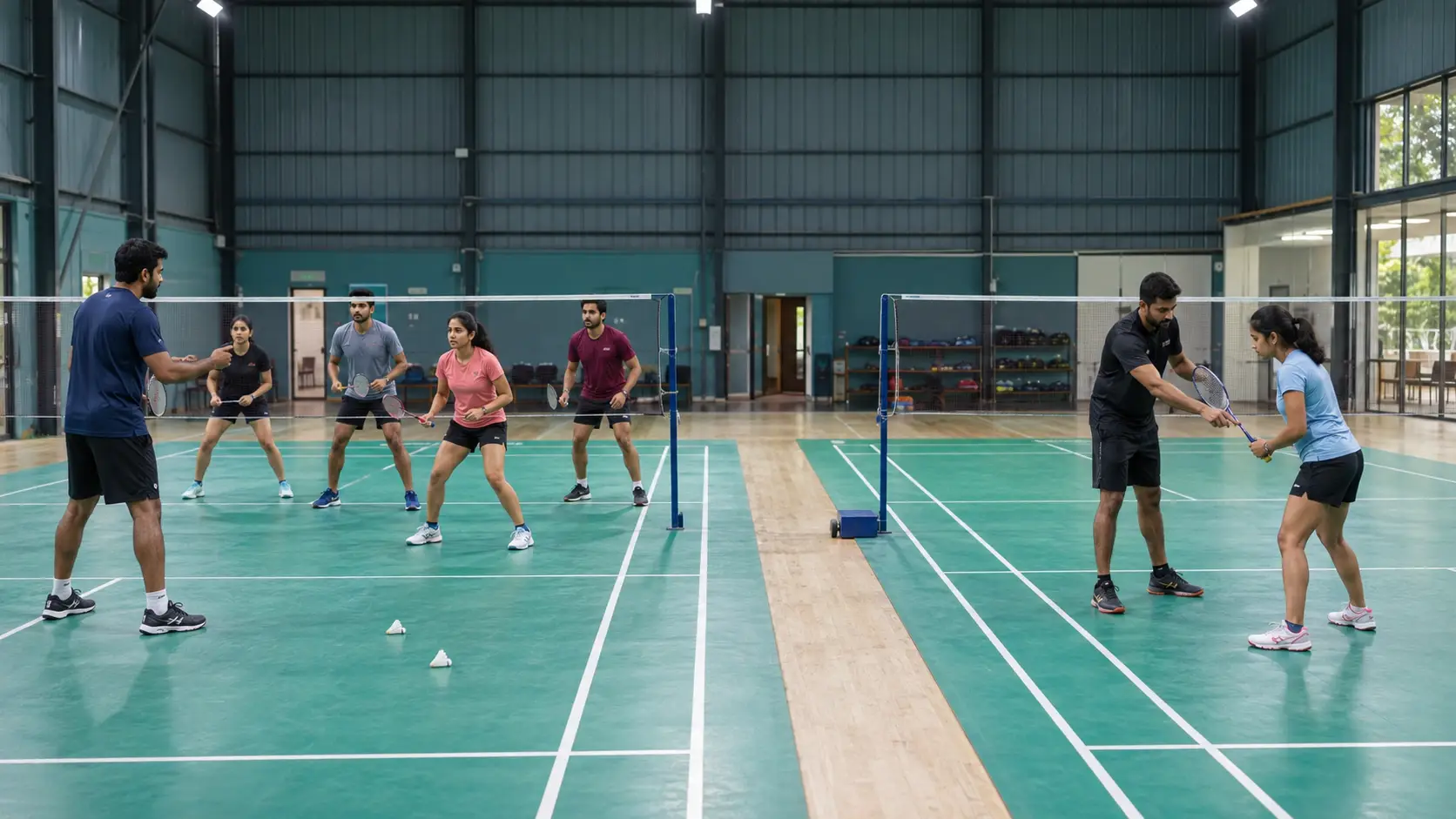
Group coaching involves several players training together under one or more coaches. Players may share a court while completing footwork exercises, stroke drills, shuttle-feeding routines and practice matches.
A well-organised group should place players of similar age and ability together. This allows the coach to follow a common training plan while adjusting instructions for individual players when required.
Group coaching sessions commonly include:
Warm-up and mobility exercises
Shadow footwork and movement drills
Grip and stroke instruction
Multi-shuttle feeding exercises
Partner drills and controlled rallies
Singles or doubles match practice
Fitness and conditioning work
This format is commonly used for children, adult beginners, recreational players and developing competitors. You can explore available badminton coaching options through Rackonnect when looking for a suitable programme.
What Is Private Badminton Coaching?
Private badminton coaching is conducted individually or, in some cases, with two players who book a session together. The coach can spend most of the session studying one player’s movement, technique and tactical decisions.
Instead of following a general batch plan, the session can focus on a specific objective. That might involve correcting a backhand, improving rear-court movement, developing a stronger serve or preparing for an upcoming tournament.
Private sessions may include:
Individual technique assessment
Personalised footwork correction
High-volume shuttle feeding
Focused work on weak strokes
Singles or doubles tactical analysis
Fitness exercises based on the player’s needs
Video review, when offered by the coach
The main advantage is focused attention. The main disadvantage is cost, especially when court hire and shuttlecocks are charged separately.
Group vs Private Badminton Coaching at a Glance
Factor | Group Coaching | Private Coaching |
Cost | Generally more affordable | Usually more expensive per session |
Coach attention | Shared among the batch | Focused mainly on one player |
Training plan | Structured around the group level | Built around individual needs |
Practice partners | Regular access to different players | A separate partner may be required |
Match practice | Usually included | May be limited during one-to-one sessions |
Schedule | Fixed batch timings | May offer greater flexibility |
Best suited for | Beginners, recreational players and regular learners | Focused correction, competition and individual goals |
Which Option Costs Less?
Group coaching usually costs less because the coach, court and equipment expenses are shared across several players. Academies often charge a monthly fee based on the number of weekly sessions.
Private coaching is normally priced per session or as a package. In addition to the coach’s fee, you may need to pay for court booking, shuttlecocks or venue access. Some coaches include these costs, while others quote them separately.
Do not compare the two formats using the monthly figure alone. Compare:
The number of sessions included
The duration of each session
The number of players sharing a court
The coach conducting the regular sessions
Whether court charges are included
Whether shuttlecocks and fitness training are included
A small, well-managed group can offer better value than occasional private sessions. Conversely, one private session focused on a persistent technical problem may save weeks of unfocused practice.
Which Format Helps Beginners Learn Better?
Most beginners can start successfully with group coaching. A structured batch introduces the basic grip, stance, footwork, serve and overhead strokes while providing partners for drills and rallies.
Learning alongside other beginners also makes the process less intimidating. You can observe common mistakes, practise with players at a similar level and gradually become comfortable with scoring and match play.
Private coaching may suit a beginner who:
Feels uncomfortable learning in a larger batch
Needs instructions adapted to a physical limitation
Has very limited weekly availability
Wants close supervision during the foundation stage
Has previously learned an incorrect technique
If you are joining an academy for the first time, Rackonnect’s guide to the first three months of badminton training explains what early progress may look like.
Which Option Produces Faster Progress?
Private coaching can produce faster improvement in a specific area because the coach can identify and correct errors immediately. You spend less time waiting for your turn, and every drill can be adjusted according to your performance.
However, faster technical correction does not always mean better overall match performance. Badminton requires decision-making, anticipation and experience against different opponents. These qualities develop through regular rallies and competitive games, which group coaching often provides more naturally.
Your progress also depends on attendance and practice outside the lesson. One private session per month cannot replace consistent training. A player attending group classes three times per week may improve more steadily than someone booking irregular individual sessions.
Which Is Better for Match Practice?
Group coaching normally has the advantage here. A batch gives you access to players with different strengths, weaknesses and styles. One opponent may play aggressively, while another may rely on defence and placement.
This variety teaches you to adjust your decisions rather than repeating the same rally pattern. It is particularly useful for doubles, where communication, rotation and partner awareness must be practised with other people.
Private coaching can improve the skills required for competition, but the coach may need to arrange practice matches separately. Ask whether match play is included if tournament preparation is your main goal.
Which Is Better for Fitness and Conditioning?
Both formats can improve badminton-specific fitness. The difference lies in how the workload is managed.
Group fitness drills build energy and competition because players train together. They may include shuttle runs, shadow movement, court sprints and multi-shuttle exercises.
Private coaching allows the intensity to be adjusted more precisely. This can be useful for players returning after a break or working on a specific physical weakness. The coach can modify repetitions and rest periods according to the player’s condition.
Neither format should ignore warming up, movement quality or recovery. Endless high-intensity feeding is not automatically good coaching. Sometimes it is merely exhaustion wearing a whistle.
Who Should Choose Group Badminton Coaching?
Group coaching is usually suitable if you:
Are learning badminton for the first time
Want an affordable monthly programme
Enjoy training with other players
Need regular rallies and match practice
Want to improve general fitness and technique
Can attend fixed weekly batch timings
Are preparing for recreational or corporate matches
The quality of the batch matters. Ask how many players share each court and whether they are separated by ability. A group of six evenly matched players can train productively. A crowded batch containing complete beginners and advanced competitors may leave everyone mildly annoyed.
Who Should Choose Private Badminton Coaching?
Private coaching may be the better choice if you:
Need to correct a particular stroke or movement pattern
Are preparing for a tournament or selection trial
Want detailed technical feedback
Have an irregular schedule
Prefer individual instruction
Are returning after a long break
Need training adapted to your current mobility or fitness
Private coaching can also help intermediate players who have reached a plateau. A coach may identify a small grip, timing or recovery error that is difficult to notice during a crowded group session.
Can You Combine Group and Private Coaching?
Yes. For many players, combining both formats provides the best balance.
You might attend group coaching two or three times per week for regular drills, rallies and match experience. An occasional private session can then focus on a specific issue such as backhand defence, serve accuracy or rear-court movement.
This approach provides individual correction without making every session expensive. It also allows you to test new technique against different opponents in the group.
How to Choose the Right Coach or Academy
The training format matters, but the quality of instruction matters more. Before paying for a long package, attend a trial session and observe how the coach works.
Check whether the coach:
Asks about your level and objectives
Explains technique clearly
Corrects mistakes instead of merely feeding shuttles
Adjusts drills when a player struggles
Maintains a suitable coach-to-player ratio
Includes movement, technique and match application
Provides realistic expectations about progress
Location should also influence your decision. Training works only when you can attend consistently. Use Rackonnect to explore sports venues near you, including badminton courts in Delhi, badminton facilities in Noida, badminton facilities in Ghaziabad and badminton academy options in Faridabad.
Questions to Ask Before Enrolling
How many players are assigned to one court?
Will the advertised coach conduct the regular sessions?
Are batches divided according to playing ability?
How much match practice is included?
Are court and shuttlecock charges included in the fee?
Can missed sessions be rescheduled?
Can group players book an occasional private class?
Is there a trial session before enrolment?
Frequently Asked Questions
Is private badminton coaching worth the cost?
It can be worthwhile when you need focused technical correction, have a specific competitive goal or cannot attend regular batch timings. Beginners with general goals may receive better overall value from a suitable group programme.
How many players should be in a badminton coaching batch?
There is no universal number because academies use different court and coaching arrangements. What matters is how many players share one court and whether the coach can observe each player regularly.
Can adults join group badminton coaching?
Yes. Many academies offer adult batches for beginners and recreational players. Ask whether the group matches your age, ability and preferred schedule.
How often should a beginner take private lessons?
The answer depends on the player’s goal and budget. Some beginners take regular private sessions, while others use one occasionally alongside group training to correct a particular problem.
Can group coaching prepare me for tournaments?
Yes, provided the programme includes structured technique, fitness, tactical training and competitive match practice. More advanced players may add individual sessions before important events.
Group or Private Coaching: The Final Decision
Choose group coaching if you want affordable, consistent training with regular partners and match practice. Choose private coaching if you need personalised attention, technical correction or preparation for a specific goal.
You do not need to remain with one format forever. Start with the option that matches your current needs and review your progress after a few months. Many players eventually discover that group sessions and occasional private coaching complement each other well.
To begin your search, explore badminton coaching with Rackonnect or browse available sports venues across Delhi NCR.