Indoor vs. Outdoor Pickleball: Surface Traction, Ball Selection & Court Lighting
Pickleball may look like the same game whether played inside a climate-controlled sports hub or on an outdoor neighborhood court, but ask any seasoned player and they’ll tell you: indoor and outdoor pickleball feel like two completely different sports.
From the weight and hole count of the ball to the grip beneath your shoes and how overhead lighting affects your vision, transitioning between indoor and outdoor courts requires distinct technical adjustments.
Whether you're gearing up for your first indoor social match or trying to figure out why your outdoor third-shot drop isn't bouncing the same way inside, this guide breaks down the core differences in ball selection, surface traction, court lighting, and gameplay strategy.
1. Ball Selection: Indoor (26 Holes) vs. Outdoor (40 Holes)
The most significant physical difference between the two formats is the ball itself. You cannot—and should not—use an outdoor pickleball on an indoor court, or vice versa.
Key Differences at a Glance:
Indoor Pickleballs: Feature 26 larger, precision-molded holes. They are lighter, made of softer plastic, drag more in the air, and bounce higher but softer.
Outdoor Pickleballs: Feature 40 smaller, precision-drilled holes. They are heavier, made of harder durable plastic, cut through wind faster, and bounce lower and faster.
How Ball Differences Impact Your Gameplay:
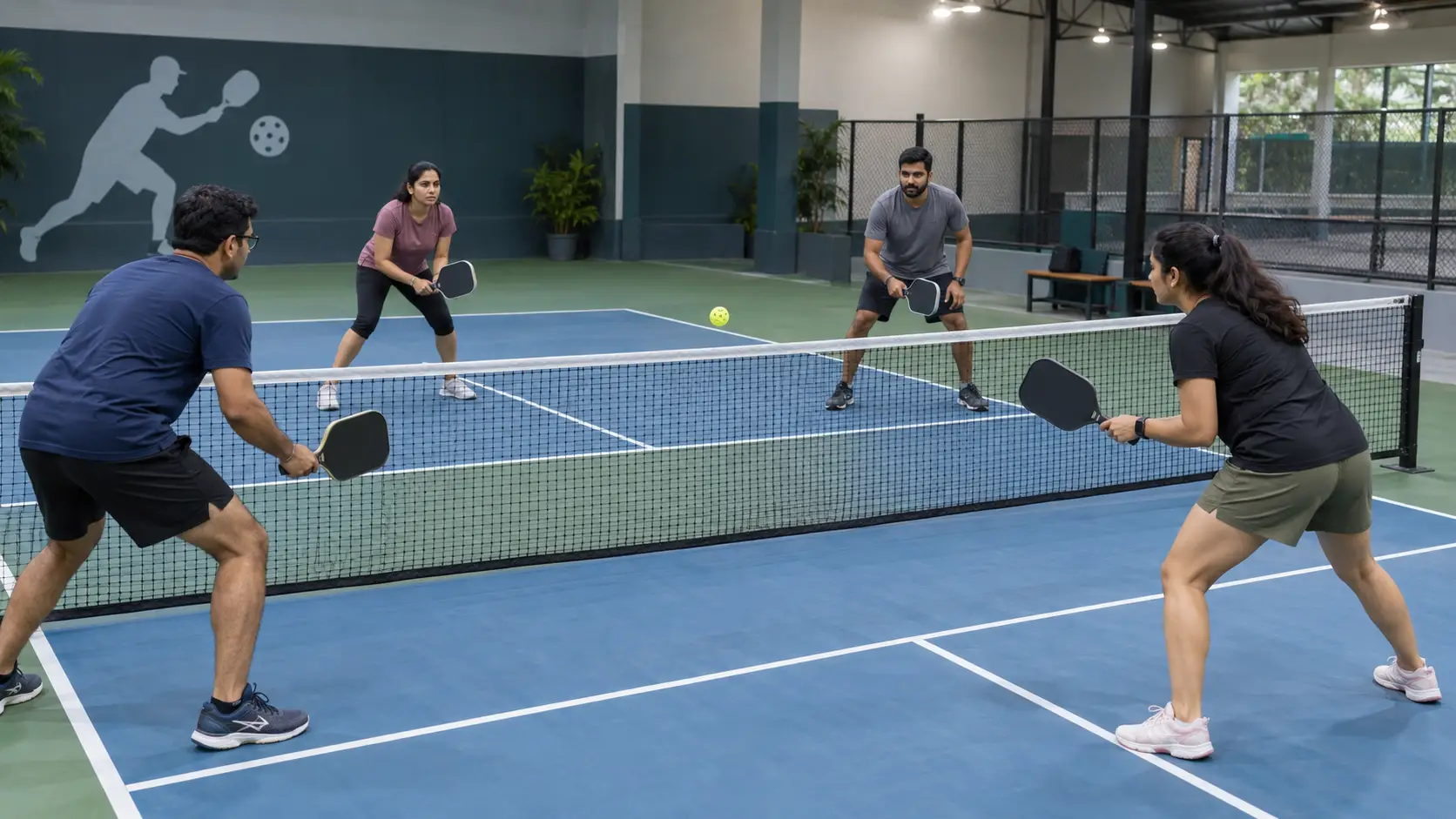
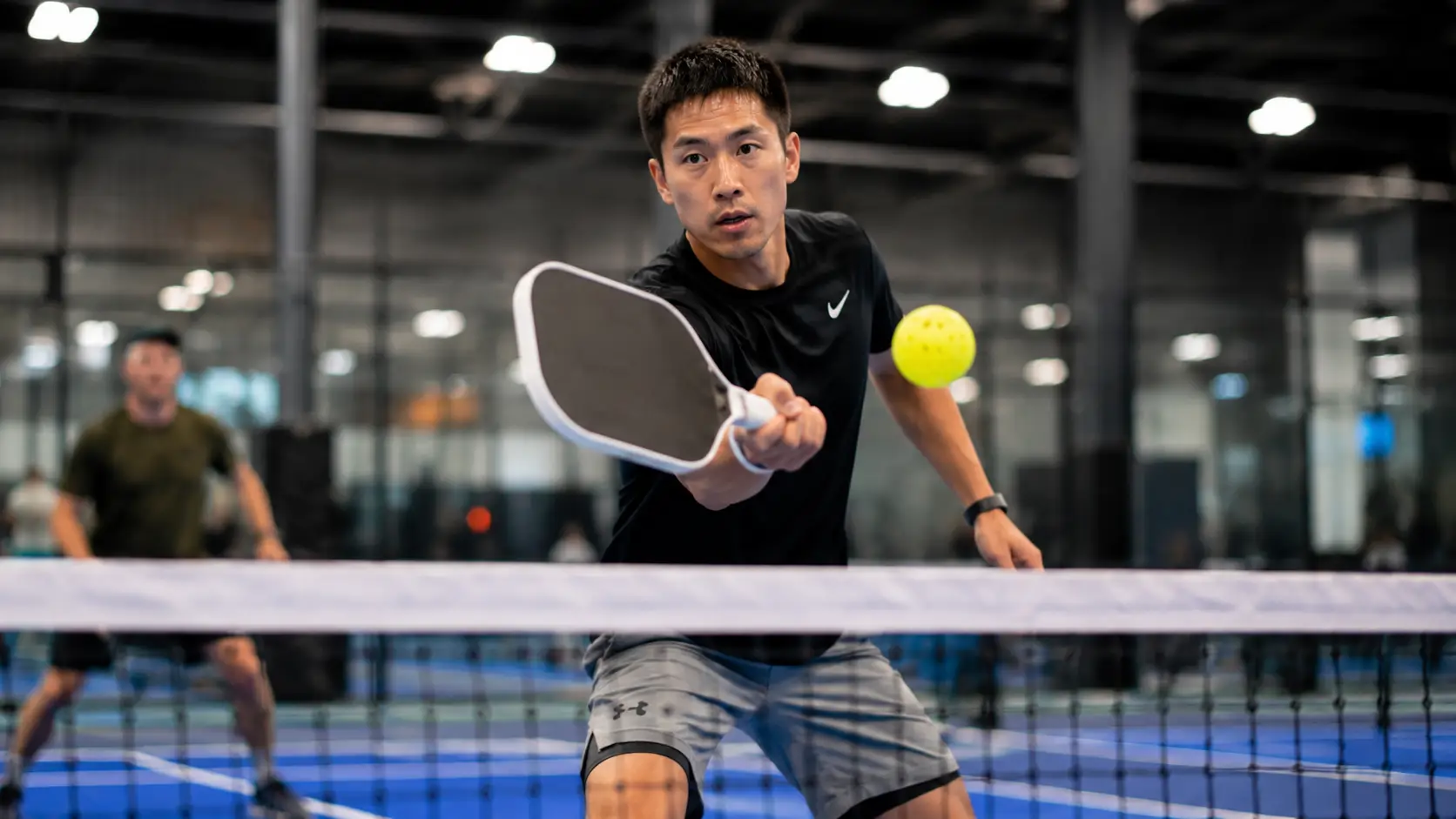
Rally Duration & Control: Because indoor balls are lighter and experience more air resistance through their 26 larger holes, they travel slower through the air. This gives players slightly more reaction time, leading to longer, touch-based dinking rallies at the kitchen line.
Power & "Pop": Outdoor balls are heavier and harder, coming off the paddle face with significantly higher velocity. Power players ("bangers") often prefer outdoor balls because hard drives are tougher to react to.
Durability & Cracking: Outdoor balls endure high friction against rough asphalt or concrete and can crack in cold weather. Indoor balls rarely crack; instead, they slowly lose shape ("soft spotting") over extended play.
Gear Guide: Looking for the right outdoor ball for high durability and consistent bounce? Read our guide on the best outdoor pickleball balls in India.
2. Surface Traction, Cushioning & Joint Impact
Court surface composition dictates how fast you can stop, pivot, and slide, as well as how much wear-and-tear your joints absorb over time.
Outdoor Courts (Asphalt / Hard Concrete)
Most outdoor pickleball courts are built on converted tennis surfaces made of concrete or asphalt coated with acrylic paint. The rough silica sand texture offers high footwear traction, but the hard sub-base provides virtually zero shock absorption. Over time, playing exclusively on hard outdoor surfaces can strain knees, ankles, and lower back muscles.
Indoor Courts (Cushioned Acrylic / Synthetic Turf / Wood)
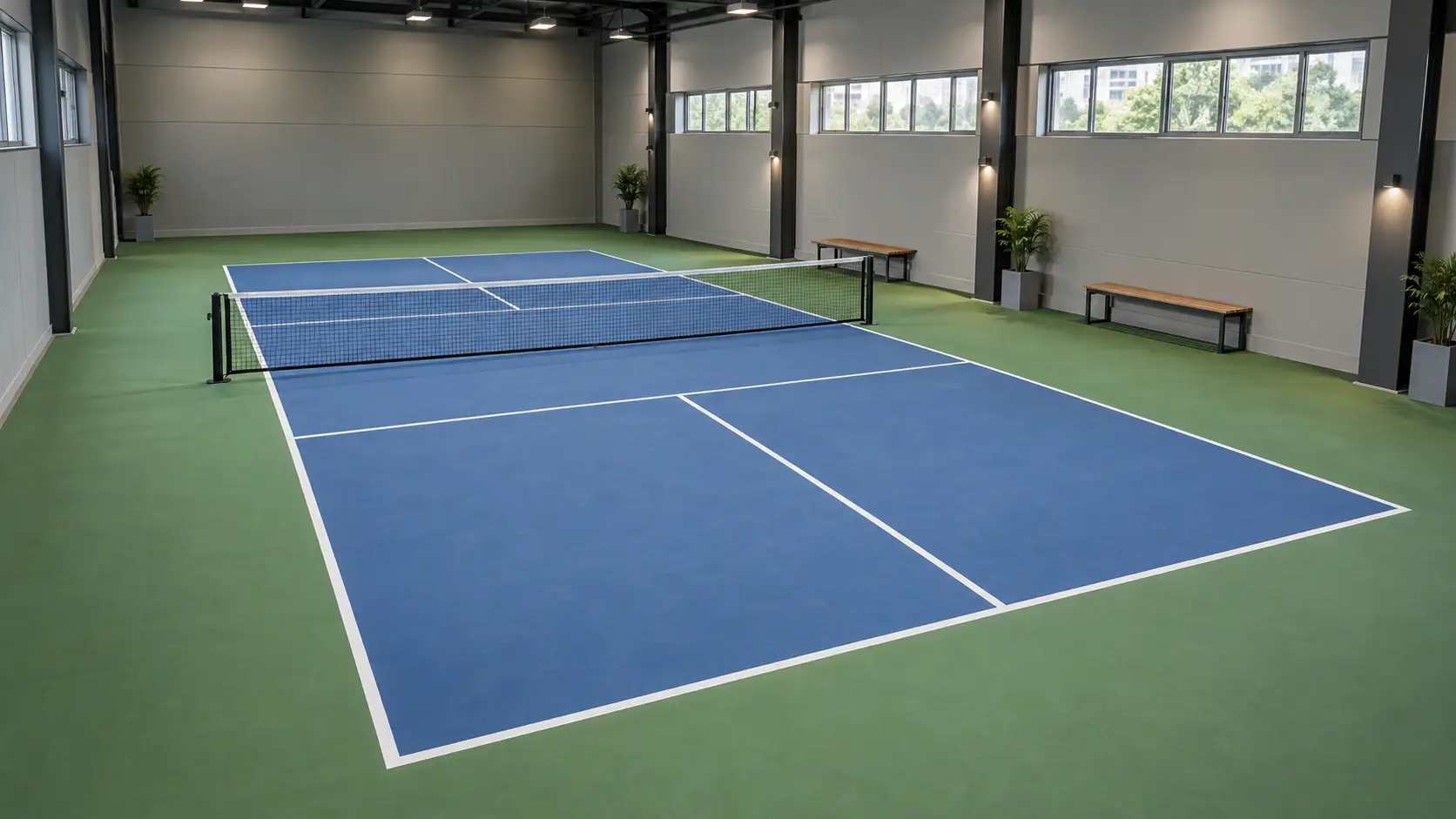
Dedicated indoor venues—such as REPPP by Rackonnect—utilize multi-layered cushioned acrylic or shock-absorbing synthetic sub-bases. These surfaces offer optimal shoe grip without binding your foot aggressively, reducing the risk of rolled ankles during sudden lateral cuts.
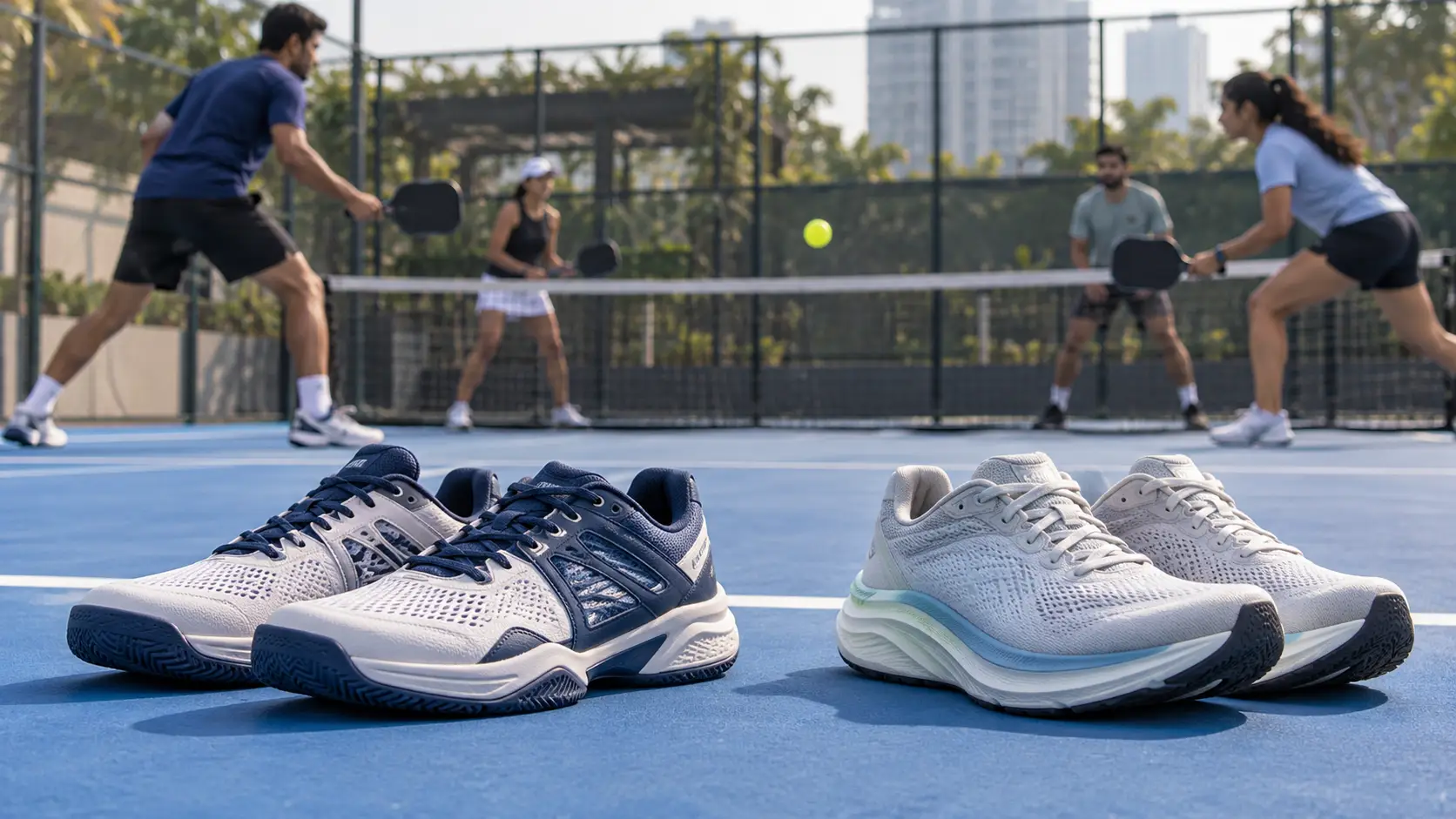
Footwear Requirement: Indoor sports facilities strictly require non-marking court shoes to preserve indoor synthetic surfaces and guarantee maximum traction without leaving rubber scuffs.
3. Court Lighting & Visual Acuity: Sunlight vs. Overhead LEDs
Visual tracking plays a massive role in hand-eye coordination when hitting high-speed kitchen volleys or tracking defensive lobs.
Outdoor Lighting Challenges
Playing outdoors means dealing with shifting sun angles, blinding overhead glare when tracking sky lobs, and harsh shadow lines cast across the kitchen line. At night, basic outdoor floodlights often create dark spots near the baseline.
Indoor Lighting Advantages
Indoor facilities utilize high-lumen, diffused overhead LED light grids strategically positioned away from direct eye lines. This creates uniform, shadow-free illumination across the entire court surface, making it significantly easier to track ball spin and speed during fast-paced exchanges.
Interested in learning how indoor facilities are elevating the sport across NCR? Read our deep-dive on the rise of indoor pickleball courts in India.
Indoor vs. Outdoor Pickleball: Head-to-Head Comparison
Feature / Factor | Indoor Pickleball | Outdoor Pickleball |
|---|---|---|
Ball Specification | 26 Holes (Larger, softer plastic) | 40 Holes (Smaller, harder plastic) |
Game Pace & Rallies | Slower, touch-focused, longer dink rallies | Faster, hard drives, shorter point length |
Surface Traction & Cushion | Cushioned acrylic/synthetic (Joint friendly) | Hard concrete/asphalt (High impact) |
Wind & Weather Factor | Zero wind (100% trajectory control) | Wind gust drift, temperature shifts |
Lighting & Vision | Diffused LED (No glare or shadows) | Sun glare, moving shadows, night dimness |
4. Weather & Environmental Factors
Outdoor pickleball is notoriously susceptible to environmental conditions. A light breeze of 10–15 km/h is enough to push a lightweight plastic ball several inches off course, turning a precise line drive into an out-of-bounds error.
In contrast, playing inside a dedicated facility like indoor pickleball courts in Delhi NCR guarantees zero wind interference, constant climate control, and zero rain cancellations. You can execute high-precision third-shot drops and deep lobs knowing the ball will travel exactly where your paddle directs it.
Experience World-Class Indoor Pickleball at REPPP
Looking for tournament-grade indoor courts with glare-free LED lighting, cushioned professional flooring, and year-round climate control?
Check out REPPP by Rackonnect in South Delhi / Mehrauli. Whether you want to join social open play sessions or reserve private court slots for your group, review our breakdown on pickleball court booking prices in Delhi NCR to pick peak or off-peak hours that fit your schedule!
Frequently Asked Questions (FAQs)
Q1. Can you use an outdoor pickleball on an indoor court?
Technically yes, but it is not recommended. Outdoor balls are harder and heavier with 40 smaller holes; on smooth indoor courts, they bounce too fast and skitter unpredictably across the floor.
Q2. Why do indoor pickleballs have 26 holes while outdoor balls have 40?
Indoor balls have 26 larger holes to increase air drag and compensate for the lack of wind inside. Outdoor balls have 40 smaller drilled holes to help the heavier ball slice through natural wind gusts without drifting off target.
Q3. Which is easier for beginners: indoor or outdoor pickleball?
Indoor pickleball is generally easier for beginners because indoor balls travel slightly slower, giving new players more time to react, learn kitchen line dinking, and master positioning without dealing with sun glare or wind distortion.
Q4. Do I need special shoes for indoor pickleball?
Yes. Indoor courts require non-marking court shoes (such as badminton, squash, or indoor court shoes) that provide lateral stability without leaving scuff marks on cushioned synthetic or acrylic indoor surfaces.
Ready to Play on Premium Indoor Courts?
Experience true ball bounce, cushioned joint protection, and glare-free play at REPPP by Rackonnect!