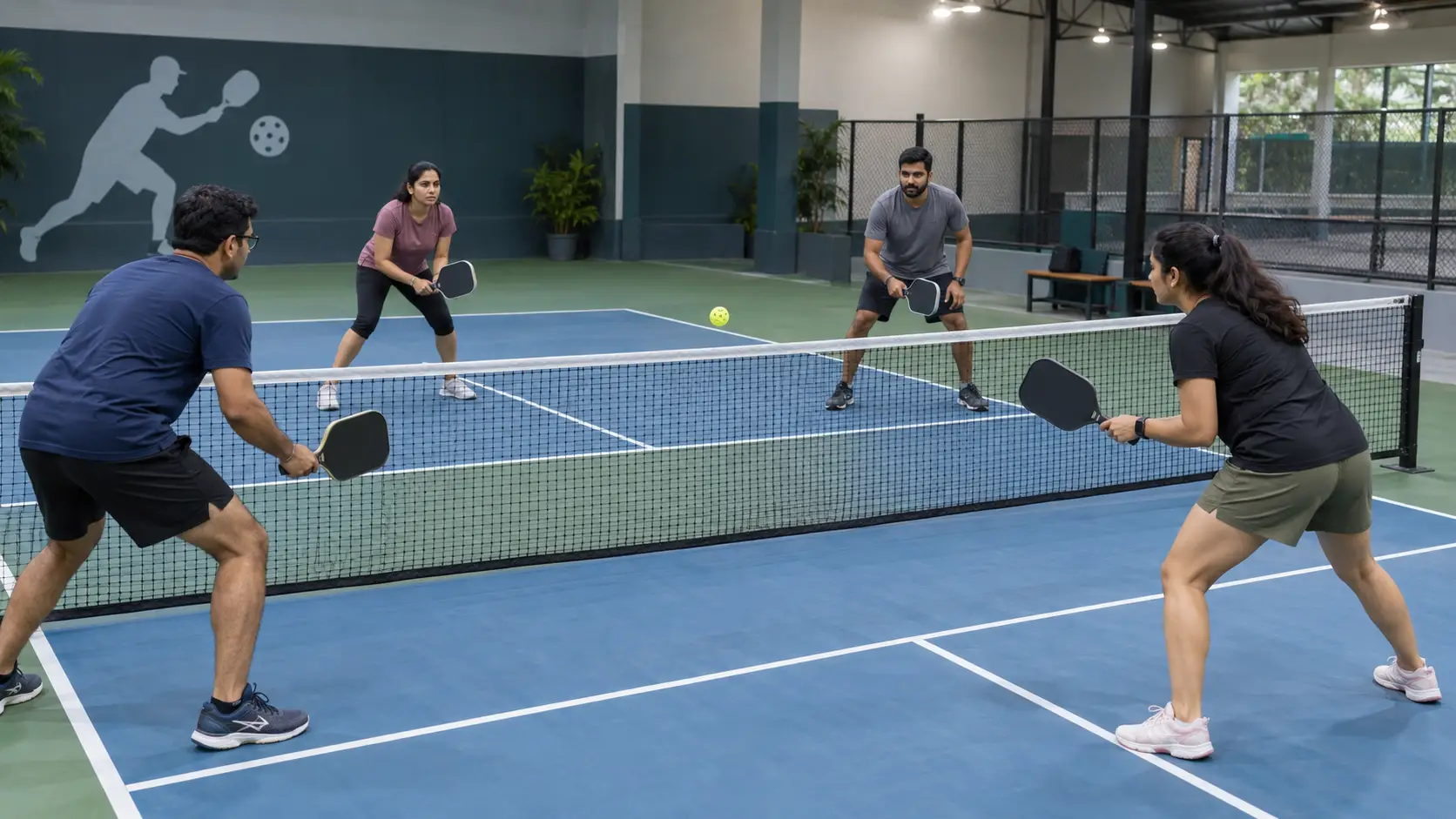
You've booked your first pickleball game, picked up a paddle and are ready to step onto the court. Then comes a question many beginners overlook: can you play pickleball in your regular running shoes, or do you need a different pair?
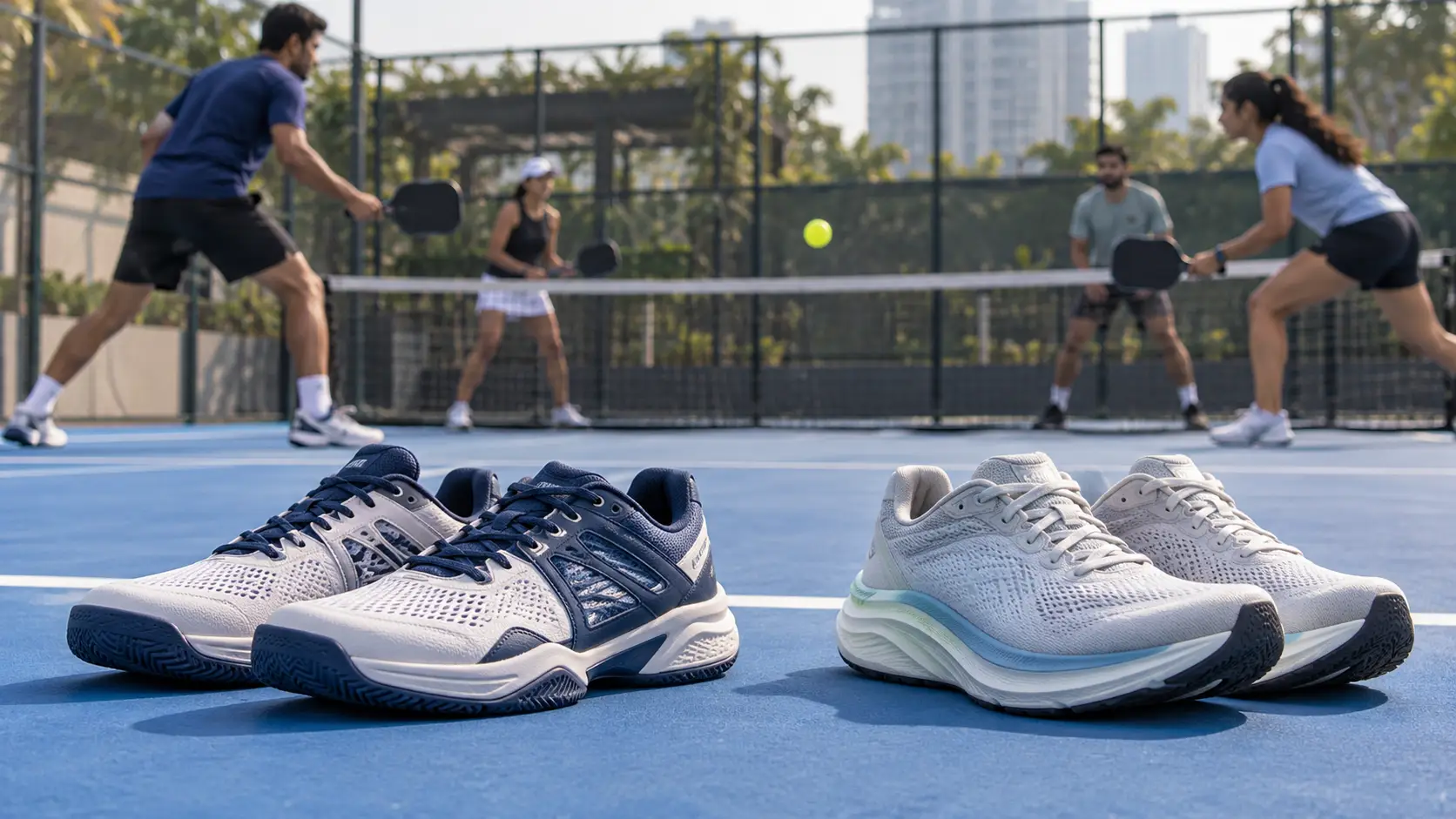
Both may look like athletic footwear, but pickleball shoes vs running shoes is more than a difference in branding. Pickleball involves quick sideways movements, sudden stops, short sprints and frequent changes of direction. Most road running shoes, meanwhile, are designed primarily for repeated forward movement.
That distinction matters when you're moving towards the kitchen line, recovering from a wide shot or changing direction during a fast rally.
So, what are the best shoes to wear for pickleball, especially if you're just starting in India? This guide explains the differences between court shoes and running shoes, which features matter, and how to choose suitable footwear for indoor and outdoor courts without spending unnecessarily.
Can You Wear Running Shoes for Pickleball?
Running shoes are not the recommended choice for regular pickleball play. While some may feel comfortable when walking or warming up, they are generally not designed around the repeated lateral movements that pickleball requires.
Road running shoes typically prioritise cushioning, forward flexibility and a smooth transition through each stride. Court shoes are generally constructed to support movement in multiple directions, with attention to lateral stability, traction and secure foot positioning.
This does not mean every running shoe is unstable or that wearing one guarantees an injury. Shoe designs vary considerably. However, for actual matches involving rapid stops and direction changes, a properly fitted court shoe is the more suitable starting point.
According to the American Academy of Orthopaedic Surgeons' athletic footwear guidance, court shoes are designed to provide stability in multiple directions, while running shoes address the demands of running.
For beginners, a good tennis court shoe or a purpose-built pickleball shoe is usually a practical option. You do not necessarily need footwear marketed specifically for pickleball.
Pickleball Shoes vs Running Shoes: Key Differences
Before buying new footwear, it helps to understand how each type is designed.
Feature | Pickleball Court Shoes | Road Running Shoes |
Primary movement | Side-to-side movement, pivots and quick stops | Repeated forward running |
Lateral support | Usually designed to hold the foot during sideways movement | Varies by model; lateral court movement is not the main design priority |
Outsole | Traction and durability suited to playing surfaces | Traction and wear characteristics suited to running surfaces |
Cushioning | Balances impact comfort with stability and court feel | Often prioritises cushioning and running efficiency |
Sole platform | Often broader and more supportive during lateral loading | Varies; some models use taller or softer cushioning systems |
Upper construction | Often reinforced around areas stressed by court movement | Often prioritises flexibility, breathability and running comfort |
Best use | Pickleball, tennis and compatible court activities | Road running, jogging and suitable walking activities |
The important point is not that one shoe type is universally better. Each is designed around different movement demands. Choosing footwear suited to the activity is more useful than choosing it solely by appearance, brand or cushioning.
Why Pickleball Requires Different Footwear
A pickleball court is relatively compact, but players rarely move in only one direction. Even during a short doubles rally, you may perform several different movements within seconds.
1. Side-to-Side Movement
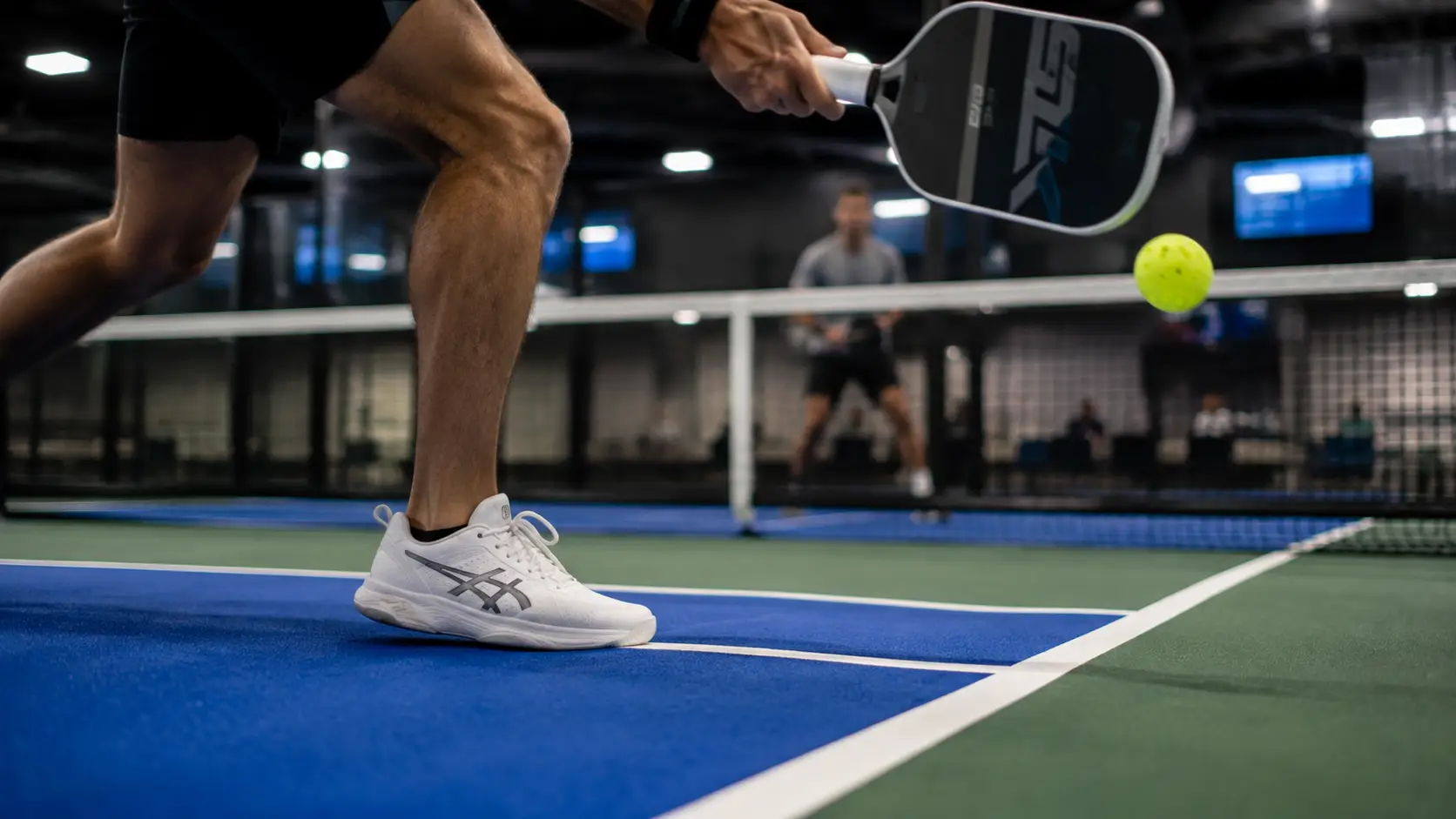
Imagine your opponent hits a wide dink towards the sideline. You take a quick lateral step to reach it, plant your outside foot and push back towards the centre.
That movement places sideways forces on your footwear. A suitable court shoe is designed to help keep the foot secure within the shoe as you change direction.
Some running shoes have softer or taller midsoles and uppers that are less suited to repeated lateral loading. How much this matters depends on the individual shoe and player.
2. Sudden Stops and Direction Changes
Pickleball involves frequent movement between the baseline and the non-volley zone, commonly called the kitchen.
You might sprint forward for a short ball, stop before entering the kitchen in a volleying situation and then retreat to respond to a deeper shot.
Appropriate traction and a stable shoe platform help you perform these movements with control. Excessive slipping is undesirable, but footwear that grips unpredictably can also interfere with comfortable movement.
3. Quick Reactions at the Kitchen Line
During fast exchanges near the net, players make small adjustment steps to prepare for incoming shots.
These movements require a shoe that fits securely around the heel and midfoot without restricting natural foot movement.
A heavily cushioned running shoe might feel soft while standing, but softness alone does not tell you how it will perform during rapid sideways movement.
4. Repeated Play on Hard Courts
Many pickleball venues use acrylic-coated hard courts or other dedicated sports surfaces. Shoes need sufficient grip, appropriate wear resistance and cushioning that suits the player.
Regular play can wear down outsoles, particularly on abrasive outdoor courts. This makes durability and court compatibility important considerations when selecting pickleball footwear.
What Shoes Should You Wear for Pickleball?
For most beginners, the best starting point is a well-fitting court shoe designed for multidirectional movement.
You have several reasonable options, depending on where you play.
Dedicated Pickleball Shoes
Purpose-built pickleball shoes are marketed for the movements and surfaces commonly encountered in the sport. Look for lateral support, a stable base, suitable outsole traction and a comfortable fit.
However, the words "pickleball shoes" on a product label do not automatically make that shoe suitable for every player or court surface. Construction and fit matter more than the category name alone.
Tennis Court Shoes
For many beginners in India, tennis court shoes are a practical alternative to dedicated pickleball footwear.
Tennis and pickleball share movement patterns such as sideways shuffling, rapid stops and changes in direction. Tennis court shoes are designed around these requirements, although the precise movement demands of the sports differ.
If you already own well-fitting tennis shoes with a suitable outsole for your playing surface, you may not need to buy a second pair immediately.
Be sure to distinguish genuine tennis court shoes from casual fashion sneakers sometimes called "tennis shoes."
Badminton Court Shoes
Badminton shoes may be suitable for pickleball on certain indoor surfaces, particularly where non-marking footwear is required.
However, footwear designed for smooth indoor badminton flooring may wear quickly or perform differently on abrasive outdoor pickleball courts.
Check the manufacturer's intended surface and your venue's footwear policy before using badminton shoes for pickleball.
Cross-Training Shoes
Some cross-training shoes offer adequate multidirectional stability for light court activities. However, designs vary, and they should not automatically be treated as substitutes for dedicated court shoes.
If pickleball becomes a regular activity, particularly at higher intensity, investing in suitable court footwear makes more sense than relying on general gym shoes.
Indoor vs Outdoor Pickleball Shoes: Does the Court Surface Matter?
Yes. Choosing between indoor pickleball shoes and outdoor pickleball shoes depends on the actual playing surface, not simply whether the court has a roof.
Outdoor Pickleball Courts
Many outdoor pickleball courts use acrylic-coated concrete or asphalt surfaces. These can be abrasive and place repeated demands on the outsole.
For outdoor pickleball, prioritise:
Durable rubber outsoles intended for hard-court use.
Reliable traction during lateral movements.
A stable platform and secure heel fit.
Appropriate cushioning for playing on a firm surface.
Breathable construction suited to local weather conditions.
In cities such as Delhi, Mumbai, Bengaluru and Hyderabad, outdoor conditions can also be hot or humid. Breathable materials and moisture-managing socks may improve comfort, although they do not replace proper hydration or heat precautions.
Indoor Pickleball Courts
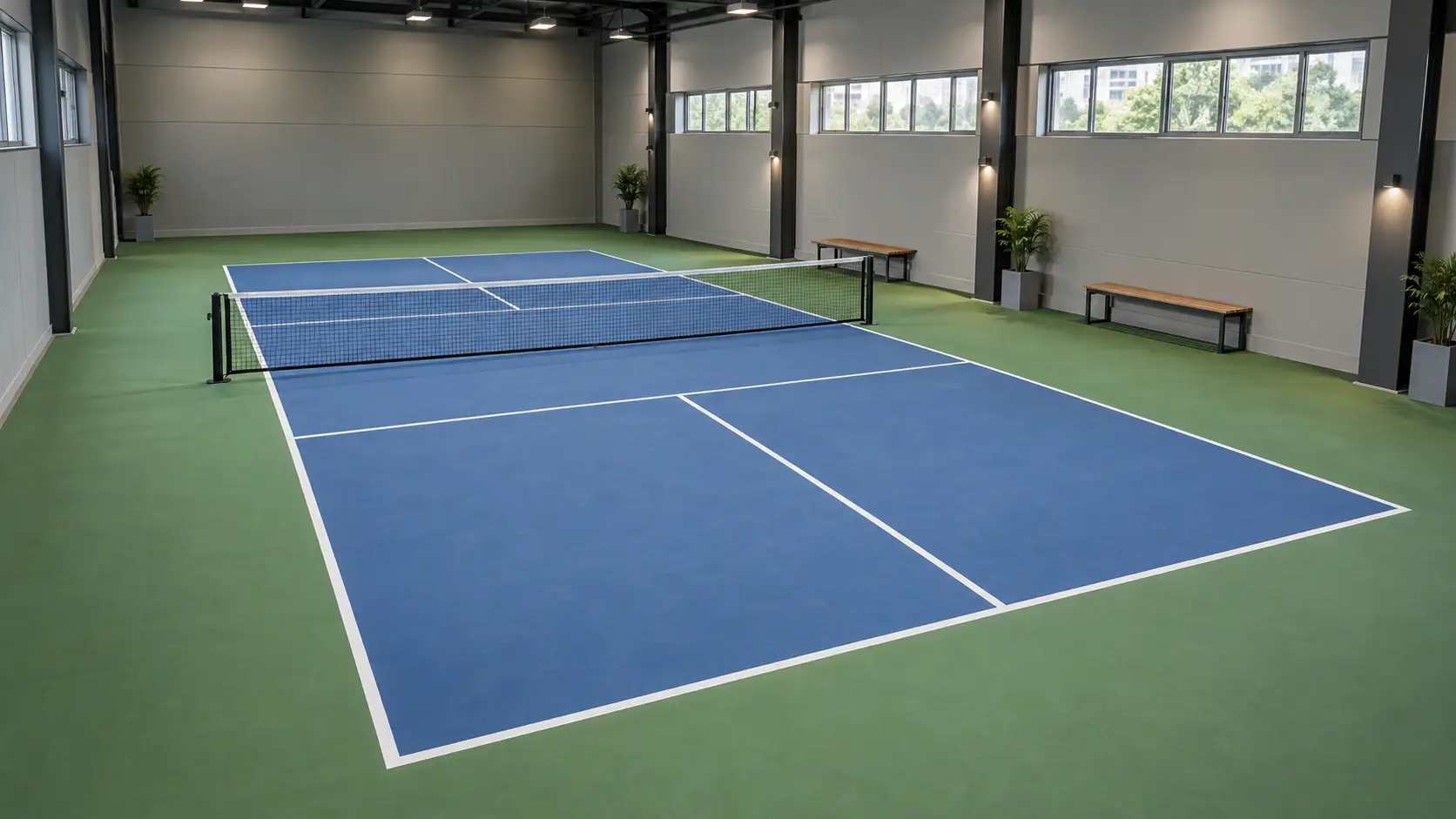
Indoor courts may use wood, synthetic sports flooring, cushioned systems or even acrylic hard-court surfaces.
Some indoor facilities require non-marking footwear to protect the playing surface. The appropriate outsole depends on the floor and venue rules.
Look for shoes designed for the specific surface, with secure lateral support and suitable traction. A non-marking label alone does not guarantee that a shoe offers adequate support for pickleball.
Rackonnect explains the distinction in its guide to non-marking shoes vs regular shoes.
You can also read the indoor vs outdoor pickleball guide to understand how playing surfaces, lighting and ball selection affect the game.
How to Choose the Best Pickleball Shoes in India
You do not have to purchase the most expensive pair to start playing. Instead, evaluate the following features before choosing your footwear.
1. Prioritise Fit Over Brand
A suitable shoe should feel secure around your heel and midfoot while giving your toes enough room to move comfortably.
When trying on court shoes:
Wear the type of socks you normally use for playing.
Check that your toes do not press against the front of the shoe.
Make sure your heel does not slip excessively.
Walk, take small side steps and change direction carefully.
Check for pressure or rubbing around the sides of your feet.
Do not assume that your usual running-shoe size will fit exactly the same in every court-shoe model.
2. Look for Lateral Stability
Pickleball requires controlled sideways movement. Check whether the shoe offers a secure upper, supportive midfoot and stable outsole platform.
The foot should not slide excessively inside the shoe when you move laterally.
3. Choose the Right Outsole
Outsole design affects traction, durability and court compatibility.
For outdoor acrylic courts, select footwear intended for hard-court use. For indoor facilities, follow the surface-specific and non-marking requirements where applicable.
A particular tread pattern or sole colour does not, by itself, prove that a shoe is appropriate.
4. Balance Cushioning and Stability
Comfortable cushioning is useful, especially on firm courts. But maximum softness is not necessarily the best choice for pickleball.
Look for a balance between underfoot comfort, court feel and stability during lateral movement.
If you have recurring foot pain or an existing lower-limb condition, consider getting professional footwear advice rather than relying solely on generic buying recommendations.
5. Consider Breathability
India's weather can make long playing sessions uncomfortable, particularly in warmer months.
Breathable uppers may improve comfort, provided they also hold the foot securely. Choose materials that suit the conditions in which you play most often.
6. Match the Shoe to Your Playing Frequency
If you're booking your first introductory session, you may not want to invest immediately in premium footwear. Check the venue's shoe requirements and whether you already own suitable court shoes.
However, if you plan to play regularly, purpose-appropriate court footwear is a sensible priority.
A beginner who plays occasionally may have different durability requirements from someone playing several competitive sessions each week.
Do You Need Expensive Pickleball Shoes as a Beginner?
No. Beginners do not automatically need premium pickleball-specific models.
The right buying decision depends on fit, playing surface, stability, durability and budget.
When comparing shoes available in India, focus on what the manufacturer actually specifies. Some established sports brands offer tennis or court footwear suitable for pickleball, while others sell dedicated pickleball models.
Rather than selecting a shoe because of its brand or an advertised discount, ask:
Is this shoe designed for court sports?
Is the outsole appropriate for my playing surface?
Does it provide a secure fit during side-to-side movement?
Does it meet my venue's footwear requirements?
Is it comfortable enough for the length of my usual session?
Does the retailer provide a clear return or size-exchange policy?
A properly fitted, moderately priced court shoe can be a more sensible purchase than an expensive running shoe that is poorly suited to pickleball.
If you're also buying your first paddle, Rackonnect's beginner pickleball paddle buying guide can help you evaluate the other major piece of equipment.
Common Pickleball Footwear Mistakes Beginners Should Avoid
Choosing suitable footwear becomes easier when you avoid a few common mistakes.
Buying Shoes Based Only on Appearance
A shoe may look athletic without being designed for court movement. Casual sneakers and lifestyle footwear are not necessarily suitable for regular pickleball matches.
Assuming More Cushioning Means More Support
Soft cushioning can improve comfort, but it does not automatically provide secure lateral support. Evaluate the entire shoe, including the upper, heel fit and platform.
Using Indoor Shoes on Rough Outdoor Courts
Some indoor shoes use outsole materials intended for smooth flooring. Abrasive outdoor surfaces may wear them down more quickly.
Ignoring Venue Rules
Some facilities require non-marking shoes. Others permit appropriate outdoor hard-court footwear. Always confirm the policy rather than assuming that every pickleball facility uses the same requirements.
Continuing to Play in Worn-Out Footwear
Inspect your shoes periodically. Unevenly worn soles, noticeably reduced traction, damaged uppers or a loose heel fit may signal that the footwear needs attention or replacement.
Replacing worn footwear does not eliminate injury risk, but playing in shoes that no longer fit securely or grip appropriately is avoidable.
What Should You Wear for Your First Pickleball Session?
If you're preparing for your first game, keep the equipment simple.
Shoes: Properly fitted court shoes suitable for the venue's surface.
Clothing: Comfortable sportswear that allows unrestricted movement.
Socks: Sports socks that fit well and help manage moisture.
Paddle: Your own paddle or a suitable rental from the venue.
Water: Enough to stay hydrated during breaks.
Before playing, spend a few minutes warming up with gentle movement and gradually increasing intensity. Start with controlled rallies while becoming familiar with the court.
If you only own running shoes, contact the venue before your session. Ask about footwear rules and whether you can arrange suitable court shoes. Avoid assuming your running shoes are appropriate for a fast-paced match.
Where Can Beginners Play Pickleball in Delhi NCR?
Having the right shoes is only part of getting started. A suitable playing environment and the opportunity to learn the basics can make your first few sessions more enjoyable.
Rackonnect's REPPP sports destination in Mehrauli, South Delhi, offers dedicated pickleball courts and opportunities for group play.
Players can explore the pickleball courts at REPPP in Delhi to find venue information and booking options.
Before your first visit, check the court surface, footwear requirements, available equipment and whether beginner sessions are offered.
Frequently Asked Questions About Pickleball Shoes
1. What are the best shoes to wear for pickleball?
Properly fitted pickleball court shoes or suitable tennis court shoes are good options. Look for lateral support, reliable traction, appropriate cushioning and an outsole compatible with your playing surface.
2. Can you play pickleball in running shoes?
Running shoes are not generally recommended for regular pickleball matches because most are designed primarily for forward running rather than repeated sideways movements. Court shoes are typically better suited to the game's movement requirements.
3. Are tennis shoes good for pickleball?
Yes. Genuine tennis court shoes are often suitable for pickleball because they are designed for sideways movement, stopping and changing direction. Check that the outsole matches the playing surface.
4. Are pickleball shoes different from tennis shoes?
There can be differences in design, fit, cushioning and marketing, but the categories overlap considerably. A well-fitting tennis court shoe can work for pickleball, and a pickleball-specific label is not essential.
5. Do indoor pickleball shoes need to be non-marking?
Many indoor sports facilities require non-marking footwear, but policies vary. Check your venue's requirements and select a shoe suitable for the actual flooring.
6. Can I wear badminton shoes for pickleball?
Some badminton court shoes can be suitable on compatible indoor surfaces. They may not be the best choice for abrasive outdoor hard courts, so check the manufacturer's recommendations and venue policy.
7. Are running shoes or court shoes better for beginners?
Court shoes are generally more appropriate for beginners who intend to play pickleball because they are designed for the sport's multidirectional movement. The most important factors are a suitable design, proper fit and court compatibility.
8. Are expensive pickleball shoes worth buying?
Not necessarily. The best choice depends on comfort, stability, playing frequency, surface and durability. Beginners can start with reasonably priced, well-fitting court shoes rather than automatically choosing premium models.
9. Can the same pickleball shoes be used indoors and outdoors?
Some court shoes are suitable for multiple surfaces, but not all. Outdoor hard courts can wear certain indoor outsoles quickly, while indoor facilities may have non-marking requirements. Follow the shoe manufacturer's guidance and venue rules.
10. How do I know when to replace my pickleball shoes?
Look for worn tread, reduced traction, damaged uppers, poor heel retention or significant changes in comfort. Replacement timing depends on how often you play, your movement style and court conditions.
Final Verdict: Choose Court Shoes Over Running Shoes for Pickleball
When comparing pickleball shoes vs running shoes, the most important distinction is how each type supports movement.
Running shoes are designed mainly for running, while court shoes are generally better suited to the lateral shuffles, quick stops and changes of direction that occur during pickleball.
For beginners in India, that does not mean you must immediately buy an expensive pair of specialised pickleball shoes. A properly fitted tennis court shoe or another suitable court-sport model may be a sensible starting point.
Choose footwear that matches your playing surface, supports comfortable movement and meets the venue's requirements. Good equipment helps you concentrate on the game rather than worrying about your shoes.
Ready for your first pickleball game? Explore pickleball courts in Delhi through Rackonnect, check the venue's footwear policy and book a session that suits your schedule.