Picture this: You’re locked in a high-intensity rally at 10-10 on game point. You hit a blistering overhead winner at the net, celebrate with your partner, and turn around—only to hear the referee (or opponent) call out: "FOOT FAULT!"
Just like that, your winning point is wiped off the board, the ball goes to the other side, and momentum shifts instantly. In recreational and competitive pickleball, more points are gifted to opponents through illegal serves and kitchen foot faults than almost any other unforced errors.
Because pickleball attracts players from tennis, badminton, and squash, many players bring habits from other racket sports that break official USA Pickleball / International Pickleball rules. In this playbook, we'll demystify the legal serve mechanics, expose the top 4 Kitchen (Non-Volley Zone) mistakes, and show you how to fix them before your next match at REPPP by Rackonnect.
Part 1: The Anatomy of a Legal Serve (Volley Serve vs. Drop Serve)
Unlike tennis, where the serve is an aggressive offensive weapon hit overhand, the pickleball serve is designed purely to start the point. Amateurs frequently break serve rules when trying to add extra speed or topspin.
Rulebook Standard
The Volley Serve: 3 Mandatory Criteria
When hitting a traditional Volley Serve (striking the ball out of the air without letting it bounce first), your stroke MUST meet all three criteria at the moment of impact:
Underhand Arm Motion: Your arm must move in an upward arc.
Contact Below the Waist: The point of contact with the ball must be below your navel (belly button).
Paddle Head Below the Wrist: The highest point of your paddle head cannot be above the highest part of your wrist joint.
The Alternative: The Drop Serve Rule
Struggling with wrist positioning or upward arc mechanics? Use the Drop Serve. To execute a legal drop serve, simply hold the ball at any height, let it drop naturally to the court surface, and strike it after it bounces. When using the Drop Serve, the three upward-arc/waist restrictions listed above do NOT apply!
Caution: You cannot throw, toss, or propel the ball downward to make it bounce higher during a Drop Serve. It must drop purely under gravity.
Deep Dive: Want a complete breakdown on tactical serve variations? Read our article analyzing overhead serves in pickleball: game changer or rule breaker.
3 Top Serving Foot Faults to Avoid
Stepping on the Baseline: At the moment your paddle hits the ball, at least one foot must be grounded on the court surface behind the baseline. Neither foot may touch the baseline or the court inside.
Sideline Extension Fault: Your feet must remain within the imaginary extensions of the center line and sideline. Stepping outside these boundaries before contact is a fault.
Serving Into the Kitchen / Line: Your serve must clear the net AND clear the 7-foot Non-Volley Zone (including the kitchen line). If your serve lands on the kitchen line, it is OUT!
Part 2: Demystifying The Kitchen (Non-Volley Zone)
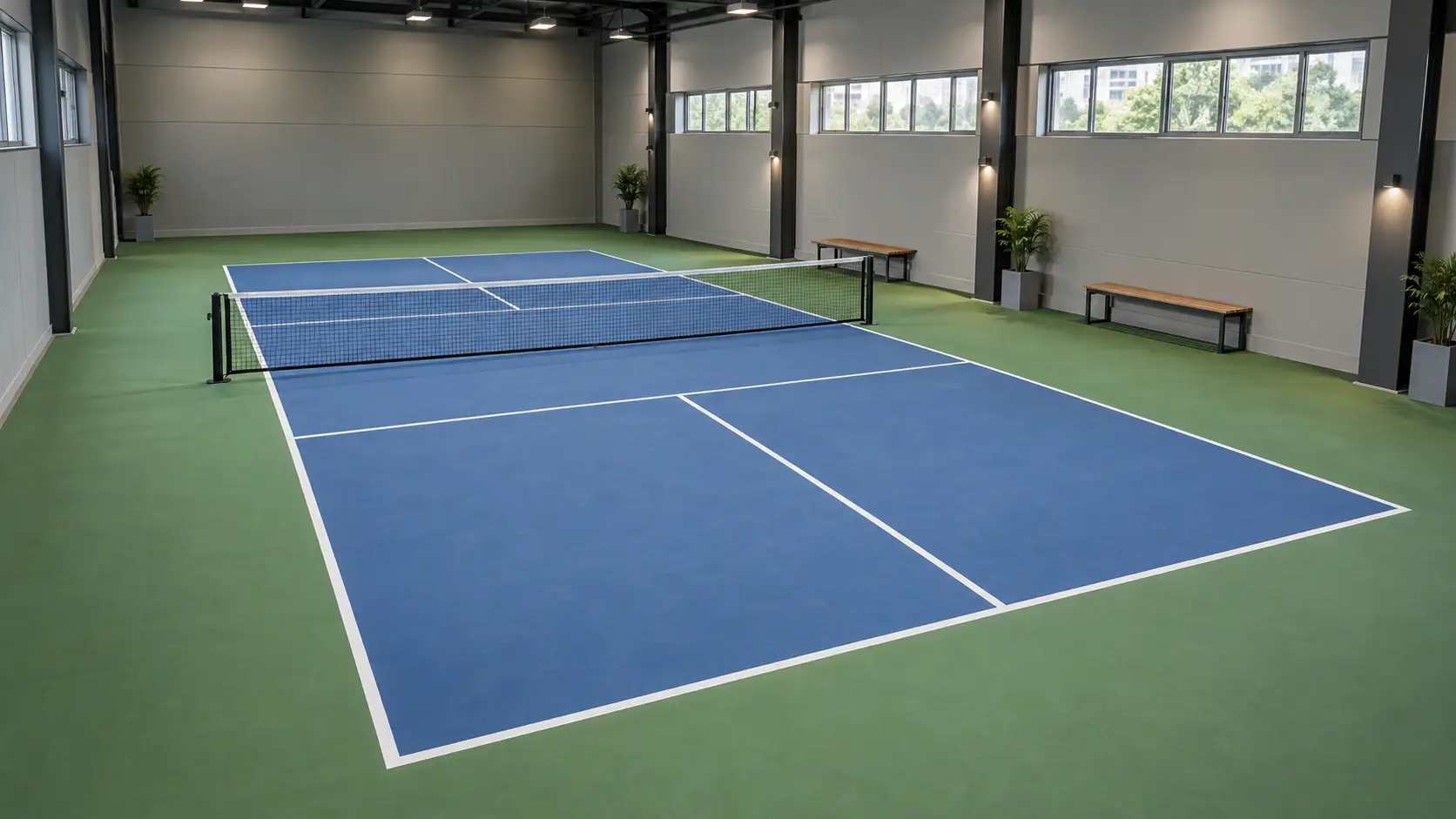
The 7-foot court area on both sides of the net is officially named the Non-Volley Zone (NVZ), but universally known as "The Kitchen." Its purpose is simple: to prevent players from standing right at the net and smashing every ball downward.
Match Scenarios: Allowed vs. Fault BreakdownFAULT
Stepping on the Line During a Volley
The Kitchen line IS part of the Kitchen! If your foot, toe, or heel even grazes the white line while hitting a volley, it is an immediate fault.FAULT
The Momentum Foot Fault
You hit a legal volley outside the kitchen, but your forward momentum causes you to step on or inside the line after contact. Even if the ball is already dead, it is a fault!ALLOWED
Hitting a Bounced Ball in the Kitchen
You ARE allowed to stand inside the Kitchen to hit any ball that has already bounced! The Kitchen rule ONLY applies to volleying (hitting out of the air).FAULT
Gear Dropping Into the Kitchen
If your sunglasses, hat, paddle, or towel falls off your body into the Kitchen during or as a result of a volley stroke, it is an automatic fault.
New to court layout and basic scoring rules? Review our beginner-friendly guide on how to play pickleball: 9 simple rules for beginners to get fully prepared.
Part 3: 3 Drills to Eliminate Foot Faults Forever
The best way to build muscle memory and avoid giving away free points is structured court practice:
1. The Shadow Line Drill
Stand 3 inches behind the kitchen line. Practice hitting shadow volleys while focusing on keeping your weight on your back heels. Focus on pushing off your back leg rather than leaning forward with your feet.
2. The Erne Jump Drill
An advanced tactic to hit aggressive net volleys legally is the Erne—jumping from outside the court sideline over the kitchen corner and hitting the volley mid-air before landing completely outside the court boundaries.
3. Drop Serve Precision Practice
If you get nervous on match point, switch to the Drop Serve. Drop the ball, let it bounce, and hit a smooth, deep drive into the opponent's back third of the court.
Social Play Tip: Ready to test your serve mechanics in a friendly setting? Join organized social sessions or drop-in matches at pickleball games near you in Delhi NCR.
Practice & Play on Tournament-Grade Courts at REPPP
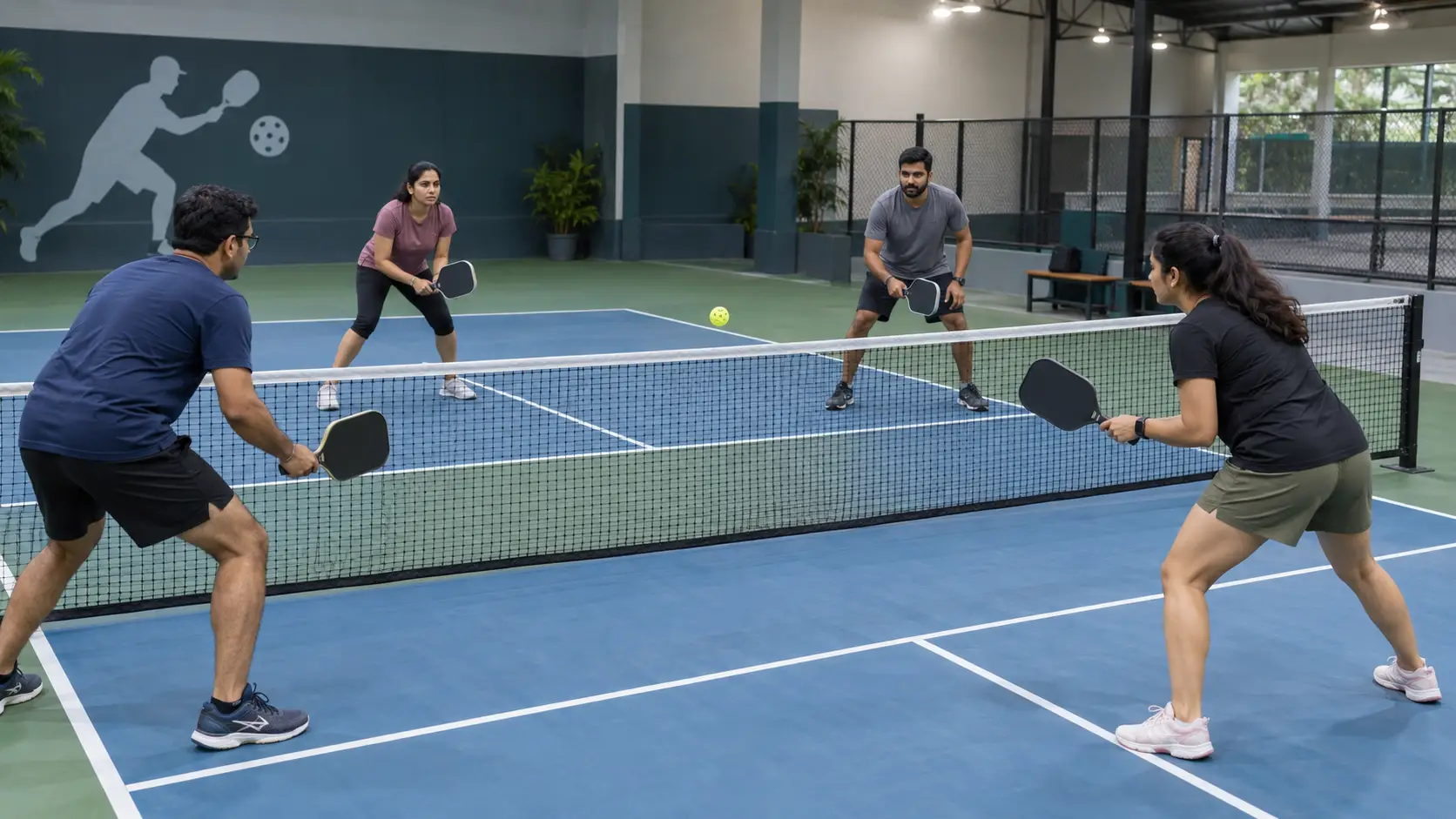
Mastering footwork and legal serves requires crisp, clear court lines and professional playing conditions. At REPPP by Rackonnect, our indoor and outdoor pickleball courts feature laser-precise court lines, anti-glare lighting, and cushioned surfaces so you can focus 100% on your game.
Looking for playing partners or court slots? Use the Rackonnect App to find playing partners match-rated for your skill level!
Frequently Asked Questions (FAQs)
Q1. Can my momentum carry me into the kitchen if the ball is already dead?
No! In pickleball, there is no time limit on momentum. If you hit a volley and your momentum carries you into the kitchen (or onto the kitchen line) even after the opponent has missed the ball or the point is over, it is STILL a fault.
Q2. Is the kitchen line considered inside or outside the non-volley zone?
The kitchen line is 100% part of the Non-Volley Zone. Stepping on any portion of the white line during or after a volley is an immediate foot fault.
Q3. Can I serve overhand if I use the Drop Serve?
Yes! When using a Drop Serve (dropping the ball and letting it bounce), the underhand upward-arc, waist-height, and wrist-level rules do NOT apply. However, most players still hit drop serves underhand for better control.
Q4. What happens if my partner is standing in the kitchen while I hit a volley?
That is completely legal! As long as the player who actually strikes the volley is standing outside the kitchen and does not touch their partner or the kitchen zone during the stroke, no fault has occurred.
Clean Up Your Game & Play Fault-Free!
Ready to put your legal serve and net footwork to the test on premier courts?