Padel Shot Mastery: How to Use the Glass Walls & Master the Bandeja
If you're transitioning to padel from tennis, squash, or badminton, you'll quickly realize that padel isn't just a game of power—it is a high-speed game of court geometry and tactical patience. Two defining elements separate beginner players from advanced competitors: mastering glass wall rebounds and executing a rock-solid Bandeja.
To the untrained eye, the glass walls surrounding a padel court look like a defensive nightmare. In reality, the walls are your greatest tactical asset once you learn how to let the ball pass and use its momentum to reset the point.
In this comprehensive guide, we unpack the physics of glass wall play, step-by-step biomechanics of the Bandeja shot, common amateur mistakes, and how to practice these shots at REPPP padel courts in Delhi NCR.
Part 1: How to Master the Glass Walls in Padel
The most common beginner impulse in padel is hitting the ball before it reaches the back glass. While this instinct works in tennis, in padel it robs you of recovery time and forces difficult defensive errors.
The Golden Rule of Glass Play: "Let it Pass!"
When an opponent lob or deep drive lands behind your service line, do not panic. Turn your body sideways, let the ball bounce on the turf first, strike the back glass wall, and rebound back toward you. Letting the ball bounce off the glass slows its speed down and gives you 1–2 extra seconds to setup a controlled counter-attack.
Step-by-Step Technique: Defending Off the Back Glass (Bajada & Contra-Pared)
Early Shoulder Turn: As soon as you read a deep ball, turn your shoulders 90 degrees sideways to the wall before the ball bounces. Never face the back glass straight-on with your chest.
Backpaddle & Distance Management: Move back with the ball, but stay at least arm's length away from the glass. If you stand too close to the back wall, you will get jammed when the ball rebounds.
Contact Point in Front: Wait for the ball to rebound off the glass, drop to waist height, and strike the ball out in front of your lead hip.
The Double Wall Rebound (Corner Wall): When the ball hits the side glass first and then the back glass (or vice versa), read the angle. If the ball strikes the side wall close to the corner, track it by pivoting around the ball in a semi-circle motion rather than chasing it in a straight line.
Tactical Rule: Need a complete refresher on court rules and glass boundary specifications? Review our comprehensive breakdown on what is padel, rules, and how to play in India.
Part 2: What is the Bandeja and Why is It Essential?
In Spanish, "Bandeja" translates to "tray" or "platters." It gets its name from the racket face position, which stays flat and open as if you were holding a waiter's serving tray overhead.
The Bandeja is a defensive-offensive hybrid shot played from mid-court when opponents hit a medium-depth lob over your head. Instead of retreating all the way back to the back wall or attempting a risky, full-power smash, you execute a Bandeja to keep your offensive position at the net.
The Strategic Goal of the Bandeja: The primary goal of a Bandeja is NOT to hit an instant winner. It is designed to hit a low, sliced ball into the back corners that stays low off the opponent's back glass, preventing them from attacking and allowing you and your partner to hold the net position.
How to Execute a Perfect Bandeja (Step-by-Step Biomechanics)
1. Preparation & "Trophy Pose"
As soon as you see a medium lob coming overhead, shuffle backward sideways using side-step footwork. Raise your racket arm with an open face pointing toward the sky (the "tray" angle) while pointing your non-dominant hand up toward the incoming ball for balance and tracking.
2. Flat & Sliced Impact Point
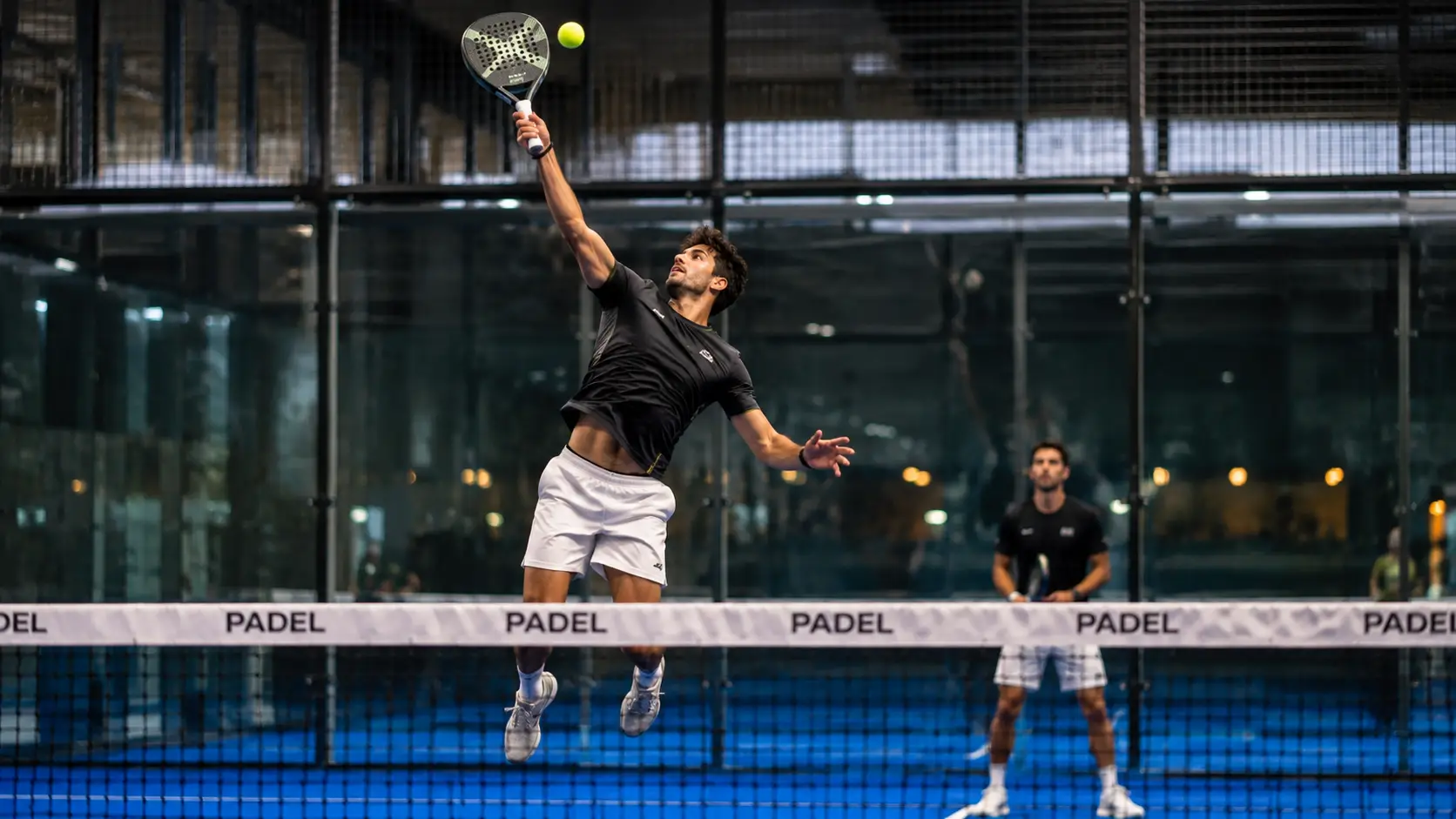
Unlike a tennis overhead smash where contact is made directly above your head with wrist snap, the contact point for a Bandeja is slightly lower (around eye or forehead level) and out to your side. Hit the ball with a flat, downward slicing motion across the bottom of the ball to generate heavy backspin.
3. Tactical Placement Targets
Where should you aim your Bandeja? To maximize pressure on your opponents, aim for two primary court zones:
Deep Cross-Court Corner: Hitting deep into the diagonal glass forces the opponent into a awkward corner glass recovery.
The Center Line (The "Fence" Gap): Hitting down the middle between two opponents creates confusion over who should take the ball.
4. Recovery & Re-Attacking the Net
Immediately after making contact, push off your back foot and move straight back toward the net position (approximately 2 meters from the net). Do not stand still watching your shot!
Bandeja vs. Víbora vs. Flat Smash: Knowing the Difference
Shot Type | Racket Contact & Spin | Primary Objective | Optimal Court Position |
|---|---|---|---|
Bandeja | Flat / Open Face (Backspin) | Control net position; keep ball low off glass | Mid-court (Defending medium lobs) |
Víbora | Brushed Side-Face (Sidespin) | Aggressive pressure; erratic side-wall bounce | Close to mid-court (Aggressive setup) |
Flat / Kick Smash | Heavy Topspin or Power Flat | Direct winner (Bounce out of court x3 / x4) | Very close to net (Short lob) |
3 Common Mistakes Amateurs Make (And How to Fix Them)
Mistake 1: Treating the Bandeja Like a Power Smash
Trying to smash every overhead lob results in the ball hitting the opponent’s back glass hard and rebounding high into the middle of the court—setting up your opponents for an easy counter-attack. Focus on control and backspin depth over raw speed.
Mistake 2: Standing Parallel to the Net During Overhead Preparation
If you backpedal with your chest facing forward, you lose power, balance, and reach. Always turn sideways immediately and use crossover or side-shuffle steps to move backward.
Mistake 3: Running Straight Toward the Glass Wall
When defending a glass rebound, running forward directly toward the back glass cramps your strike zone. Always move at a slight diagonal angle to give yourself space to swing.
Looking to test your skills against top local competition or take coached sessions? Read about community events like the ultimate padel challenge events at REPPP to see how tactical shot placement wins competitive matches.
Practice Your Padel Shot Mastery at REPPP
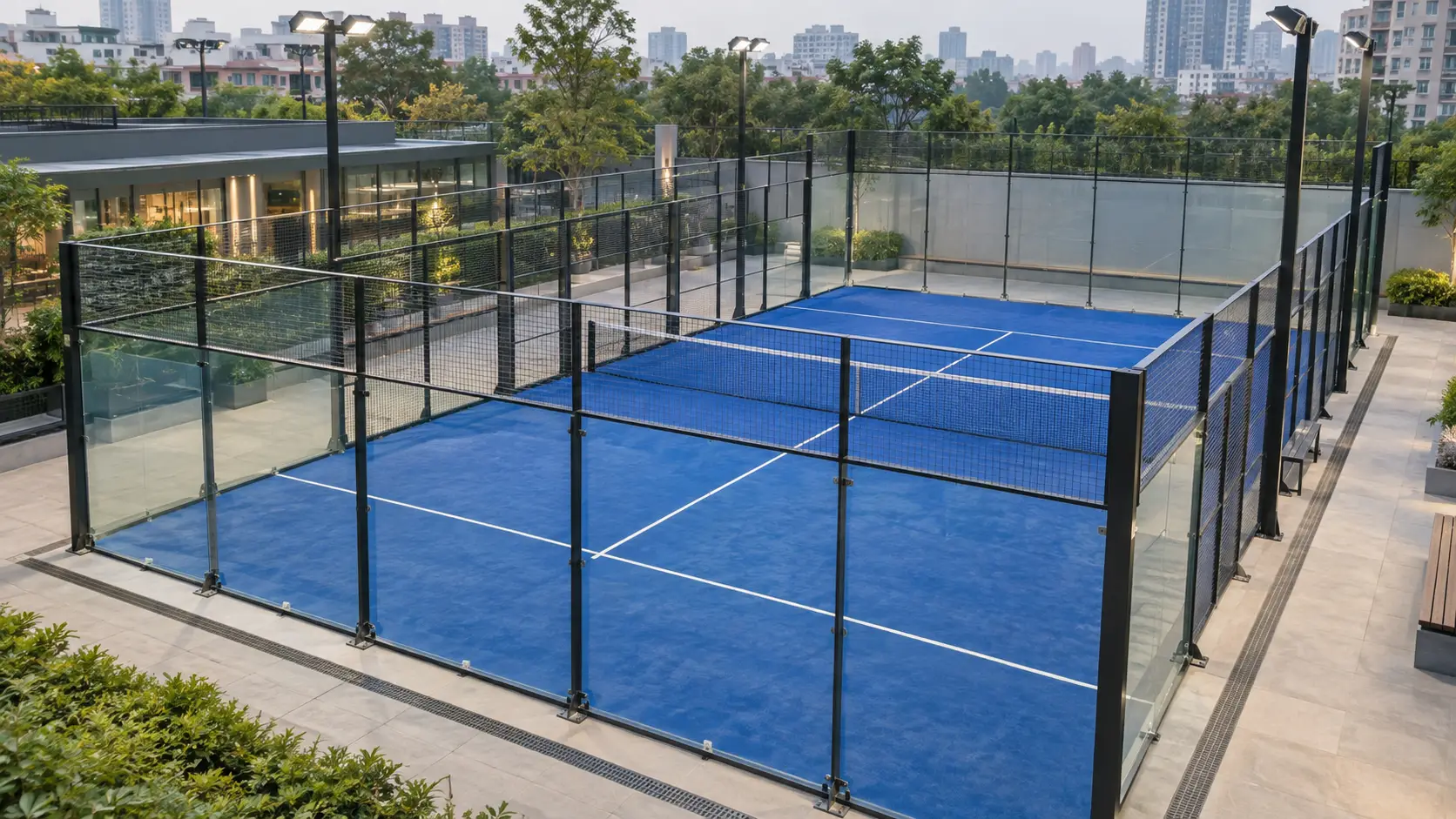
Mastering glass rebounds and technical overheads requires world-class court conditions. Premium panoramic glass courts, anti-glare indoor lighting, and high-density WPT turf at REPPP by Rackonnect provide the ideal environment to refine your padel game.
Need a practice partner or looking to book a court slot in South Delhi or Mehrauli? You can check court pricing on our guide for padel court booking prices in Delhi NCR or use the Rackonnect App to find padel playing partners instantly.
Frequently Asked Questions (FAQs)
Q1. What is the difference between a Bandeja and a Víbora in padel?
The Bandeja uses a flat or backspin slice struck out to the side with an open racket face to maintain control of the net. The Víbora uses a side-brushing motion that imparts aggressive sidespin, causing the ball to stay extremely low and curve unpredictably when it hits the side and back glass.
Q2. Can you hit the ball directly into your own glass wall in padel?
Yes! In defensive situations where you are trapped near your back wall, you are allowed to hit the ball forcefully against your own glass back wall so that it flies over the net into the opponent's court (called a Contra-Pared).
Q3. Why does the ball bounce differently off wet glass vs dry glass?
Dry tempered glass creates friction with the ball, allowing it to grip the wall and rebound upward into the court. Wet or humid glass eliminates friction, causing the ball to skid straight downward, making wall play unplayable on outdoor un-covered courts.
Q4. At what height should I contact the ball when hitting a Bandeja?
Unlike a smash which is hit at maximum arm extension directly overhead, the ideal contact point for a Bandeja is around eye to forehead height, slightly off to the side of your dominant shoulder.
Take Your Padel Game to the Next Level
Ready to practice your Bandeja and glass wall defense on world-class panoramic courts? Reserve your indoor court slot or join coaching sessions at REPPP today!