In 2010, most Indians had never heard of pickleball. In 2020, it was a curiosity - something you stumbled across in a video featuring American retirement communities and immediately filed under "sports that will never take off here." In 2026, it is booming. Courts are filling up in Delhi, Mumbai, Bengaluru, Hyderabad, and Pune. Waiting lists for introductory sessions are getting longer by the month. And a sport that started as a backyard pastime in Washington State in 1965 is quietly becoming one of the most talked-about recreational activities in urban India.
If you have been curious about pickleball but have not yet made the leap, this is the article to read before you do. We are going to cover what the sport actually is, why it has grown so explosively, why India specifically is primed for its continued rise, and how you can get started - regardless of your age, fitness level, or sporting background.
What Is Pickleball, Really?
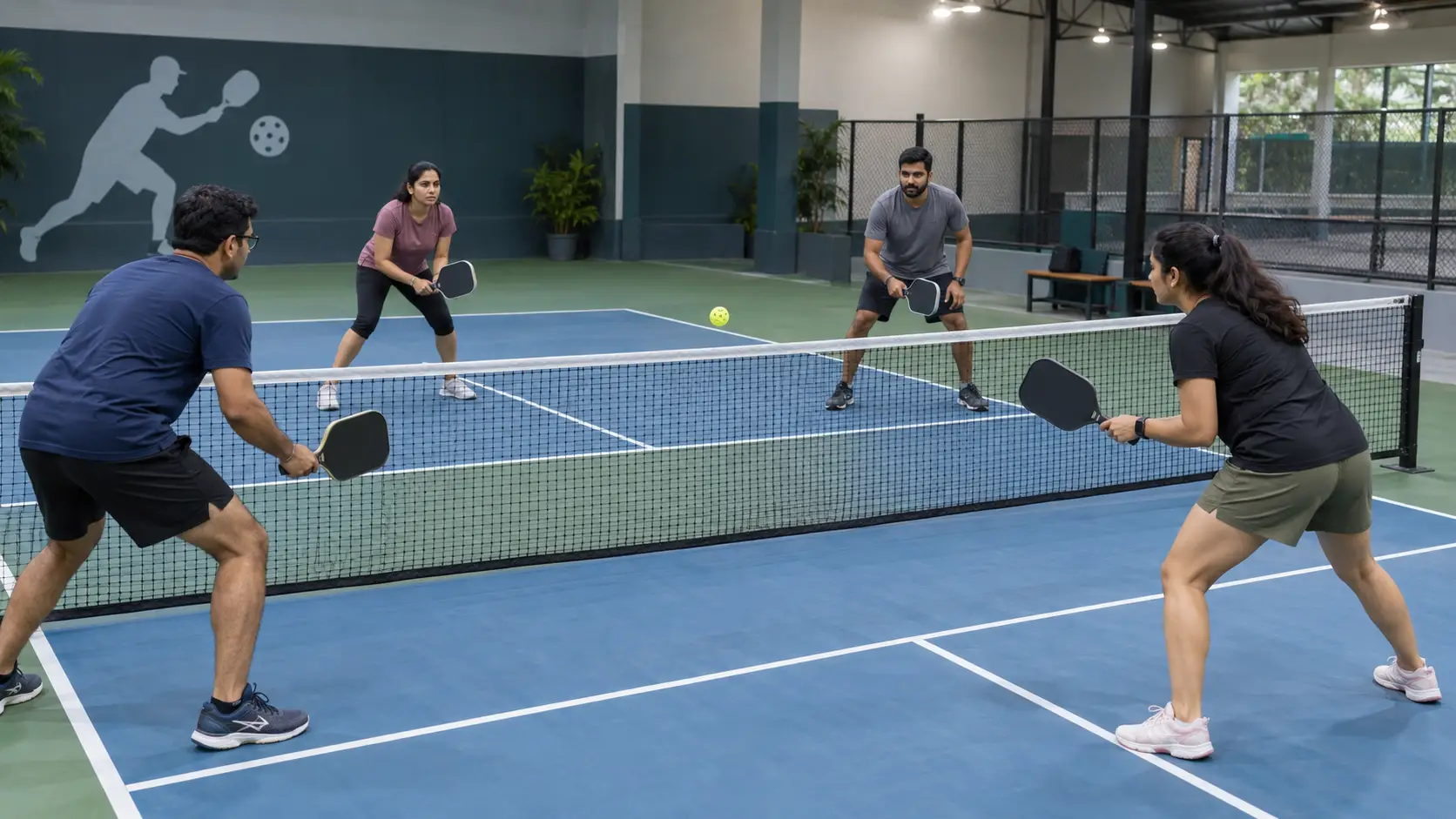
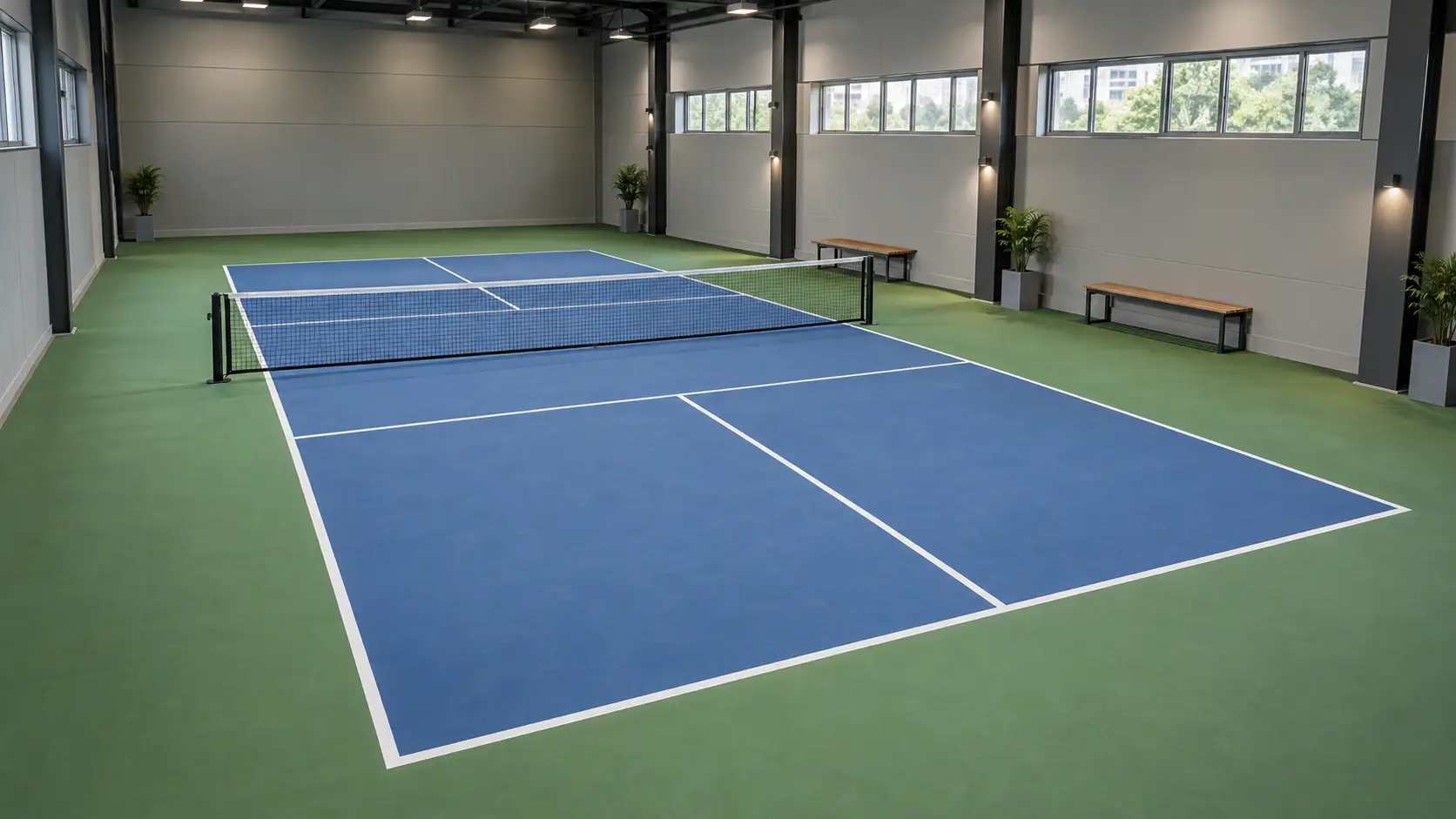
Pickleball is a paddle sport that blends elements of tennis, badminton, and ping-pong. It is played on a court roughly the size of a badminton court - significantly smaller than a tennis court - with a lowered net, solid paddles, and a perforated polymer ball (similar to a Wiffle ball). It can be played as singles or doubles, though doubles is by far the most common format.
The game is governed by a simple set of rules that most people can learn in under twenty minutes. Serving is done underhand. There is a seven-foot non-volley zone on either side of the net - known as the kitchen - which forces close-quarters rallies and rewards tactical placement over raw power. Scoring goes to 11 points (win by 2), and only the serving side can score, which means matches can swing dramatically right up until the final exchange.
On paper, it sounds modest. On court, it is immediately addictive.
The Numbers Behind the Boom
To understand why pickleball is the world's fastest-growing sport - a title it has held consistently for the past five years - you need to look at the data. In the United States, there are now well over 36 million active players, up from fewer than 5 million in 2019. Major investment has poured in from professional athletes, private equity, and sports media companies. Professional leagues have launched. Prize money has climbed. And the sport's governing body has been granted full recognition by the International Olympic Committee.
In India, the numbers are smaller but the trajectory is steep. The Pickleball Federation of India has seen a significant surge in affiliated players and member clubs since 2023. The sport has been adopted in corporate wellness programmes, residential communities, school sports curricula, and premium fitness centres. Industry observers estimate the number of regular pickleball players in India will cross several hundred thousand by the end of 2026, with urban metros leading the growth.
Why Pickleball Works So Well in India
India is a vast, diverse market, and not every sport translates cleanly from one context to another. Pickleball, it turns out, has a remarkably good fit with the Indian urban demographic.
The Court Size Advantage
Land is expensive and scarce in Indian cities. A full tennis court requires roughly 260 square metres. A pickleball court needs about 65 square metres. A single tennis court can comfortably fit four pickleball courts. This means venues that could never justify the space or cost of tennis infrastructure can offer pickleball without significant capital expenditure - and can generate more bookings per square metre in the process. For operators, it is a more viable proposition. For players, it means more courts, more availability, and more access.
Lower Barrier to Entry
A quality pickleball paddle can be purchased for anywhere between ₹2,000 and ₹8,000, which is a fraction of the cost of tennis rackets or even badminton equipment at the performance end of the market. The ball itself is cheap and durable. Entry-level sessions typically cost less than a multiplex cinema ticket. For a sport to become truly mainstream in India, the economics need to work for the middle class - and pickleball's economics work.
A Sport That Crosses Generations
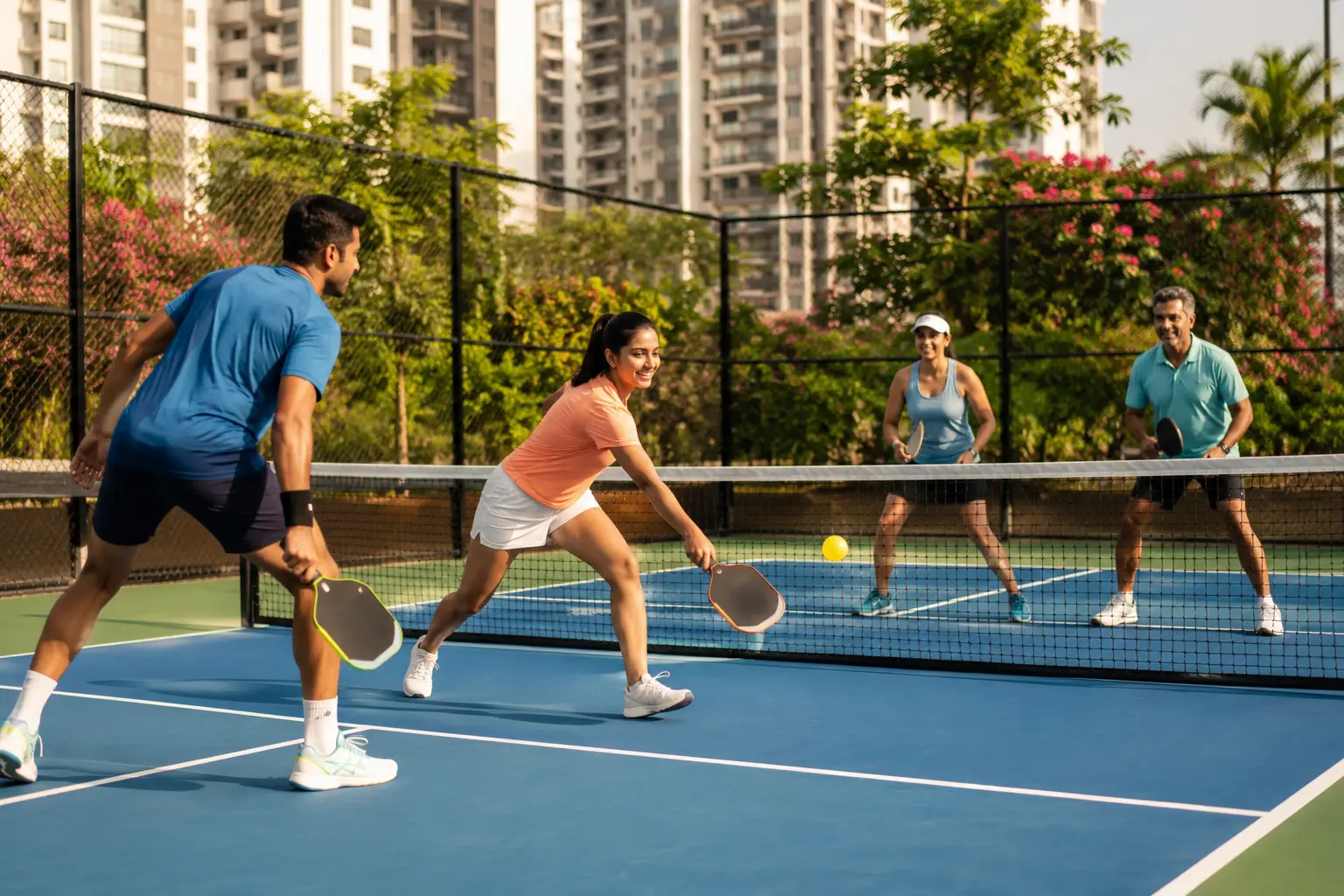
One of pickleball's most remarkable social properties is its multigenerational appeal. A competitive game between two seasoned players is fast, technical, and physically demanding. A social game between a 65-year-old retired professional and their teenage grandchild is genuinely enjoyable for both parties. The sport scales beautifully to different physical intensities without requiring rule changes or equipment modification.
In a country where families often want to do things together across age gaps - and where sporting infrastructure rarely accommodates more than one generation at a time - this is not a minor advantage. It is a structural differentiator.
The Doubles Format and Social Culture
Indians are socially oriented. We like doing things in groups. We like the energy of shared experience. Pickleball's dominant doubles format, with four people on a small court in close proximity, is inherently social in a way that solo running or gym workouts simply are not. The court chatter, the team fist-bumps, the post-match chai - pickleball, more than most sports, facilitates the kind of easy sociability that Indian recreational culture thrives on.
Who Is Playing Pickleball in India Right Now?
The current Indian pickleball player base is fascinatingly diverse, though it skews urban and educated. Here is a rough sketch of the main cohorts:
Former tennis and badminton players looking for something fresh, more social, and less physically demanding on ageing joints. Many of them pick up pickleball within a session or two and find their existing skills transfer well.
Corporate professionals in their 30s and 40s who want an active hobby that fits around a demanding schedule - and that offers genuine social connection rather than the solitary grind of a gym membership.
Older adults (55+) who want to stay active, competitive, and social but need a sport that is kind to joints and does not carry the injury risk of more intense activities. For many in this group, pickleball has become the most significant recreational discovery of their later years.
Young adults and college students who discovered the sport through social media and viral pickleball content, and who are drawn to its competitive potential and community culture.
Key Differences from Tennis and Badminton - A Quick Guide for New Players
If you are coming from a tennis or badminton background, pickleball will feel familiar but will also require genuine adjustment. A few things to keep in mind:
The kitchen rule changes everything. You cannot volley the ball while standing in the non-volley zone (the kitchen). This single rule forces a more tactical, patient style of play and makes net dominance a game of positioning rather than power alone.
The ball bounces differently. The polymer ball is lighter and bouncier than a tennis ball but slower than a shuttlecock. Your timing will need recalibrating for the first few sessions.
Underarm serving is mandatory. There are no overhead serves in pickleball. The serve must be hit below waist height with an upward arc, which eliminates the serve dominance seen in tennis and keeps rallies going.
The double bounce rule. After the serve, both the return of serve and the next shot must bounce before being hit. Only after these two bounces can either team begin volleying. This rule slows the early part of each point and rewards consistency.
Points feel shorter, but games feel longer. Individual rallies are often quick, but because only the serving team scores, games can involve significant momentum shifts and feel more competitive than the scoreline suggests at any given moment.
Where to Play Pickleball in India
Pickleball courts are now available in all major Indian metros and many tier-2 cities. Premium venues like REPPP in Delhi offer dedicated multi-court facilities with coaching programmes and equipment rental. Many residential complexes and sports clubs have converted existing badminton courts to dual-use pickleball courts. Outdoor courts in public parks are beginning to appear in city planning blueprints.
The fastest way to find a court near you - and to find someone to play with - is the Rackonnect platform. You can search by city and area, browse real-time availability, book a slot, and use the partner-matching feature to find a player at your level for your first game. The entire process takes less time than driving to the venue.
Getting Started: What You Need for Your First Session
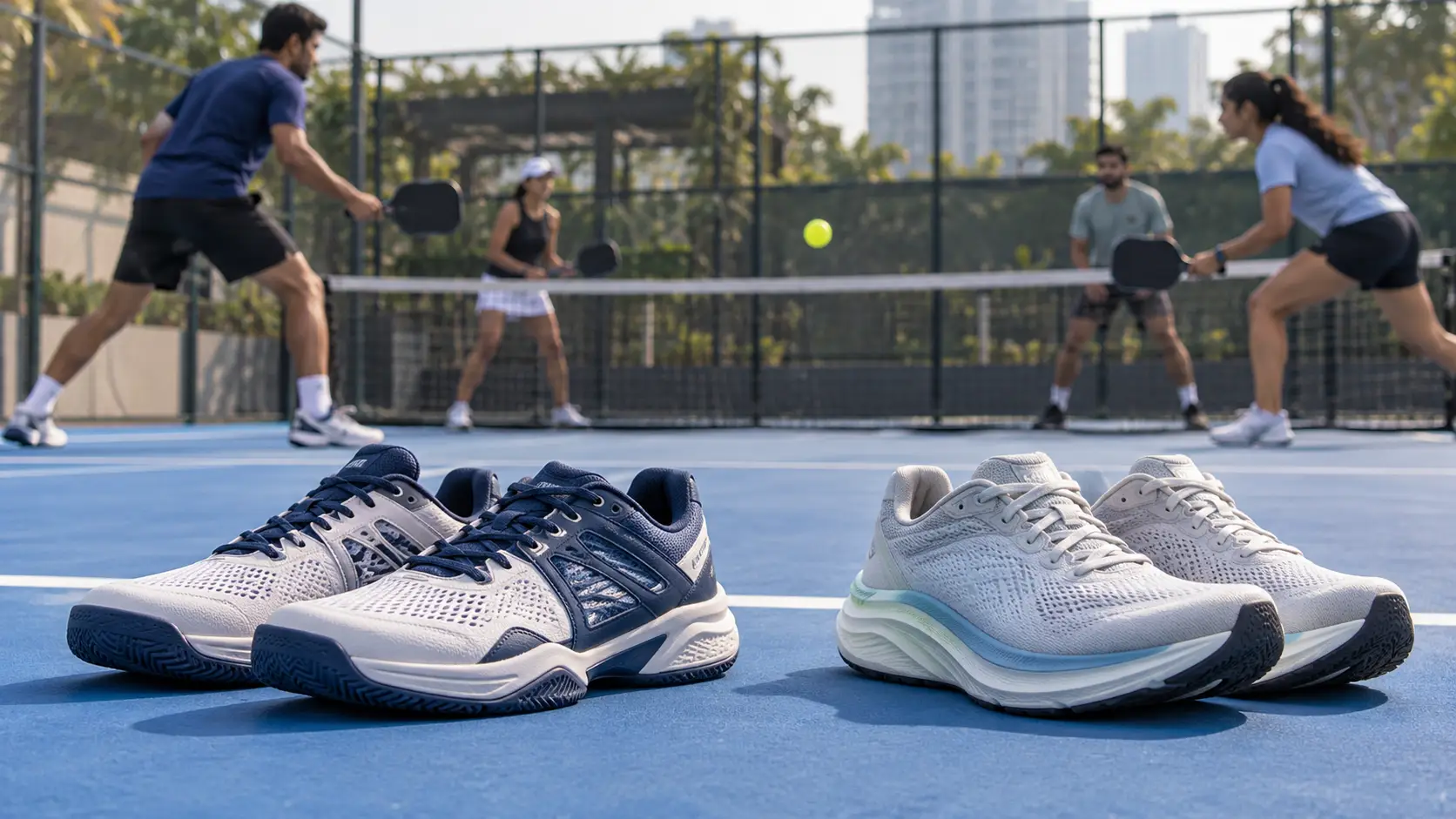
You genuinely do not need much. Most venues offer equipment rental, so your first session requires nothing more than a pair of sports shoes, comfortable active wear, and the willingness to look slightly awkward for the first fifteen minutes. The learning curve is gentle enough that by the time your one-hour session ends, you will be rallying, keeping score, and already thinking about when you can book the next one.
If you want to invest in your own paddle before your first session, entry-level options in the ₹2,500–₹4,000 range are perfectly adequate for beginners. A graphite or fibreglass face with a polymer core is the standard recommendation. Avoid wooden paddles - they are heavy, they dampen your feel for the ball, and you will outgrow them quickly. You will not regret the small additional spend.
The Bigger Picture: What Pickleball's Rise Means for India
India has spent decades building a cricket monoculture, with occasional room for badminton, kabaddi, and hockey. That monoculture is not going anywhere - but the gaps are filling in. Padel, pickleball, squash, and other racket sports are becoming legitimate mainstream choices for urban recreational athletes, and the infrastructure - courts, coaches, platforms, communities - is arriving fast enough to support real growth.
What is happening with pickleball in India right now is the early chapter of something that will look significant in retrospect. The players who are getting in now - building skills, joining communities, competing in the first waves of organised tournaments - are the founders of a sporting culture that will define how a generation of Indians thinks about recreation and fitness.
You can join that story at any point. But there is something to be said for joining it while it is still being written.
Find your first pickleball court on Rackonnect.Download the app, search your city, book a slot, and get on the court. The sport that has taken the world by storm is here - and it is waiting for you.