Key Takeaways
Pickleball combines easy learnability, low equipment cost, and high social value, making it ideal for workplace wellness.
Short session formats and low impact play make pickleball a natural fit for lunchtime leagues and team-building events.
Rapid infrastructure growth and corporate pilot programs have accelerated adoption across Indian metros.
Operational factors such as venue choice, scheduling, safety, and coaching determine program success for organisations.
Simple pilot plans with measurable engagement metrics deliver fast ROI for HR and facilities teams.
Introduction
Pickleball is emerging as one of the fastest adopted workplace sports in India, driven by a mix of operational suitability and cultural fit for modern offices. Companies seeking quick wins in employee engagement and wellness now see pickleball as a practical option that scales from a small pilot to a larger corporate program.
This article explains why pickleball resonates with corporate teams in India, summarises evidence of infrastructure and event growth, and offers a practical path for HR and facilities teams to pilot and scale workplace programs.
What Is Pickleball – A Quick Primer
Pickleball is a racket sport played on a smaller court than tennis, using solid paddles and a perforated plastic ball. It blends elements of tennis, badminton, and table tennis and is simple to learn for mixed-ability groups.
Key Differences That Matter for Corporates
Court size: Smaller footprint enables play in multipurpose spaces or temporary setups.
Equipment: Inexpensive paddles and portable nets lower upfront costs.
Session length: 10–30 minute formats fit workday breaks and reduce scheduling friction.
Intensity: Low to moderate impact reduces injury risk and broadens participation across age and fitness levels.
For background reading on adoption trends and court growth in India, refer to recent industry coverage and market summaries documenting rapid court expansion and corporate events.
Why Pickleball Clicks With Corporates
Low Barrier to Entry and Minimal Setup
One of the strongest reasons pickleball is gaining traction in corporate environments is how easy it is to start. Unlike many traditional sports, pickleball does not require expensive infrastructure, long training periods, or specialised athletic ability.
A basic setup requires paddles, a portable net, and a marked playing area, making it feasible for offices to host sessions on unused courts, parking areas, or nearby sports facilities. This low entry barrier allows companies to test programs quickly without large upfront commitments.
Short Social Sessions That Fit the Workday
Pickleball naturally supports short, high-engagement sessions that align well with work schedules. Matches can be completed in 10 to 20 minutes, making them suitable for lunch breaks, post-work slots, or wellness hours.
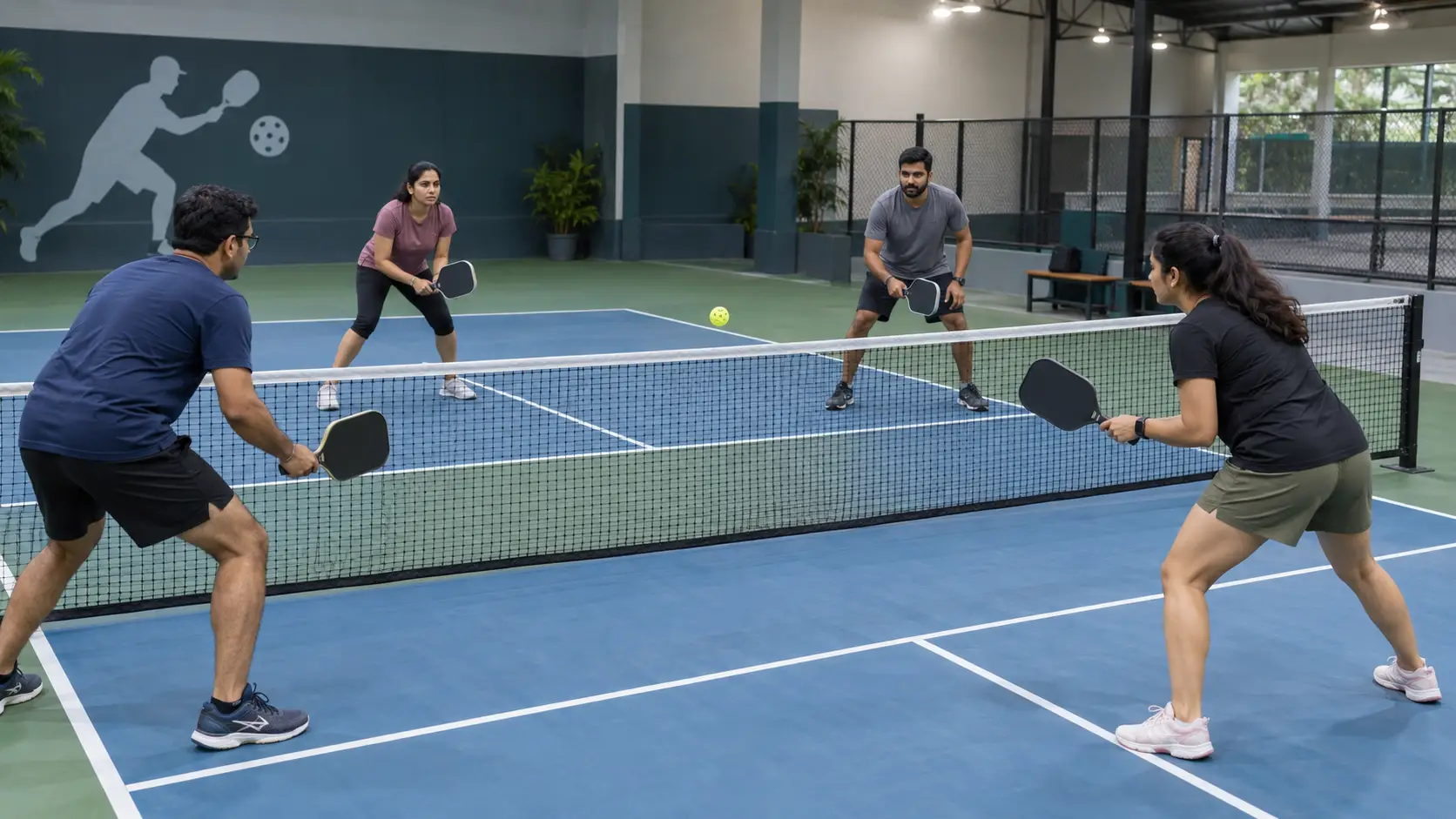
Because play is social and rotational, employees interact across teams and seniority levels, strengthening informal connections without forced team-building exercises.
Inclusive and Low Impact for Diverse Teams
Corporate teams are often diverse in age, fitness level, and sporting background. Pickleball’s low impact nature reduces intimidation for beginners while still offering competitive depth for experienced players.
This inclusivity increases participation rates, a critical factor for HR teams measuring the success of wellness initiatives.
The Business Case for Corporate Pickleball Programs
Improved Employee Engagement and Morale
Workplace sports programs are most effective when participation feels voluntary and enjoyable. Pickleball’s easy learning curve helps employees feel competent quickly, which encourages repeat participation and organic word-of-mouth growth within teams.
Higher engagement often translates into improved morale and stronger workplace relationships, especially in hybrid or high-pressure work environments.
Mental Wellbeing and Stress Reduction
Light physical activity combined with social interaction supports stress reduction and mental clarity. Pickleball sessions provide movement without exhaustion, helping employees return to work refreshed rather than fatigued.
This makes the sport particularly suitable for knowledge-based roles where cognitive performance matters as much as physical health.
Cost-Effective Wellness Investment
Compared to gym memberships or large offsite retreats, pickleball programs are relatively cost efficient. Portable equipment, shared courts, and short session formats keep recurring costs low while maintaining high participation.
For HR and facilities teams, this creates a favourable balance between budget control and visible impact.
Pickleball in Indian Workplaces – Evidence and Momentum
Rapid Growth of Courts and Playing Communities
India has seen a sharp increase in dedicated pickleball courts across metro cities and tier-one locations. Private sports clubs, mixed-use facilities, and purpose-built venues are expanding access, making it easier for corporates to find nearby playing options.
This infrastructure growth has reduced logistical friction for companies exploring workplace sports programs.
Emergence of Corporate and Professional Events
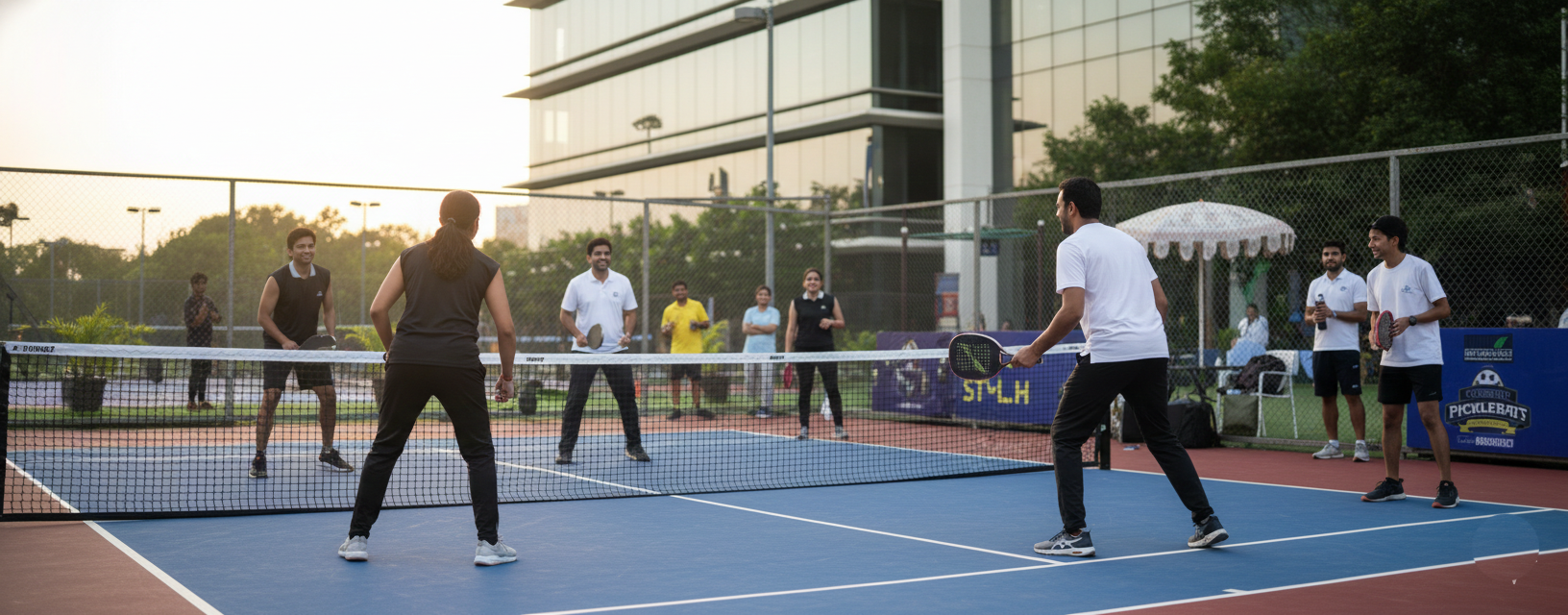
Beyond casual play, structured pickleball tournaments are now being organised for corporate groups, professional communities, and industry associations. These events combine sport, networking, and brand visibility, reinforcing pickleball’s position as more than a recreational trend.
The rise of inter-company leagues and invite-only tournaments signals a shift toward long-term adoption rather than short-term novelty.
Alignment With Modern Workplace Culture
Pickleball aligns well with modern workplace values such as inclusivity, flexibility, and social connection. Its appeal among millennials and Gen Z professionals further accelerates adoption within technology, consulting, and startup ecosystems.
As organisations continue to prioritise culture and engagement, pickleball fits naturally into broader employee experience strategies.
Operational Considerations for Corporates
Choosing the Right Venue and Playing Format
One of the first operational decisions companies must make is where pickleball sessions will be hosted. Options include on-campus multipurpose spaces, nearby sports facilities, or dedicated pickleball venues depending on space availability and participation size.
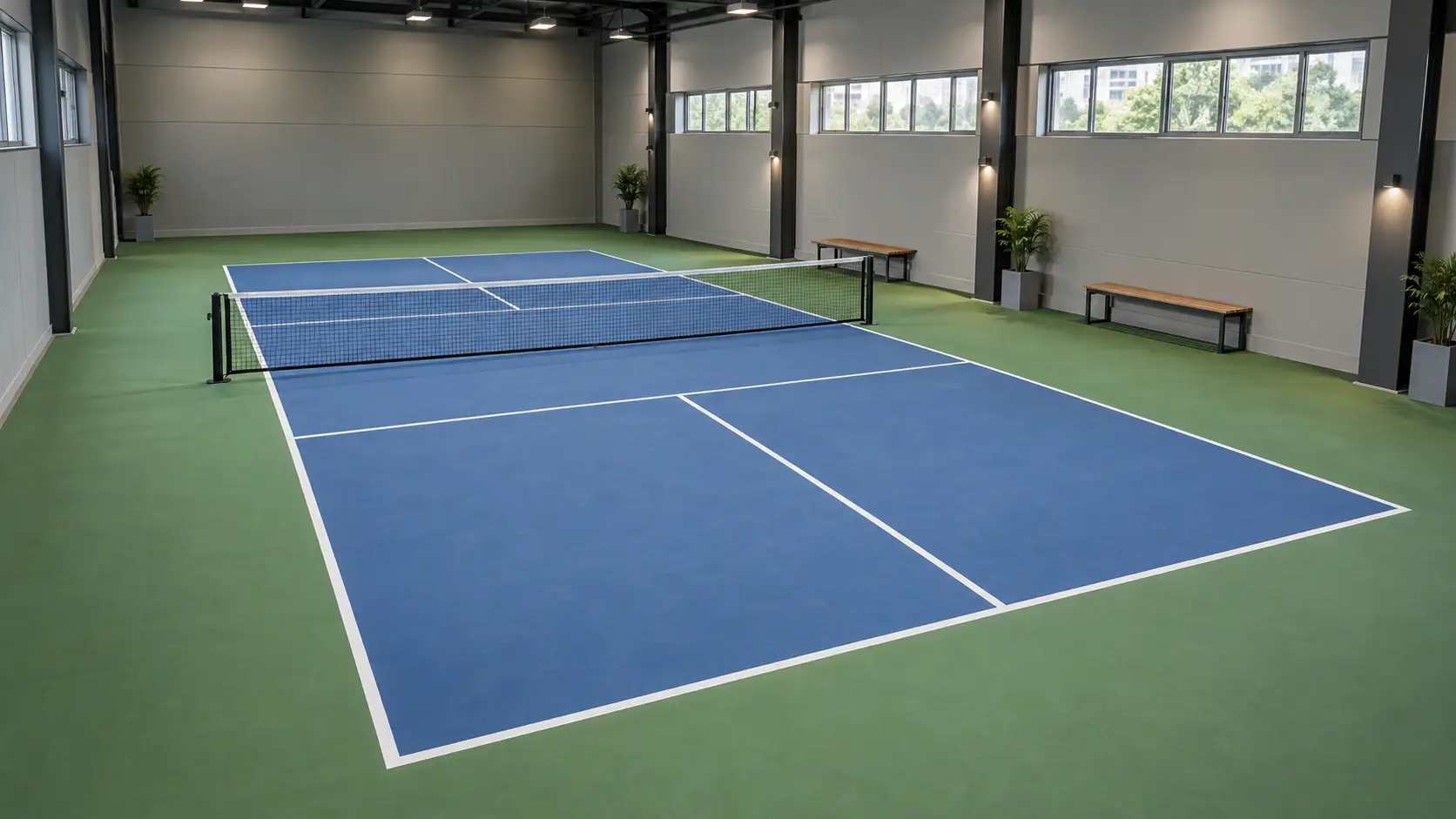
Indoor venues offer weather consistency and controlled conditions, while outdoor courts work well for short seasonal programs. The key is to select locations that are easily accessible to employees and allow predictable scheduling.
Safety Standards and Basic Rules
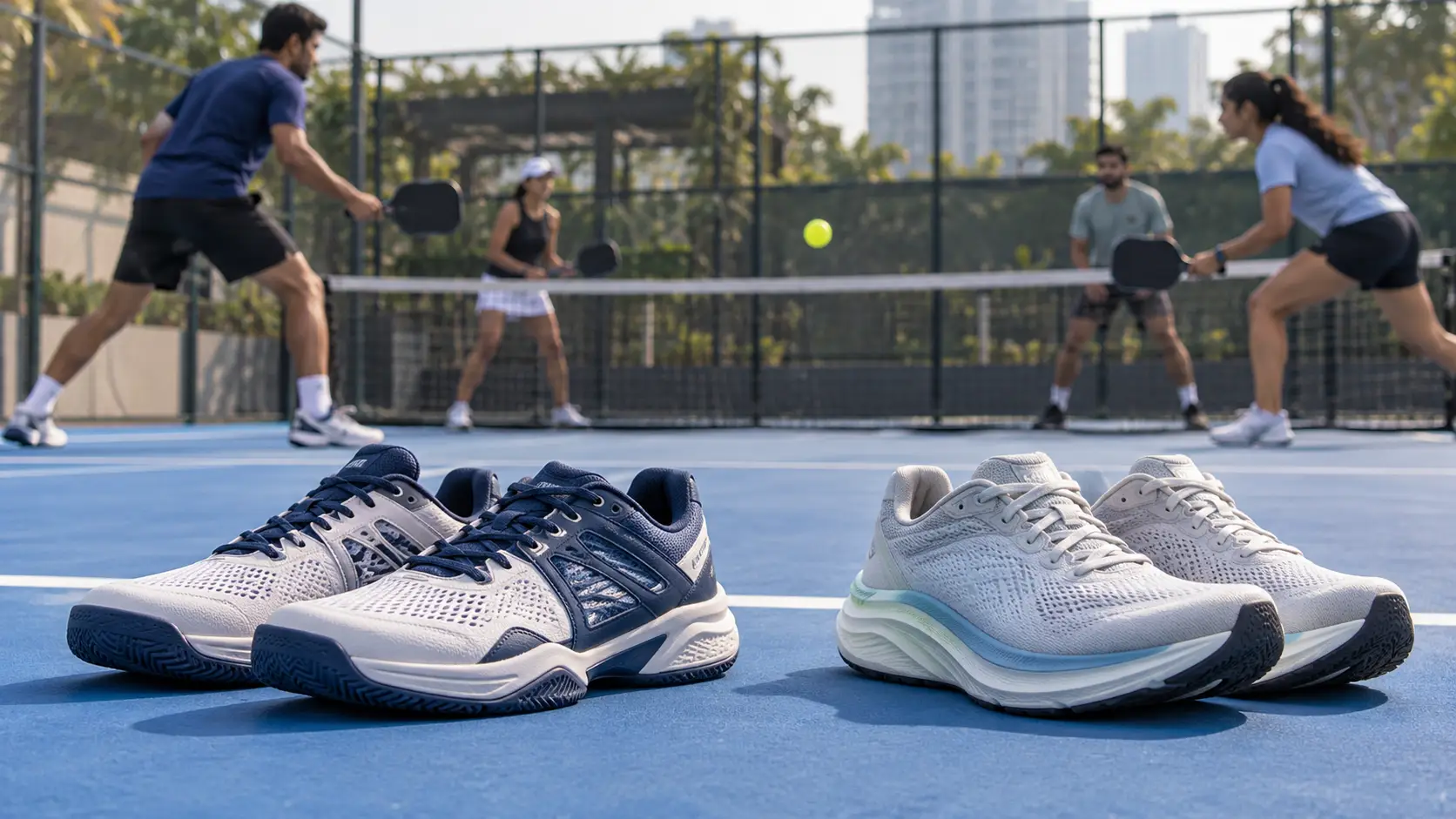
Although pickleball is low impact, safety protocols remain important in corporate settings. Clear footwear guidelines, warm-up routines, and basic court rules reduce the risk of minor injuries.
Using standard equipment and defined playing zones ensures sessions remain safe and inclusive for beginners.
Equipment, Coaching, and Onboarding
For first-time programs, brief onboarding sessions help participants understand rules and scoring. Short coaching clinics or guided play sessions accelerate confidence and improve early adoption.
This initial structure reduces drop-off after the first few sessions and creates a more enjoyable experience for new players.
How to Pilot Pickleball at Your Company Step by Step
Step 1 – Define the Objective and Participation Scope
Start by clarifying whether the pilot is focused on wellness, team building, or social engagement. Defining objectives helps determine session frequency, format, and measurement criteria.
Step 2 – Secure a Venue and Basic Equipment
Identify a convenient venue and procure essential equipment such as paddles, balls, and a portable net. Keeping the setup simple allows faster execution and lower initial cost.
Step 3 – Launch a Short-Duration Pilot Program
A four-week pilot with one or two sessions per week is often sufficient to measure interest and engagement. Limiting the duration creates urgency while keeping operational effort manageable.
Step 4 – Track Engagement and Feedback
Track participation numbers, repeat attendance, and informal feedback. Simple metrics such as session fill rate and voluntary sign-ups indicate program viability.
Step 5 – Refine and Scale
Based on feedback, refine session timing, format, or venue choice before scaling. Successful pilots often expand into internal leagues, inter-team ladders, or quarterly tournaments.
Common Objections and How to Address Them
We Do Not Have Enough Space
Pickleball requires a smaller footprint than many traditional sports. Portable nets and shared spaces allow sessions to be hosted without permanent infrastructure.
Concern About Injuries or Liability
The sport’s low impact nature already reduces injury risk. Clear rules, warm-up guidance, and optional coaching sessions further improve safety.
Budget Constraints
Pickleball programs can be launched with minimal equipment and shared facilities. Compared to large offsite activities, costs remain predictable and scalable.
Low Initial Interest
Interest often grows after employees try the sport once. Short demo sessions and informal matches help overcome hesitation and build organic participation.
Future Outlook for Pickleball as a Corporate Sport in India
Pickleball’s momentum in India shows no signs of slowing down. As more venues, clubs, and multi-sport facilities add pickleball courts, accessibility will continue to improve across metro and tier-one cities.
Corporate participation is expected to evolve from informal wellness sessions to structured inter-company leagues, sponsored tournaments, and annual corporate championships. This mirrors patterns seen in other emerging workplace sports that transitioned from recreational play to organised ecosystems.
As companies increasingly prioritise employee experience, mental wellbeing, and social connection, pickleball fits naturally into long-term workplace culture strategies. Its flexibility allows organisations to adapt formats based on workforce size, location, and engagement goals.
Conclusion
Pickleball is becoming a preferred corporate sport in India because it solves real workplace challenges. It is easy to learn, inclusive across fitness levels, cost efficient, and highly social, making it an ideal choice for organisations exploring structured wellness initiatives. With the growing availability of professional pickleball courts in Delhi, companies now have access to reliable venues that support regular play and corporate events. For organisations seeking meaningful engagement rather than one-off activities, pickleball offers a scalable solution that blends wellness, teamwork, and enjoyment. Platforms like Rackonnect make it easier for companies to discover verified venues, plan sessions, and build long-term sports programs without operational complexity. As infrastructure grows and corporate adoption increases, pickleball is positioned to become a permanent fixture in India’s workplace sports landscape, supported by organised venues, accessible booking, and a strong community ecosystem.
Frequently Asked Questions
Why are companies in India adopting pickleball for workplace wellness
Companies prefer pickleball because it is easy to learn, requires minimal setup, and encourages participation across age and fitness levels.
How much space is required to run a corporate pickleball program
Pickleball courts are smaller than tennis courts and can be set up in multipurpose areas or nearby sports facilities.
Is pickleball suitable for employees with no sports background
Yes, pickleball is beginner friendly and designed for mixed-ability groups, making it ideal for diverse corporate teams.
How long does it take to run a pickleball session at work
Sessions can be as short as 10 to 30 minutes, allowing them to fit into lunch breaks or post-work hours.
Can pickleball programs be scaled for large organisations
Yes, companies often start with a pilot and scale into leagues, tournaments, or inter-office events based on participation.