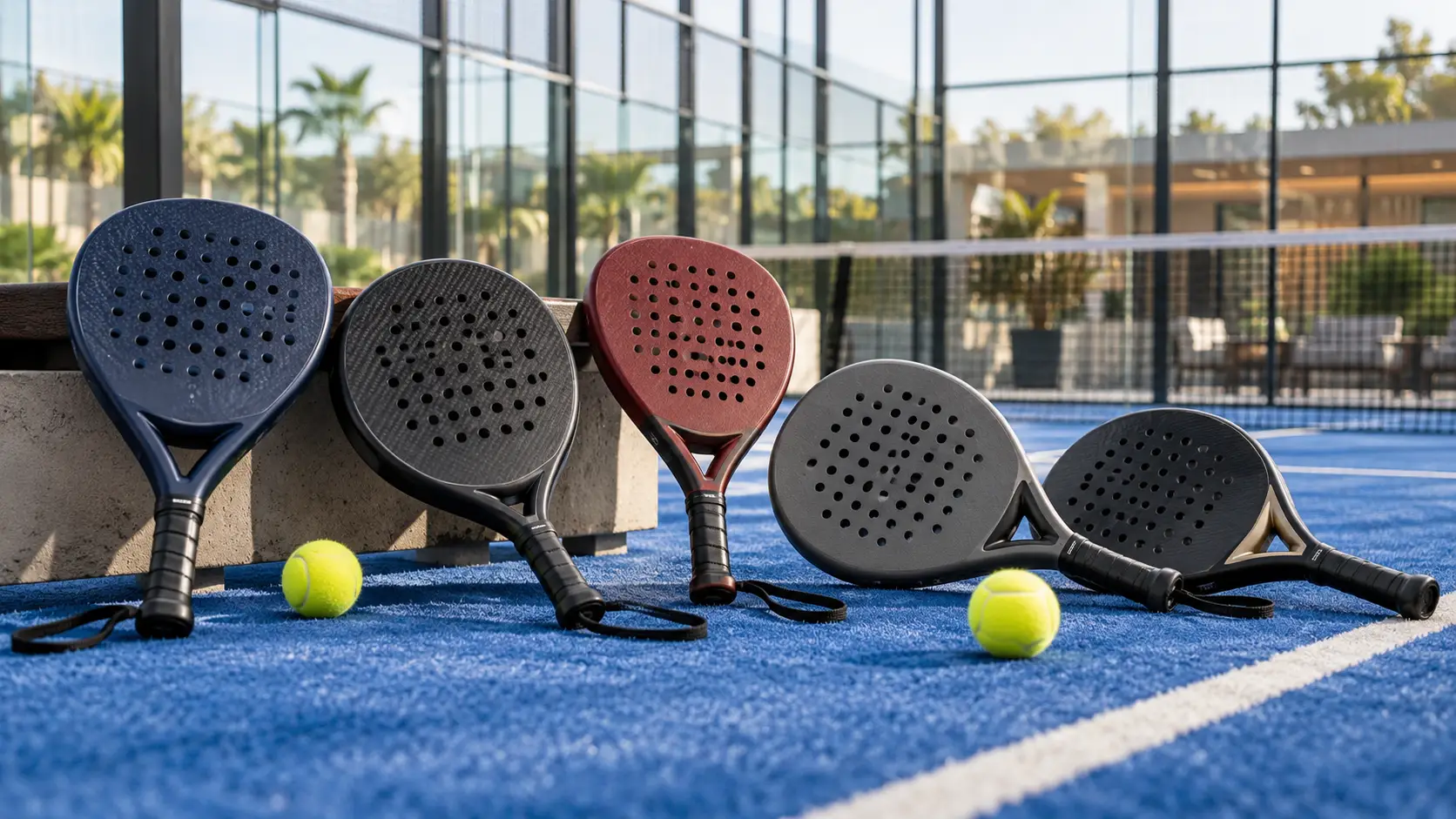

Padel is almost exclusively played as a 2v2 doubles game. While individual athletic ability and shot power are great assets, they will only carry you so far. In padel, a well-synchronized pair with sharp tactical positioning will almost always defeat two superior tennis players who play as individuals.
Because the padel court is enclosed by glass walls and mesh fencing, managing court space and controlling the net as a team is the golden key to winning matches. If you and your partner are constantly caught in "no man's land" or leaving the center line wide open, you are handing free points to your opponents.
In this tactical guide, we break down official padel doubles serving and receiving rules, court positioning principles (like the famous "Elastic Band" rule), wall play coordination, and winning strategies to employ during your next match at REPPP padel courts.
1. Official Padel Doubles Serving & Receiving Rules
Serving in padel doubles sets the tactical foundation for the entire point. Unlike tennis where the serve is hit overhead for maximum speed, a padel serve is hit underhand at or below waist height.
Rulebook Standard
Padel Doubles Serving Checklist
Diagonal Target: The serve must be hit diagonally into the opponent's cross-court service box.
The Glass Rebound Rule: After bouncing in the service box, the ball may strike the glass wall and remain in play. However, if the serve hits the metallic wire mesh fence after bouncing, it is an automatic OUT fault.
Two Serve Attempts: Just like tennis, the server gets a first and second serve.
Receiving Order: Receiver positions are fixed for the entire set. Player A receives on the right side (deuce court) and Player B receives on the left side (advantage court).
Tactical Formations: Traditional vs. Australian Formation
When serving in padel doubles, your team can choose between two main formations:
Traditional Rotation: The server's partner stays at the net on the opposite side of where the server is standing. After serving, the server rushes to the net to join their partner side-by-side.
Australian Formation: The server's partner stays permanently posted on one side of the net (usually their preferred side, such as a right-handed player staying on the left court). The server serves and immediately sprints diagonally to cover the open half of the net. This keeps both players on their specialized court sides.
Refresher Note: Need a complete breakdown of basic padel scoring and court dimensions? Read our foundation guide on what is padel, rules, and how to play in India.
2. Court Positioning: The "Elastic Band" Concept
The single biggest mistake amateur padel doubles pairs make is moving independently. If one player charges the net while the other lingers near the back glass, a massive gap opens up in the middle of the court.
To master positioning, think of you and your partner as being connected by an invisible elastic band 3 to 4 meters long:
1. Attacking the Net (Together)
In padel, 80% of winning points are scored at the net. Both players should advance together to stand roughly 2 meters from the net, taking away time and angles from opponents.
2. Retreating to Defense (Together)
When opponents hit a deep lob over your heads, BOTH partners must drop back behind the service line together to defend off the back glass wall.
3. Shifting Laterally (Screening)
When the ball is hit into the left corner, BOTH players shift left. The left player covers the alley wall, while the right player slides to the center line to close the middle gap.
3. Wall Play Coordination: Who Takes the Center Ball?
In doubles, the area down the middle line is known as "No Man's Land." Opponents will repeatedly target the middle gap to cause confusion and force miscommunication between partners.
Rule of Thumb: The Forehand In The Middle Takes It
When a ball is driven right down the center line between both partners, the player whose forehand is in the center of the court has priority.
Pair Combination | Left Court Player | Right Court Player | Who Takes the Middle Ball? |
|---|---|---|---|
Two Right-Handed Players | Forehand in Center | Backhand in Center | Left Court Player Priority |
Righty (Right) + Lefty (Left) | Backhand in Center | Backhand in Center | Communication Required ("Yours / Mine") |
Righty (Left) + Lefty (Right) | Forehand in Center | Forehand in Center | Lethal Combination! Both Forehands Cover Middle |
Looking to master advanced overhead shots when retreating to the glass walls? Check out our technical guide on how to use glass walls and master the Bandeja in padel.
4. Three Winning Padel Doubles Tactical Moves
1. The Chiquita (Soft Feet Reset)
When you are trapped at the back wall and opponents are controlling the net, hit a soft, slow dip shot right at their feet (called a Chiquita). This forces them to volley upward, giving you time to charge forward and steal the net position.
2. The High Lob to Steal the Net
The lob is the most important tactical shot in padel doubles. A high, deep lob pushes opponents away from the net back to their glass wall, instantly allowing your team to transition from defense to net attack.
3. Targeting the Diagonal (Cross-Court Play)
In doubles, cross-court shots travel over the lowest part of the net and provide a larger court surface area. Hitting cross-court minimizes unforced errors compared to risky down-the-line shots.
Want to test your doubles tactical chemistry in competitive events? Learn about tournament action at the ultimate padel challenge events at REPPP.
Book Your Court & Find Padel Partners on Rackonnect
Ready to put these doubles tactics to work on world-class panoramic glass courts? At REPPP by Rackonnect, you can enjoy climate-controlled indoor courts, tournament-grade WPT turf, and top-tier lighting.
Need a doubles partner or an opposing pair for a weekend match? Review our padel court booking prices in Delhi NCR and use the Rackonnect App to connect with playing partners near you.
Frequently Asked Questions (FAQs)
Q1. Why is padel almost always played as doubles instead of singles?
A standard padel court (10m x 20m) is designed geometrically for 4 players. Playing singles on a standard court leaves too much open space, making wall defense nearly impossible. While specialized narrow singles courts exist, official tournament padel is exclusively 2v2 doubles.
Q2. Can padel partners switch receiving sides during a match?
Partners can only switch their designated receiving sides (deuce vs. advantage court) at the beginning of a new set. Once a set begins, receiving positions must remain fixed until that set ends.
Q3. What is the Australian formation in padel doubles?
The Australian formation is a tactical strategy where the net player stays permanently on one side of the net (left or right) regardless of where their partner is serving from. The server then sprints diagonally after serving to cover the open half of the net.
Q4. Who should take the ball down the middle line in padel doubles?
Standard priority goes to the player whose forehand is in the middle of the court (usually the left-court player when two right-handed partners play together). Clear verbal communication ("Mine" or "Yours") is essential for middle balls.
Master the Glass with Your Doubles Partner!
Grab your partner, reserve your court at REPPP, and experience the ultimate 2v2 padel match!